Eye Problems in Hamsters: A Complete Guide to Prevention and Care
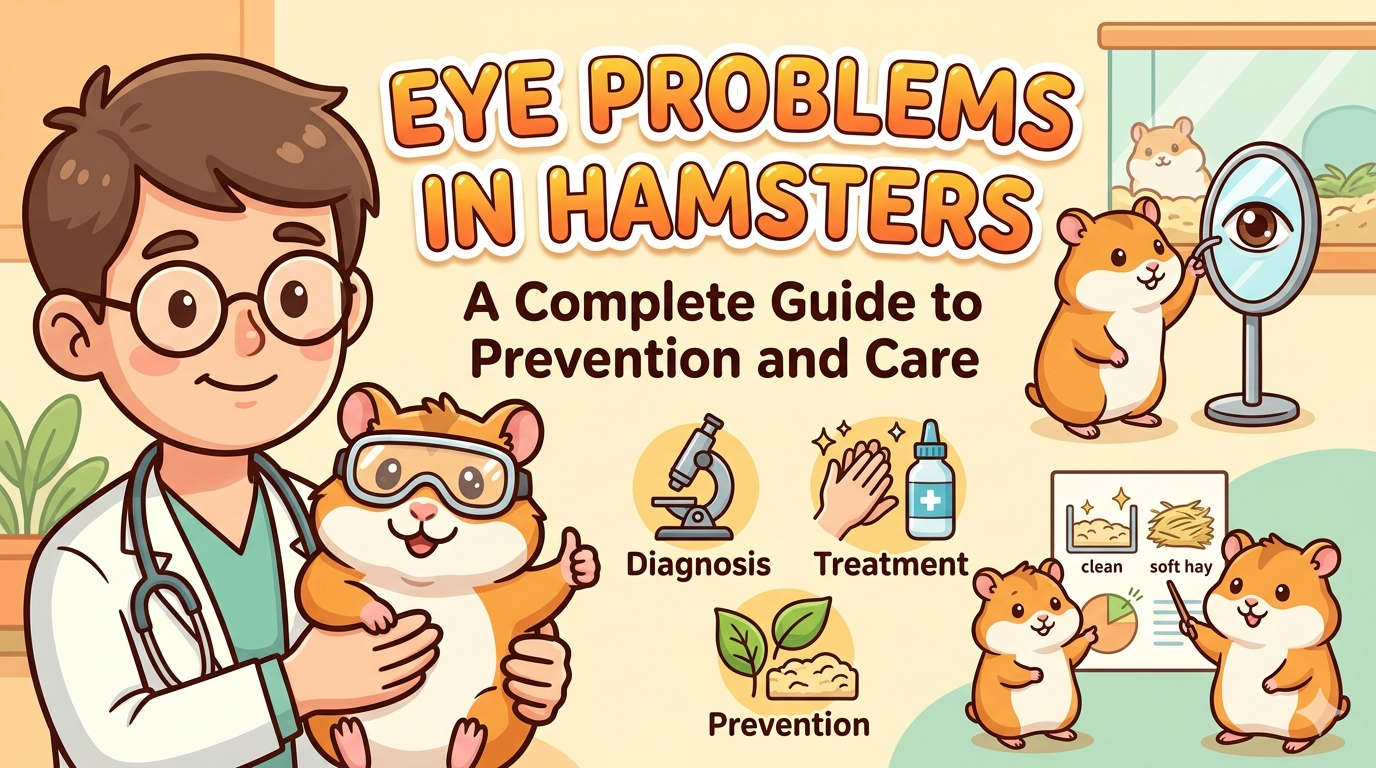
Table of Contents
Imagine waking up, pulling back the cozy fleece cover of your hamster’s enclosure, and seeing your tiny friend peering back at you with one eye completely sealed shut by a crusty, yellow discharge. Your heart drops. You wonder if they fought with a cage mate, got poked by a stray piece of bedding, or if they are facing a life-threatening infection.
If you are dealing with this right now, take a deep breath. You are not alone, and this is completely manageable. Eye problems in hamsters are among the most frequent reasons small mammal owners seek veterinary advice. Because hamsters are prey animals, they instinctively hide physical vulnerabilities until an ailment has progressed significantly. Their prominent, slightly bulbous ocular anatomy makes them highly susceptible to environmental irritants, mechanical injuries, and bacterial infections.
In my decades of hands-on experience rehabilitating small rodents and consulting for veterinary boards, I have seen how quickly a minor scratch can escalate into a severe corneal ulcer without prompt intervention. This definitive guide delivers actionable, clinically grounded insights to help you identify symptoms, understand root causes, apply safe home care, and recognize exactly when to sprint to an exotic animal veterinarian.
What Are the Main Causes of Eye Problems in Hamsters?
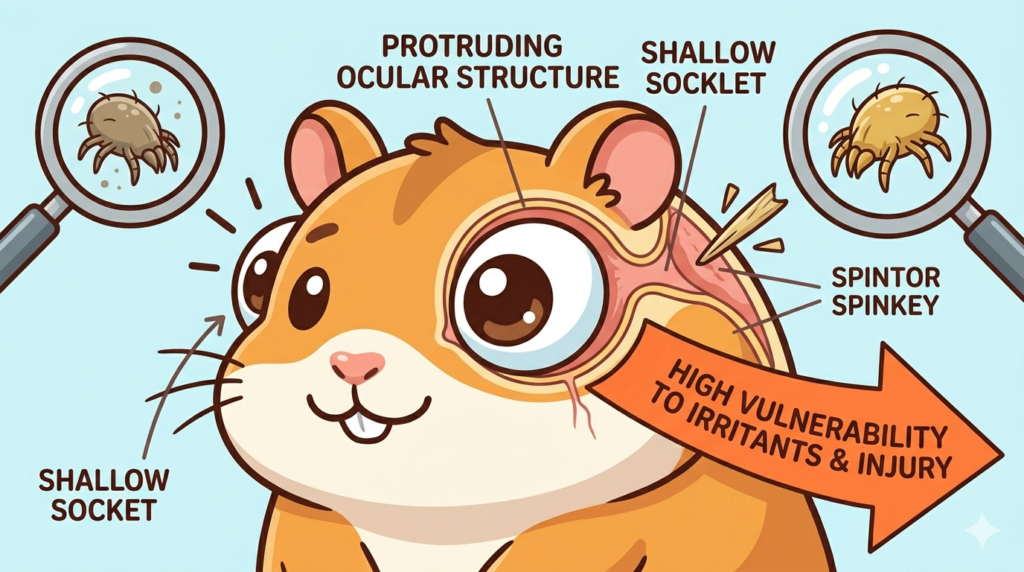
To effectively protect your pet, you must understand why eye problems in hamsters happen in the first place. A hamster’s eyes lack the deep protective bony sockets found in larger mammals. This protruding structure exposes the cornea to immediate environmental hazards.
Environmental Irritants and Poor Husbandry
The single most common culprit behind ocular inflammation is dusty or inappropriate bedding. Pine and cedar wood shavings release volatile aromatic hydrocarbons (phenols) that irritate the respiratory tract and the mucous membranes of the eye. Even high-quality paper bedding can settle into a fine dust at the bottom of a bag, getting kicked up when your hamster digs or burrows.
Furthermore, when urine breaks down in a poorly ventilated enclosure, it releases ammonia gas. High ammonia levels chemically irritate the conjunctiva, paving the way for secondary bacterial invasions.
Mechanical Trauma and Scratches
Hamsters are natural explorers who navigate their world in the dark, relying heavily on their whiskers (vibrissae) rather than keen eyesight. If their habitat contains sharp-edged plastic toys, splintered wooden hideouts, or stiff, stalky Timothy hay, accidental scratches to the cornea are highly likely.
In multi-hamster households—particularly with territorial species like Syrian hamsters, which must always live alone, or poorly bonded dwarf pairs—fighting is a primary cause of severe ocular trauma. A single misplaced claw during a squabble can rupture an eyeball.
Secondary Systemic and Dental Issues
Did you know that a hamster’s cheek pouches and tooth roots sit directly beneath their eye sockets? The roots of a hamster’s upper incisors grow continuously throughout their life. If these teeth are not properly worn down by chewing, or if they grow misaligned (malocclusion), the elongated roots can push upward into the retrobulbar space behind the eye. This creates immense pressure, leading to swelling, inflammation, and even the protrusion of the eyeball itself. Similarly, an infected cheek pouch can form an abscess that presses against the back of the eye.
Recognizing the Signs and Symptoms of Ocular Distress
Early detection saves lives—and sight. Because these creatures are so small, a change in their behavior often manifests before the physical symptoms become starkly obvious. If your active nighttime explorer suddenly becomes lethargic or refuses to leave their nest, a closer physical inspection is required.
Physical Indicators of Infection and Injury
When evaluating your pet, look for these specific clinical signs of eye problems in hamsters:
- Epiphora (Excessive Tearing): The fur around the eye appears wet, matted, or stained greasy brown.
- Blepharospasm (Squinting): The hamster keeps one or both eyes partially or fully closed, indicating acute pain.
- Conjunctival Erythema: The pink tissue surrounding the eyeball looks bright red, swollen, or fleshy.
- Exophthalmos (Proptosed Eye): The eyeball visibly bulges forward out of its socket.
- Corneal Opacity: The normally crystal-clear surface of the eye looks cloudy, milky, or bluish.
- Purulent Discharge: Thick yellow, green, or white crusting that seals the eyelids shut.
Behavioral Shifts Triggers by Pain
A hamster experiencing eye pain will often rub its face repeatedly with its front paws. This self-grooming behavior is an attempt to clear away the discomfort, but it unfortunately introduces more bacteria from the paws into the damaged eye, worsening the condition. You may also notice a sudden onset of territorial aggression or hand-shyness; a partially blinded or hurting hamster startles easily and may bite defensively when approached.
A Deep Dive Into Sticky Eye Syndrome in Hamsters
If you notice your hamster cannot open its eyes after waking up, you are likely dealing with a classic case of “Sticky Eye Syndrome.” This condition is particularly prevalent in senior hamsters and specific breeds like Robo or Syrian hamsters.
What Exactly is Sticky Eye?
Sticky Eye Syndrome occurs when the normal, lubricating secretions of the eye dry out, creating a glue-like crust along the eyelid margins. It is crucial to understand that Sticky Eye is a symptom, not an independent disease. It can be triggered by a minor allergic reaction to dust, a mild cold, or a localized bacterial infection within the conjunctival sac.

Step-by-Step Safe Flush Protocol
Never attempt to force a crusty eye open with your fingers; doing so can tear the delicate skin of the eyelid or scratch the cornea. Instead, follow this safe, non-invasive cleaning method:
- Prepare a Sterile Solution: Boil water and let it cool completely to a lukewarm temperature. Mix in half a teaspoon of plain table salt per cup of water to create a mild saline solution, or use over-the-counter sterile saline drops (without preservatives).
- Saturate a Clean Compress: Dip a sterile gauze pad or a clean cotton ball into the lukewarm saline. Do not use cotton swabs (Q-tips), as loose fibers can detach and get trapped in the eye.
- Apply a Warm Compress: Gently hold the moist gauze against the closed eye for 30 to 60 seconds. This softens the hardened crust.
- Wipe Gently Outward: Wipe from the inner corner of the eye outward. Use a fresh pad for every single stroke to avoid rubbing bacteria back into the eye.
- Allow Natural Opening: As the crust dissolves, the hamster will naturally blink the eye open. If it remains shut, repeat the warm compress for another minute.
Differentiating Between Conjunctivitis, Ulcers, and Cataracts
To provide the right care, you must know what specific pathology you are looking at. Treating a structural corneal scratch with the wrong method can cause permanent blindness.
| Condition | Primary Symptoms | Primary Causes | Typical Veterinary Treatment |
| Conjunctivitis | Red swollen lids, clear to yellow discharge, crusting | Dust, ammonia buildup, bacterial infection | Topical antibiotic drops, habitat deep-clean |
| Corneal Ulcer | Cloudy eye surface, intense squinting, rubbing | Mechanical scratch from bedding, hay, or claws | Broad-spectrum antibiotic ointment, pain meds |
| Cataracts | Internal milky-white disc inside the pupil, clumsiness | Genetics, aging, underlying diabetes mellitus | Environmental management, no surgical options |
| Proptosis | Eyeball protruding completely out of the socket | Severe trauma, restraint pressure, deep abscess | Emergency surgical enucleation (eye removal) |
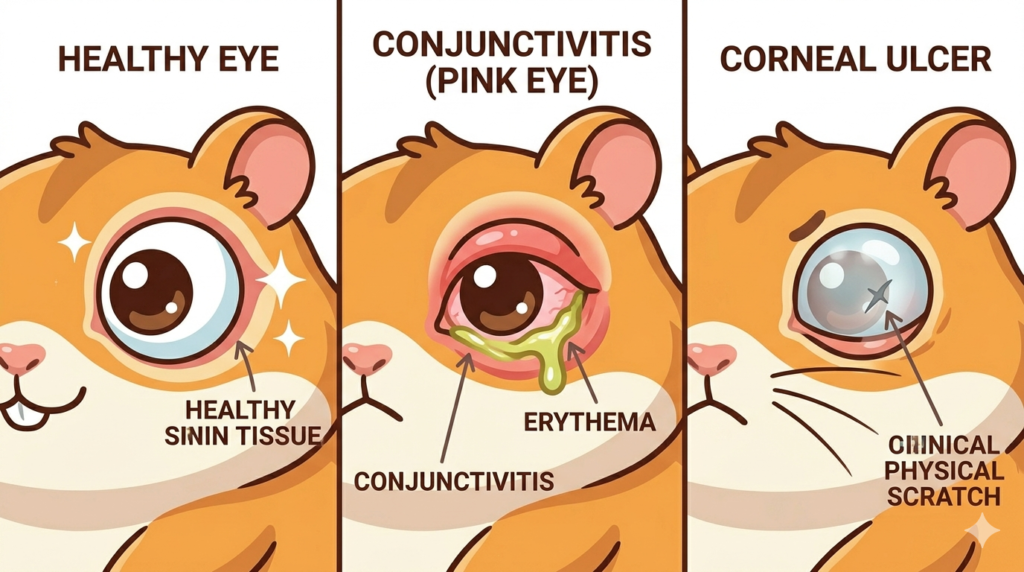
Conjunctivitis (Pink Eye)
Conjunctivitis is an inflammation of the mucous membrane that lines the inner surface of the eyelids. It can be non-infectious (caused by dust or allergies) or infectious (bacterial or viral). The eye looks red and angry, and it is usually accompanied by a watery or pus-filled discharge.
Corneal Ulcers: The Hidden Danger
A corneal ulcer is an open sore on the outer layer of the eye, almost always caused by mechanical trauma. When a hamster runs through hay or burrows in rough bedding, a sharp edge can slice the cornea.
If your hamster is squinting intensely but the eye looks dry rather than gunky, suspect an ulcer. Veterinarians diagnose this by placing a special fluorescent orange dye (fluorescein stain) into the eye; the stain clings to damaged corneal tissue and glows bright green under a blue light.
Cataracts and Age-Related Changes
If you notice a milky white disk deep inside the eye behind the pupil, your hamster is developing a cataract. This is an opacity of the internal lens that blocks light from reaching the retina.
Cataracts are common in aging hamsters, particularly in Campbell’s dwarf hamsters, which are genetically prone to diabetes. Unlike infections, cataracts are completely painless and cannot be treated with drops. Because hamsters naturally navigate using scent and hearing, a blind hamster can live a completely happy, full life if you keep their cage layout identical and avoid moving their things around.
Professional Treatment Options and Veterinary Care
While mild case cleaning can resolve temporary dust irritation, true eye problems in hamsters require professional veterinary intervention. Attempting to manage an active bacterial infection or an ulcer with home remedies alone can lead to systemic infection (septicemia) or unnecessary suffering.
When to See an Exotic Vet Immediately
Schedule an emergency veterinary visit if you observe any of the following high-risk symptoms:
- The eyeball appears larger than normal or seems to be pushing out of the socket.
- The eye remains completely cloudy or blue for more than 24 hours.
- There is active bleeding from the eye socket.
- Your hamster stops eating, drinking, or grooming entirely.
- The surrounding cheek or jaw is swollen, suggesting a deep dental abscess.
Common Medications and How to Safely Apply Drops
Your veterinarian will likely prescribe broad-spectrum topical ophthalmic drops or ointments, such as Terramycin, Ciprofloxacin, or Tobramycin. Administering medication to a tiny, squirming rodent requires a steady, confident hand.
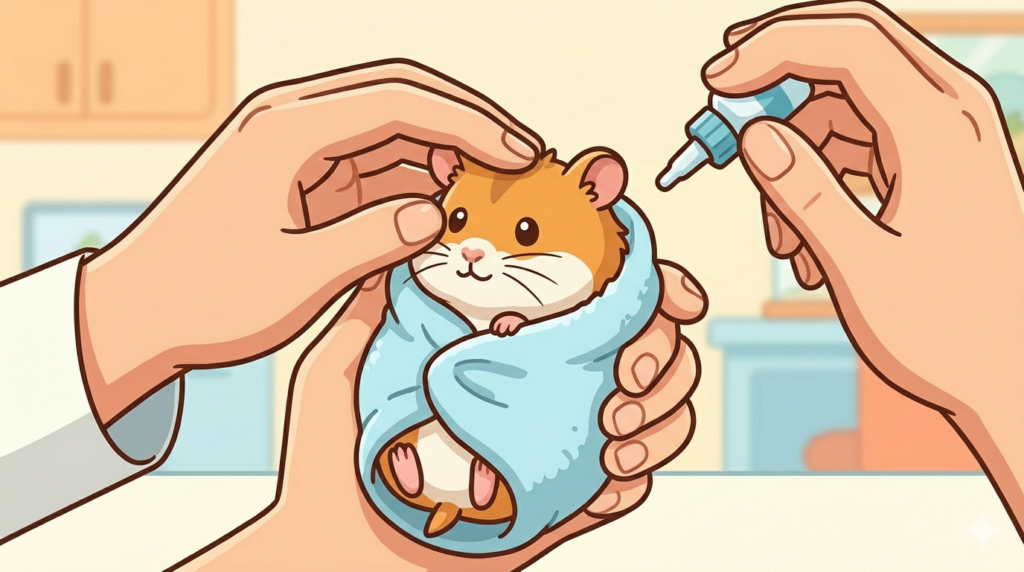
To safely apply drops, wrap your hamster snugly in a small, clean washcloth (the “burrito wrap method”) to secure its limbs and prevent scratches. Hold the hamster firmly but gently on a flat, low surface. Rest your dominant hand lightly on the hamster’s head, holding the dropper bottle about an inch away from the eye—never touch the tip of the bottle directly to the eye, as this contaminates the medication. Approach from behind or from above so the hamster doesn’t see the bottle coming, and drop the liquid onto the center of the eye. Allow the pet to blink to distribute the medication evenly.
How to Prevent Eye Problems in Hamsters: A Master Guide
Prevention is always easier, cheaper, and kinder than treatment. By optimizing your husbandry practices, you can eliminate nearly 90% of the environmental risks that cause ocular disease.
Choosing the Ideal Bedding
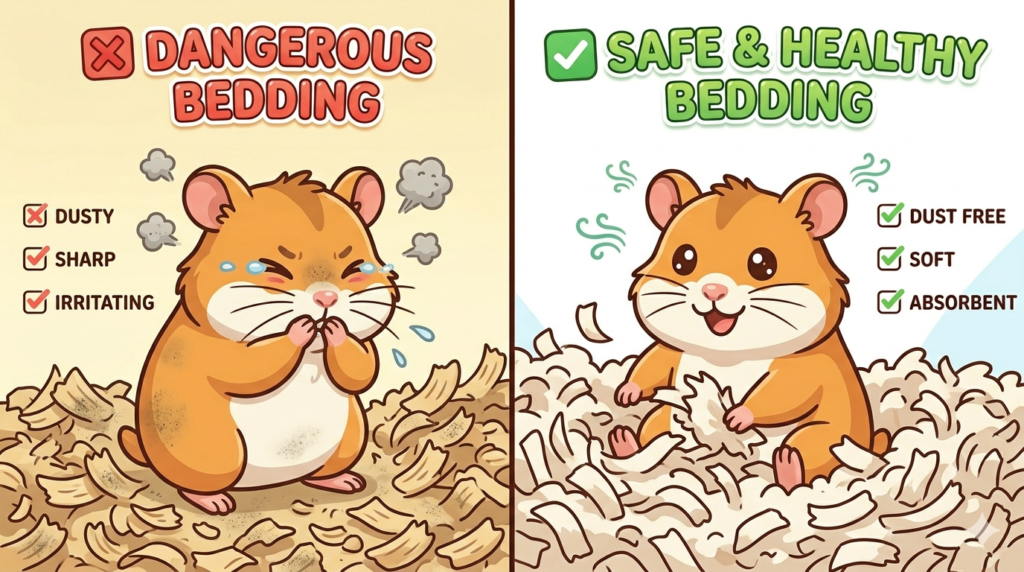
Get rid of pine, cedar, and unscented generic wood shavings. Opt instead for ultra-low-dust, unbleached virgin paper bedding or high-quality aspen shavings that have been triple-screened for dust. When expanding a compressed block of paper bedding, shake it out inside a mesh laundry bag outdoors before placing it into the enclosure to sift out residual fine particulates.
Also Read: The Ultimate Guide to the Best Bedding for Hamsters: 2026 Expert Review
Enclosure Design and Safety Inspections
Perform a weekly safety sweep of your hamster’s habitat. Run your fingers along the edges of all plastic wheels, tunnels, and ceramic dishes to check for sharp burrs or cracks. If you feed Timothy hay for nesting or foraging, gently break up the stiff, pokey stalks and only offer the soft, leafy green portions. Ensure that any wooden toys are free from exposed staples, nails, or toxic wood glue.
Diet and Dental Maintenance
To prevent retrobulbar tooth root abscesses, provide your hamster with ample opportunities to wear down their teeth naturally. Offer safe, pesticide-free hard woods like applewood twigs, hazelnut branches, or commercial calcium-free chew blocks. Ensure their primary diet consists of a high-quality, nutritionally balanced lab block supplemented with a species-appropriate seed mix to prevent nutritional deficiencies that weaken the immune system.
Conclusion
Managing eye problems in hamsters requires a proactive combination of clean husbandry, regular physical inspections, and a willingness to seek professional veterinary help when things go wrong. These delicate creatures rely entirely on us to interpret their subtle signs of pain and distress. By maintaining a dust-free environment, quickly clearing away morning crust with a safe saline wash, and keeping dangerous, sharp items out of their habitats, you can ensure your furry friend enjoys clear, healthy vision throughout their life.
Keep an eye on their eyes, check their teeth regularly, and never hesitate to contact your exotic vet if something looks amiss. Your prompt action can make all the difference in preserving your hamster’s comfort and sight.
FAQs
Can I use human eye drops like Visine on my hamster?
No, never use human over-the-counter eye drops on a hamster. Medications like Visine contain vasoconstrictors designed to reduce redness in human eyes, which can be highly toxic and dangerous if ingested or absorbed by a tiny rodent.
Why does my hamster have a milky white cloud over its eye?
A milky cloud usually indicates either a corneal ulcer (a physical scratch on the surface) or a cataract (an internal clouding of the lens). An ulcer requires immediate antibiotic drops, while a cataract is an untreatable, painless sign of aging.
How often should I clean a hamster’s sticky eye?
If your hamster has a mild case of Sticky Eye, gently clean it using a warm, sterile saline compress 1 to 2 times a day. If the crusting persists beyond 48 hours, see a veterinarian to check for an underlying infection.
Can a hamster survive if its eye has to be removed?
Yes, hamsters can adapt remarkably well to life with one eye or even total blindness. Enucleation surgery is a common and highly effective procedure to relieve pain caused by severe, untreatable trauma or deep eye infections.
Is conjunctivitis in hamsters contagious to humans or other pets?
While most hamster eye infections are caused by species-specific bacteria or environmental dust, certain bacterial strains can be transmitted. Always wash your hands thoroughly with soap and water before and after handling a sick hamster to prevent cross-contamination.