
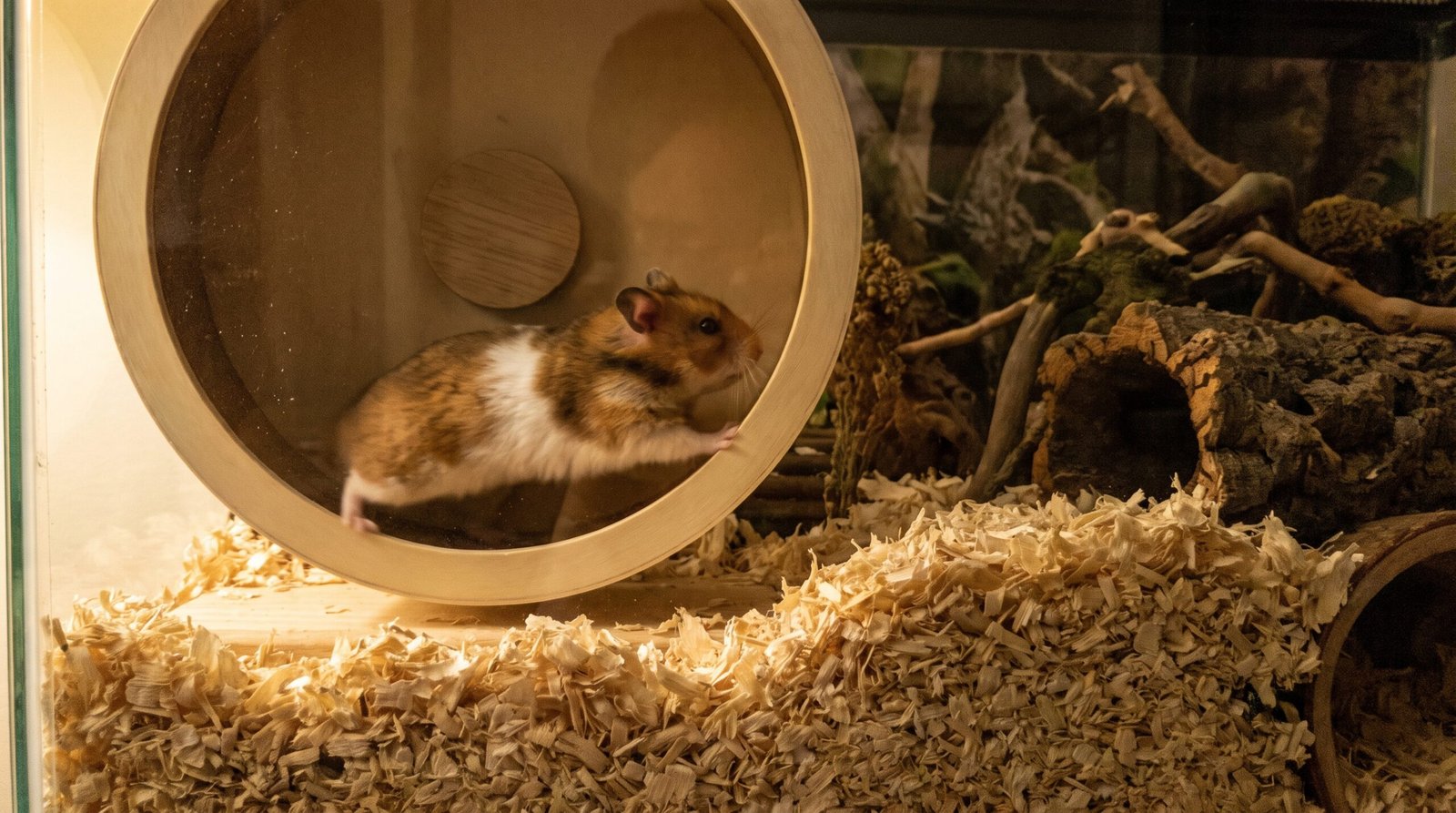
How to Stop Your Hamster from Biting Your Hands

Imagine reaching into your pet’s cage, expecting a sweet moment of connection, only to pull your hand back with a sharp gasp and a bleeding finger. If you are experiencing this, you are not alone. It is incredibly discouraging when a tiny creature you feed and care for treats your fingers like a personal chew toy. But here is the real talk: your pocket pet isn’t acting out of malice or spite.
When you want to stop your hamster from biting your hands, you have to first understand that a hamster’s primary defense mechanism in the wild is its sharp incisors. In my two decades of working with small exotic mammals, evaluating behavioral trends, and consulting with veterinary behaviorists, I have seen thousands of owners transform nippy, terrified rodents into gentle companions that willingly snooze in their palms.
This comprehensive, veterinary-verified guide will break down the exact behavioral psychology behind hamster aggression, provide a step-by-step taming protocol, and arm you with the advanced insights needed to foster a bite-free relationship with your pet.
Why Is My Hamster Biting Me? Understanding Rodent Psychology
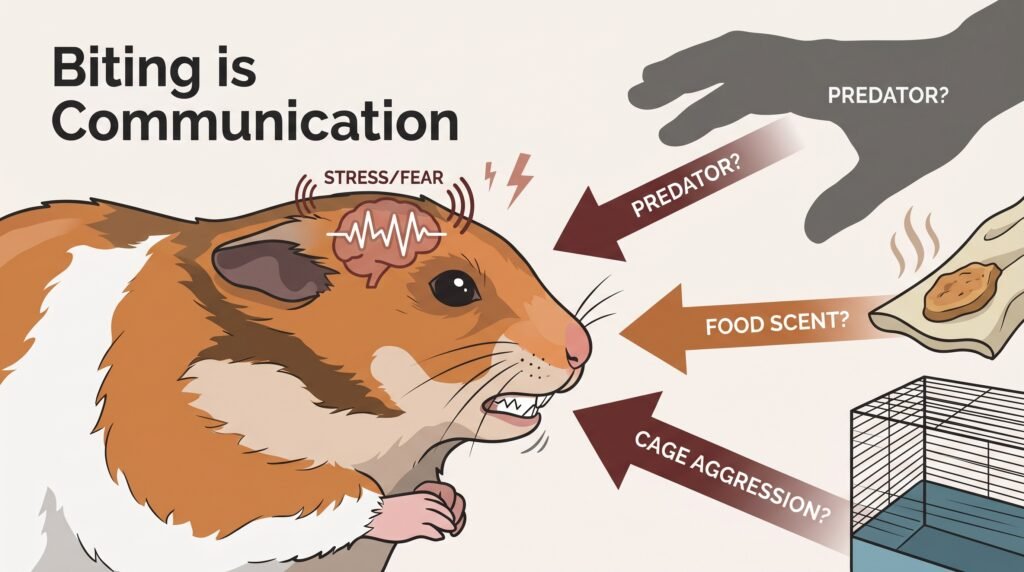
Before we can fix the behavior, we must decode the underlying motivation. Hamsters do not bite to be “mean.” Unlike domesticated dogs or cats, hamsters are solitary prey animals that retain strong wild instincts.
1. Fear and Territorial Aggression
In the wild, a shadow over a hamster usually means a hawk or a weasel is about to make them dinner. When your hand swoops into their enclosure from above, their survival instinct screams danger. Furthermore, certain species, particularly female Syrian hamsters, possess highly developed territorial drives. They view their enclosure as their kingdom, and your hand is an unauthorized invader.
2. The Impact of Poor Breeding and Cage Aggression
A massive factor behind persistent nipping is a psychological phenomenon known as “cage aggression.” This condition runs rampant in rodents sourced from commercial rodent mills or purchased from generic pet stores that do not prioritize behavioral health or genetic temperament.
When confined to sub-standard, cramped housing during critical development phases, hamsters experience chronic neurological stress. This stress lowers their threshold for fear, resulting in a hyper-reactive pet that attacks anything entering its territory.
3. Scent Misidentification and Exploratory Nipping
Sometimes, a bite is simply a case of mistaken identity. Hamsters have notoriously poor eyesight, relying heavily on their highly sensitive olfactory systems and tactile whiskers to navigate their surroundings. If you just finished eating a sandwich, peeling an apple, or handling fragrant soap, your hand smells exactly like food.
Furthermore, juvenile hamsters use exploratory nipping—a gentle testing of textures with their teeth—to understand their environment. If you flinch, scream, or pull away aggressively during an exploratory nip, you can inadvertently trigger a fear-based defensive bite.
Also Read: The Science of “Ghost Hamsters”: Dealing with a Shy Pet
Setting Up a Stress-Free Environment to Prevent Bites
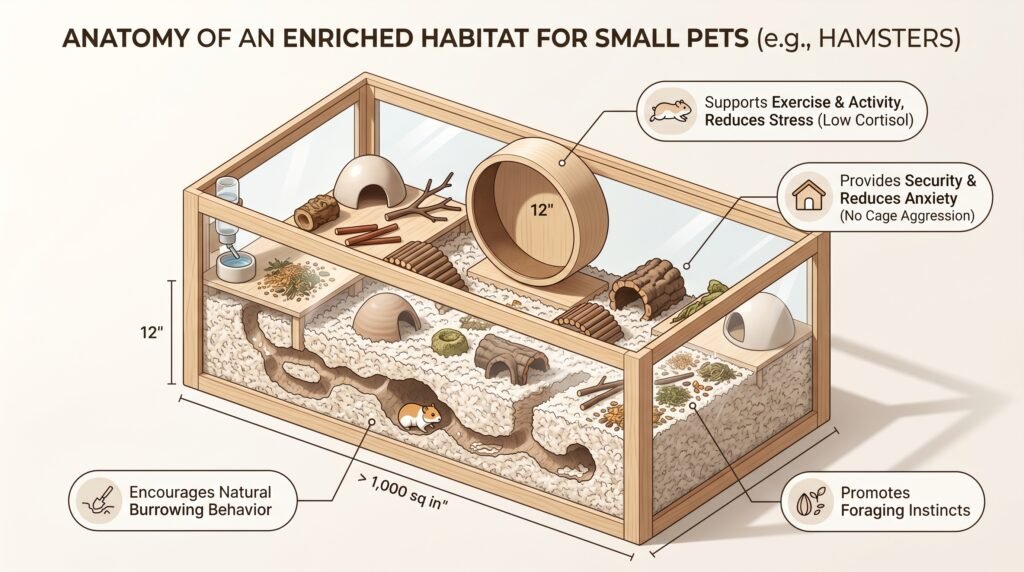
You cannot expect a calm pet if their living quarters resemble a high-stress pressure cooker. Environmental optimization is the foundational bedrock of behavior modification. If your pet is constantly on edge due to their surroundings, no amount of taming will stop your hamster from biting your hands.
Selecting the Right Enclosure Size and Substrate Depth
The tiny plastic cages sold at commercial retail chains are major contributors to cage aggression. To promote a calm disposition, your enclosure must meet or exceed modern animal welfare standards.
| Hamster Species | Minimum Floor Space Requirement | Ideal Substrate Depth for Burrowing |
| Syrian Hamster | 800 – 1,000 square inches | 10 to 12 inches |
| Dwarf / Roborovski | 650 – 800 square inches | 6 to 8 inches |
A spacious environment allows your hamster to express natural behaviors, such as extensive burrowing and foraging, which dramatically lowers circulating cortisol (stress hormone) levels. Use a safe, unscented paper-based substrate or aspen shavings. Never use pine or cedar shavings, as their volatile phenols cause respiratory inflammation and chronic pain, a hidden driver behind sudden biting habits.
Essential Enclosure Enrichment
A bored hamster is a stressed hamster. To prevent behavioral issues, ensure their habitat includes:
- An Appropriate Exercise Wheel: Syrian hamsters require a solid-surface wheel with a minimum diameter of 11–12 inches, while Dwarf species need an 8–9 inch wheel. If the wheel is too small, it arches their back, causing painful spinal compression that makes them highly aggressive when handled.
- Multiple Secure Hideouts: Provide at least three bottomless hides so your pet feels secure sleeping and nesting in different areas.
- Foraging Materials: Scatter-feed their diet instead of using a bowl, and provide safe chew toys made of applewood, willow, or grapevine to keep their continuously growing incisors naturally worn down.
7 Proven Steps to Stop Your Hamster from Biting Your Hands
Taming a hamster is an exercise in patience, consistency, and positive reinforcement. Never rush this process. If your hamster shows signs of distress—such as pinning their ears back, hissing, puffing out their cheeks, or chattering their teeth—stop immediately and take a step back.
Step 1: The Vital “Reset” Period
When you bring a new hamster home, or if you are resetting the relationship with a deeply aggressive pet, you must implement a strict three-to-seven-day acclimation period. During this time, do not attempt to touch or hold your hamster.
Limit your interactions entirely to quietly changing their food and water. This allows the animal to adjust to the ambient sounds, temperatures, and routine of your home without feeling physically threatened.
Step 2: Scent Conditioning and Olfactory Familiarization
Because hamsters live in a world defined by scent, they must learn to associate your specific scent profile with safety and comfort rather than an impending predator attack.
Take a clean piece of toilet paper or a small tissue and rub it gently against your hands, wrists, or the back of your neck. Place this scent-imbued paper inside the enclosure near their favorite sleeping spot. They will naturally shred this material to line their nest, literally sleeping surrounded by your scent, which builds subconscious trust.
Step 3: Passive Hand Presence (The “Glove” Alternative)
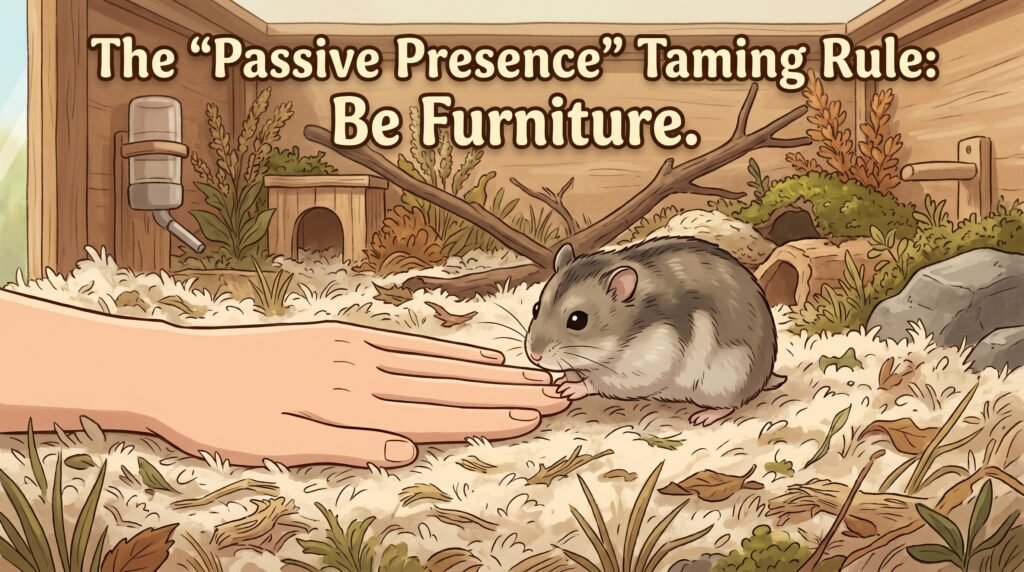
Once your hamster stops running into hiding when you enter the room, open the enclosure door and place your hand flat on the bedding. Do not move your fingers, and do not attempt to reach toward the animal. Let your hand sit still like an inanimate piece of furniture for 5 to 10 minutes.
If you are dealing with a severe biter and are afraid of injury, wear a thick, clean leather gardening glove during this phase. This protects your skin, prevents you from flinching, and ensures you do not pass fear-based chemical pheromones to your pet.
Step 4: The Art of High-Value Treats and Positive Reinforcement
Now it is time to build a bridge using their stomach. Identify a high-value treat that your hamster absolutely adores but does not receive in their daily seed mix. Great options include:
- Raw, unsalted pumpkin seeds or sunflower seeds
- A tiny piece of fresh broccoli or cucumber
- Freeze-dried mealworms (excellent source of protein for Dwarf species)
Hold the treat firmly between your fingertips, leaving plenty of space so the hamster cannot accidentally mistake your finger for the food. Offer the treat near the entrance of their hideout. Repeat this daily until they confidently walk up to your fingers to take the reward.
Step 5: Transitioning to Palm Feeding
Once your hamster willingly accepts treats from your fingertips, place the high-value treat directly in the center of your open palm. Rest your hand flat on the enclosure floor.
To secure the reward, the hamster will be forced to place their front paws onto your fingers, and eventually, step fully into your palm. Keep your hand completely still during this process. Let them eat and leave freely without attempting to scoop them up.
Step 6: The Correct Scoop Method for Safe Handling
Never grab a hamster from above. A top-down grip mimics the hunting style of birds of prey, instantly triggering a panic-induced defensive bite.
Instead, once the hamster is comfortably eating from your palm, gently cup both of your hands together to form a “scoop” or “bowl” shape. Lift them slowly, keeping them just an inch or two above the bedding or a soft surface. Keep your initial handling sessions incredibly short—under 30 seconds—and immediately follow up with a favorite treat.
Step 7: Consistency, Routine, and Routine Maintenance
Hamsters are creatures of habit. They are crepuscular and nocturnal, meaning they are active during the twilight hours of dusk and dawn, as well as throughout the night.
Never wake a sleeping hamster to tame them. Waking a rodent out of deep REM sleep induces a sudden state of disorientation and intense fear, which almost always results in a severe defensive bite. Always conduct your taming sessions in the evening when your pet is naturally awake, alert, and active.
Managing Severe and Persistent Biting
What happens if you have followed the basic taming steps perfectly, but your pet continues to launch aggressive attacks whenever your hand approaches? This requires an advanced deep dive into specific behavioral anomalies and medical underlying causes.

How to Differentiate Defensive Fear from Pain-Induced Aggression
If a previously docile, sweet hamster suddenly turns into a frequent biter overnight, the root cause is rarely behavioral. In the vast majority of sudden-onset aggression cases, the animal is in pain. As prey animals, hamsters hide physical illness or injuries to prevent looking vulnerable to predators. When you touch them, you may be inadvertently pressing on a painful area.
Inspect your pet closely for clinical signs of underlying illness, including:
- A unkempt, greasy, or matted fur coat (indicating a lack of grooming)
- Lethargy, a hunched posture, or squinted eyes
- Overgrown or misaligned incisors (malocclusion), which prevents proper eating and causes constant oral pain
- Redness, swelling, or hair loss around their scent glands (located on the hips in Syrians, or the belly in Dwarf species)
If you suspect any of these issues, pause your training program immediately and schedule a comprehensive clinical examination with a qualified exotics or small mammal veterinarian.
The “Bath Tub” Bonding Strategy for Extreme Cases
If cage territorialism is so severe that you cannot safely put your hand in the enclosure, you must move your socialization sessions to a neutral, escape-proof territory. The classic bathtub method is widely regarded by exotics experts as the ultimate tool for rehabilitating aggressive hamsters.
- Place a thick, soft blanket or towel along the bottom of a clean, completely dry bathtub.
- Put a few of your hamster’s favorite hides and toys inside the tub.
- Use a plastic measuring cup, a large mug, or a cardboard shipping tube to safely transport your hamster from their enclosure to the tub without touching them directly.
- Step carefully into the dry bathtub yourself and sit down, creating an interactive playpen.
- Let your hamster freely explore the space. Because the bathtub is neutral territory, their defensive instinct drops significantly. They will naturally begin to climb over your legs and investigate your clothing, helping them realize you are a safe climbing structure rather than a predator.
What to Do If Your Hamster Bites You
How you react in the exact second a bite occurs dictates the future trajectory of your taming success. A poor human reaction can solidify a biting habit forever.
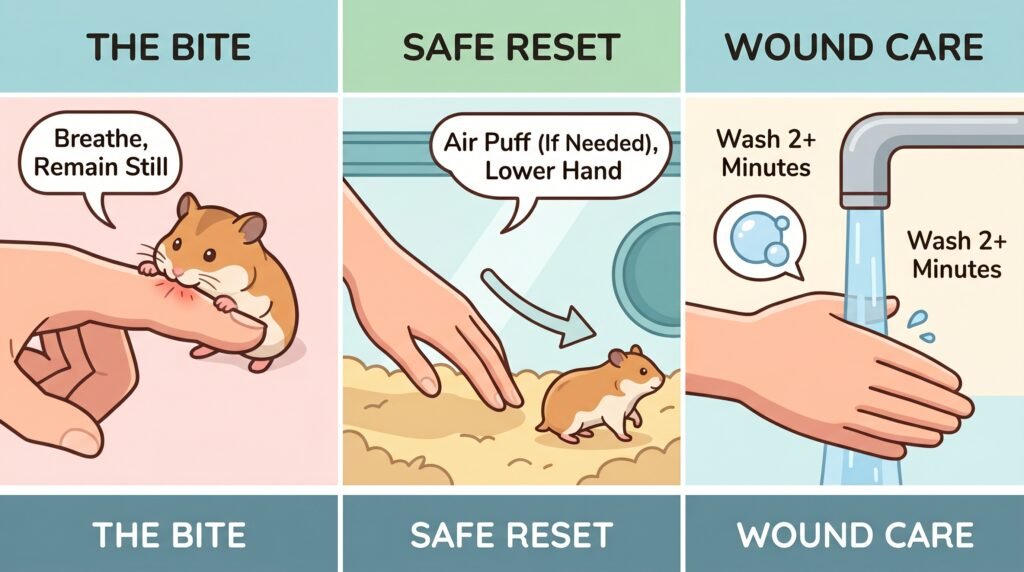
The Golden Rule: Do Not Flinch or Jerk Away
It is a natural human reflex to jerk your hand back when pinched by sharp teeth. However, yank your hand upward violently, and you run the risk of launching your tiny pet across the room, causing catastrophic internal injuries or broken bones.
Furthermore, if you pull away and scream, the hamster learns a powerful lesson: “Biting works! When I bite this giant hand, it goes away and leaves me alone.” This reinforces the negative behavior, making them much more likely to bite harder next time.
Step-by-Step Incident Management
If your pet clamps onto your hand, try to remain completely calm. Take a deep, slow breath.
- Gently lower your hand flat to the floor of the enclosure or the surface beneath you.
- If the hamster does not release their grip immediately, gently blow a small puff of air directly at their face. This harmlessly distracts them, causing them to open their mouth and back away.
- Place the hamster safely back into a secure zone within their habitat.
- Thoroughly wash the wound with warm water and antibacterial soap for at least two full minutes. While hamsters kept as indoor pets do not carry rabies, their mouths contain bacteria that can easily cause localized infections if left untreated. Apply an over-the-counter antiseptic ointment and cover the wound with a clean bandage.
FAQs
Which hamster species is the least likely to bite?
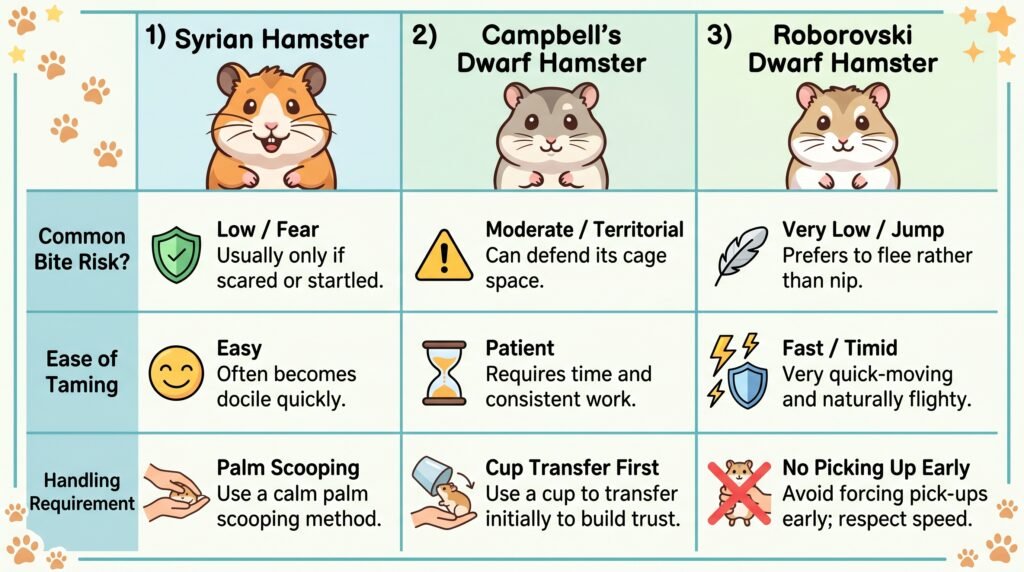
Syrian hamsters (often called Golden or Teddy Bear hamsters) are generally considered the easiest to tame and the least likely to bite out of fear, provided they are given adequate space. They are larger, slower, and much easier to handle than dwarf varieties.
Conversely, Campbell’s Dwarf hamsters are genetically predisposed to higher territorial defense traits and require meticulous, patient scent training to prevent nipping. Roborovski dwarfs are incredibly fast and timid; they are rarely aggressive but are prone to leaping out of hands due to sheer panic.
How long does it typically take to stop a hamster from biting?
There is no universal timeline for animal rehabilitation, as every rodent possesses a unique genetic temperament and background. On average, a consistent, daily 10-minute training protocol will yield significant, noticeable improvements within two to three weeks.
However, if you are working to reverse severe cage aggression in an older animal rescued from a negligent environment, the taming process can take two to three months of patient, low-stress interactions.
Can I use treats to stop a hamster from biting your hands?
Yes, high-value nutritional rewards are the single most effective tool you have to recondition your pet’s behavioral responses. By consistently pairing the presence of your hand with highly prized treats like pumpkin seeds or mealworms, you shift their emotional response from fear to eager anticipation. Just ensure you never offer treats immediately after a bite occurs, as this can inadvertently reward the aggressive behavior.
Why does my hamster bite my clothes or fingernails but not my skin?
This is a highly common behavior that is often misinterpreted as aggression. When a hamster nibbles on your shirt sleeves, pants, or hard fingernails, they are typically displaying natural nesting or grooming behaviors.
They may be attracted to the texture of the fabric for nesting material, or they may be trying to investigate a novel scent embedded in your clothing. If this behavior bothers you, gently redirect their attention by offering an appropriate wooden chew toy.
Is it possible for a hamster to be completely untamable?
While true psychological anomalies are exceptionally rare in the rodent world, a tiny fraction of hamsters may never fully comfortable with active physical handling due to genetic neurological damage or severe, unaddressed early-life trauma.
If your pet remains chronically terrified despite months of patient work, adapt your care style. You can still provide an incredible life for them by focusing entirely on viewing enrichment, creative scatter-feeding designs, and using transport cups for safe tank cleaning.
Empathy and Patience Wins the Game
At the end of the day, successfully learning how to stop your hamster from biting your hands comes down to building a bridge of mutual trust. These complex little creatures are entirely dependent on us to design a world that honors their natural biological instincts. By removing environmental stressors, upgrading to a humanely sized habitat, offering enticing rewards, and moving at a pace dictated entirely by your pet’s comfort levels, you will eventually unlock a deeply rewarding, bite-free relationship.
Do not let a rocky start ruin the joy of pet ownership. Take a deep breath, reset your training strategy today, and watch your tiny companion blossom into the affectionate, trusting pet you always knew they could be.