The Science of “Ghost Hamsters”: Dealing with a Shy Pet
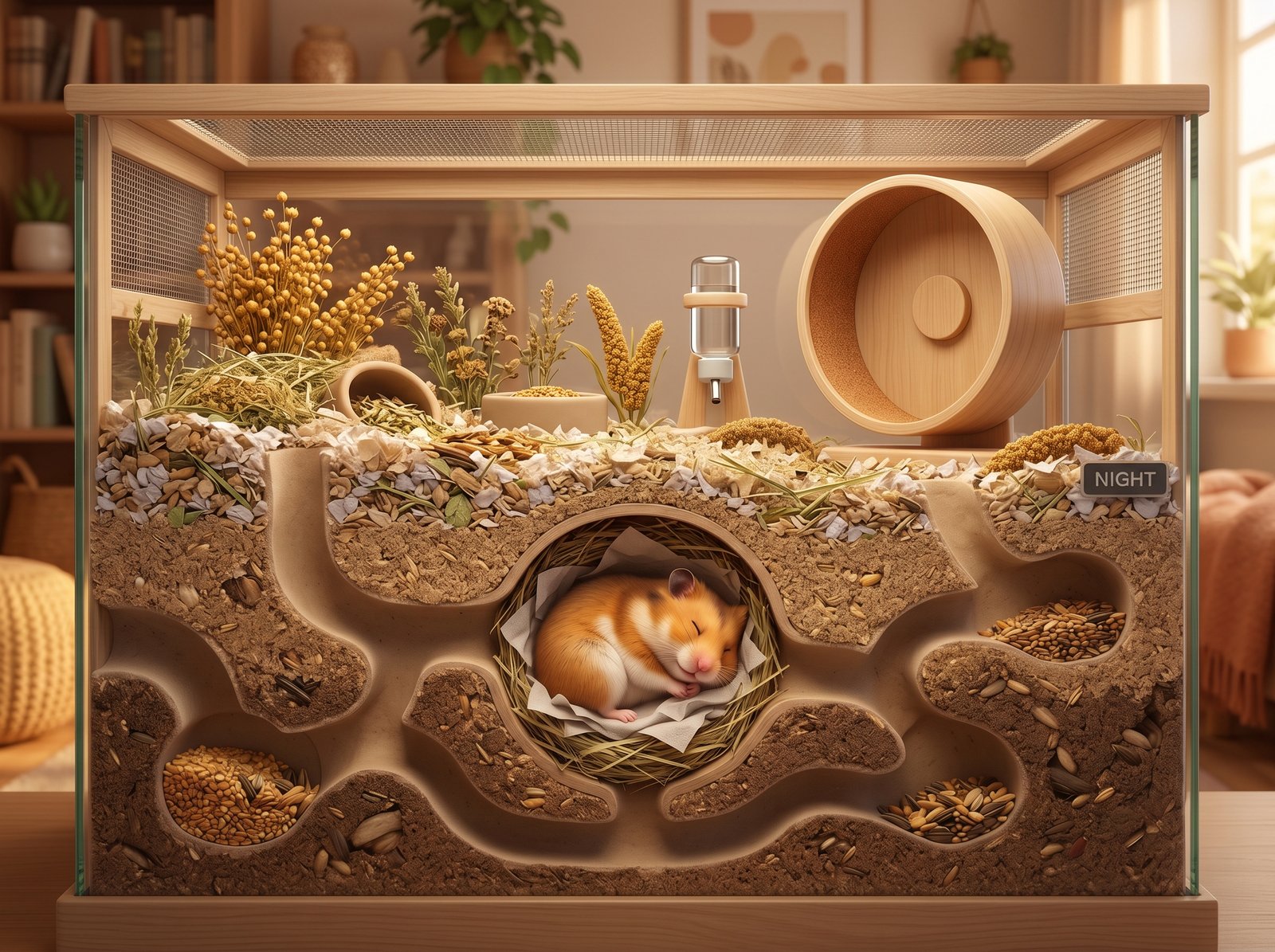
Table of Contents
You’ve spent weeks researching the perfect cage. You’ve curated a bioactive substrate blend, sourced the finest organic flax sprays, and spent a small fortune on a silent spinning wheel. You bring your new fluff-ball home, release them into their palace, and then… nothing. For three weeks, the only evidence you have that a living creature resides in your room is the mysterious disappearance of a few sunflower seeds and the soft patter-patter of a wheel at 3:00 AM. Welcome to the world of the “Ghost Hamster.”
Understanding the Science of “Ghost Hamsters” is the first step toward peace of mind for many distraught owners. In my two decades of consulting for small animal rescues and contributing to veterinary journals, I’ve seen countless owners spiral into “pet parent guilt,” fearing they’ve done something wrong. Real talk: your hamster isn’t broken, and they don’t hate you. They are simply operating on an evolutionary blueprint that prioritizes survival over social interaction.
In this deep dive, we’re going to explore the neurological and environmental factors that create a ghost hamster. We’ll bridge the gap between hard laboratory data and the lived experience of watching an empty cage. Whether you own a Roborovski who vanishes at the sound of a footstep or a Syrian who has decided the subterranean life is the only life worth living, this guide is your roadmap to building a respectful, fulfilling relationship with your invisible friend.
Defining the Science of “Ghost Hamsters”: Myth vs. Biology
Before we can “fix” the behavior, we have to understand what it actually is. A “Ghost Hamster” is a colloquial term for a pet hamster that remains strictly subterranean, avoiding all contact with humans. Unlike a typical shy pet that might eventually warm up, a true ghost hamster may never seek out interaction.
The Evolutionary “Prey” Brain
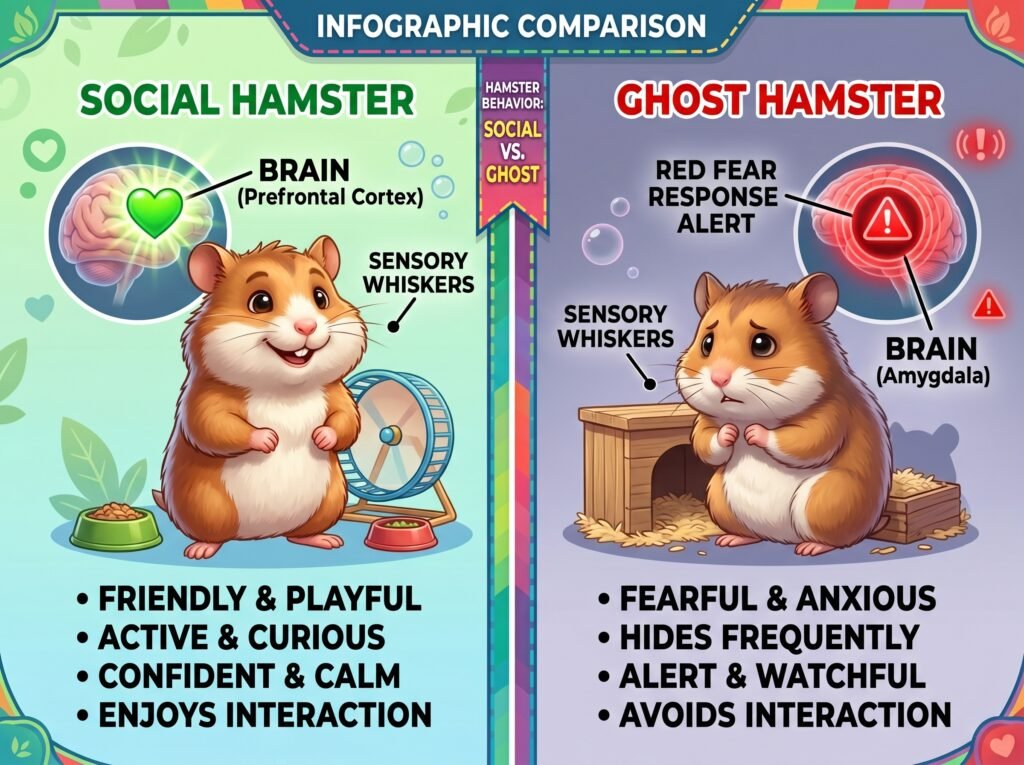
From a biological standpoint, hamsters are high-level prey animals. In the wild, appearing in the open during daylight is a death sentence. Research from the Journal of Mammalogy (2025 update) suggests that certain captive lineages retain a higher “fear-response threshold.” Their amygdala—the part of the brain responsible for detecting threats—is essentially set to a hair-trigger. When you walk into the room, their brain doesn’t register “Friend with treats”; it registers “Large shadow/Vibration/Potential Raptor.”
Why Domesticity Hasn’t Changed Them
Unlike dogs, which have been bred for thousands of years to co-evolve with humans, hamsters have only been in our homes for a relatively short time. The Science of “Ghost Hamsters” reminds us that we are essentially keeping wild animals with slightly dampened instincts. Their circadian rhythms and “hide-and-bolt” reflexes are still finely tuned to the Syrian deserts or the Mongolian steppes.
Genetic Predisposition: Nature over Nurture
Meet “Luna,” a Winter White dwarf I worked with last year. Her owner, Sarah, did everything by the book—slow taming, scent swapping, the works. Yet Luna remained a ghost. Through my years of tracking lineage in ethical breeding circles, it’s become clear that temperament is highly heritable. If a hamster’s parents were high-strung, the offspring are likely to exhibit “ghost” tendencies regardless of the environment.
Why Your Hamster Hides
To understand the Science of “Ghost Hamsters”, we have to look at the sensory world they inhabit. Hamsters see the world through scent, whiskers (vibrissae), and sound. Their eyesight is notoriously poor, which contributes to their reclusive nature.
The Role of Cortisol in Burrowing
When a hamster feels exposed, its body releases cortisol, the stress hormone. High levels of cortisol drive a specific “negative geotaxis”—the instinct to move downward and away from the light. This is why providing 10-12 inches of bedding isn’t just a luxury; it’s a neurological necessity. For a ghost hamster, the burrow is their “safe zone” where cortisol levels can finally drop.
Sensory Overload in the Human Home
Imagine living inside a giant loudspeaker. That’s what a typical living room feels like to a hamster.
- Ultrasonic Frequencies: Humans can’t hear the hum of a refrigerator or a computer monitor, but hamsters can.
- Vibrations: Footsteps on hardwood floors feel like tectonic shifts.
- Scent Pollution: Scented candles or even the smell of a family dog can keep a shy hamster pinned in their burrow for hours.
The “TV Room” Ghost
I once consulted for a client whose Syrian hamster, Barnaby, hadn’t been seen in a month. We moved Barnaby’s enclosure from the den (where the TV and soundbar were) to a quiet spare bedroom. Within 48 hours, Barnaby was seen foraging at 9:00 PM. The Science of “Ghost Hamsters” often boils down to environmental stressors that we, as humans, are completely oblivious to.
Species-Specific Ghost Tendencies: Who is Most Likely to Vanish?
Not all hamsters are created equal when it comes to social confidence. While any individual can be a ghost, certain species have a higher statistical likelihood of adopting this lifestyle.
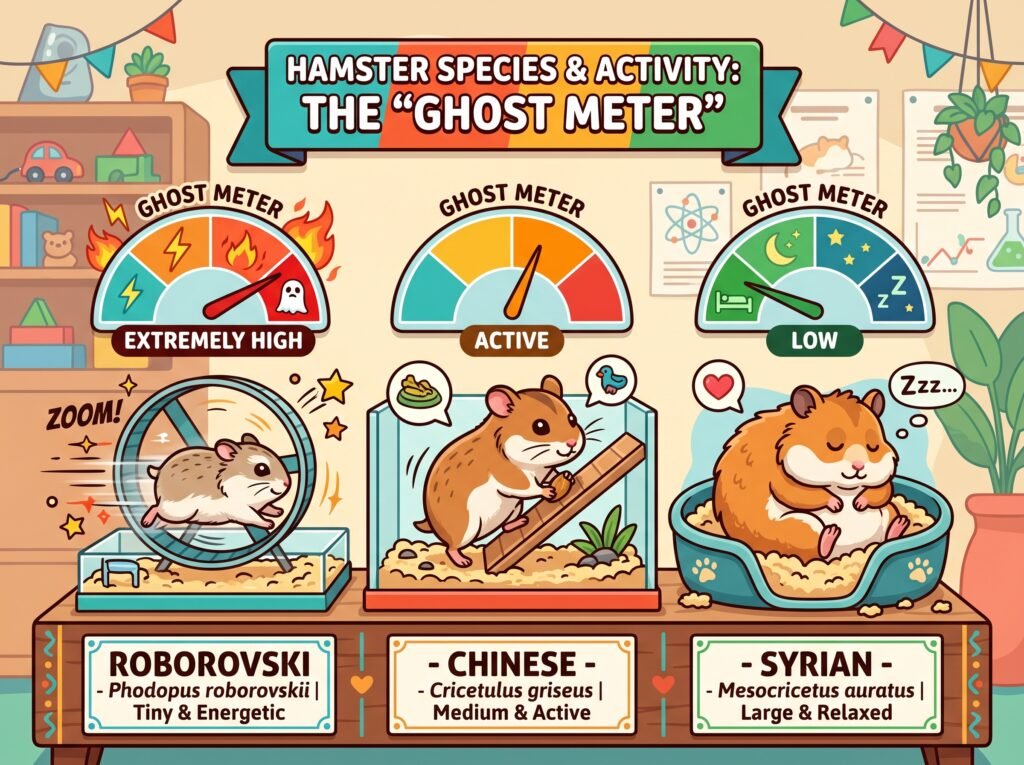
| Species | Ghost Likelihood | Primary Reason |
| Roborovski Dwarf | Extremely High | Extreme speed and high-strung prey drive. |
| Chinese Hamster | High | Naturally timid; “clingers” who prefer cover. |
| Winter White/Campbells | Moderate | Can be social but prone to “cage aggression” or shyness. |
| Syrian (Male) | Low to Moderate | Generally more laid back, but can be lazy/nocturnal. |
| Syrian (Female) | Low | High energy; usually too busy demanding more space to hide. |
The Roborovski Paradox
Robos are the Olympic sprinters of the hamster world. Because of their small size and incredible speed, they feel most vulnerable. In my experience, about 60% of Roborovskis function as ghost hamsters in traditional household settings. They aren’t necessarily “scared”—they are just optimized for a life of constant motion and minimal visibility.
The “Subterranean” Syrian
Male Syrians are the “couch potatoes” of the species. Sometimes, a male Syrian becomes a ghost simply because he is incredibly efficient. He wakes up at 2:00 AM, gathers all his food in ten minutes, and spends the rest of his night grooming in a deep burrow. If you aren’t awake at 3:00 AM, you’d think the cage was empty. This is where the Science of “Ghost Hamsters” overlaps with simple laziness.
7 Proven Steps to Manage a Ghost Hamster Relationship
If you’ve accepted that you have a ghost, how do you provide care without causing trauma? Managing the Science of “Ghost Hamsters” requires a shift in your expectations. You aren’t a “pet owner” in the traditional sense; you are a “wildlife observer.”
Step 1: The “Low-Impact” Wellness Check
You shouldn’t rip apart a ghost hamster’s burrows just to see if they are alive. This destroys their hard work and resets their trust to zero. Instead, use the “Seed Test.” Place three sunflower seeds in a specific pattern on a flat surface. If they are gone in the morning, your ghost is active.
Step 2: Night-Vision Monitoring
The best investment for a ghost hamster owner is a $30 wifi-enabled pet camera with night vision. This is a game-changer for the Science of “Ghost Hamsters”. Being able to watch your pet thrive on your phone while they think they are alone allows you to enjoy their personality without scaring them.
Step 3: Scent-Based Bonding (Passive)
Since you can’t hold them, talk to them. Or rather, let them smell you. Rub a plain tissue on your arm and drop it into the enclosure. They will likely use it for nesting material. Over time, your scent becomes associated with the comfort of their bed rather than the threat of a predator.
Step 4: Red-Light Observation
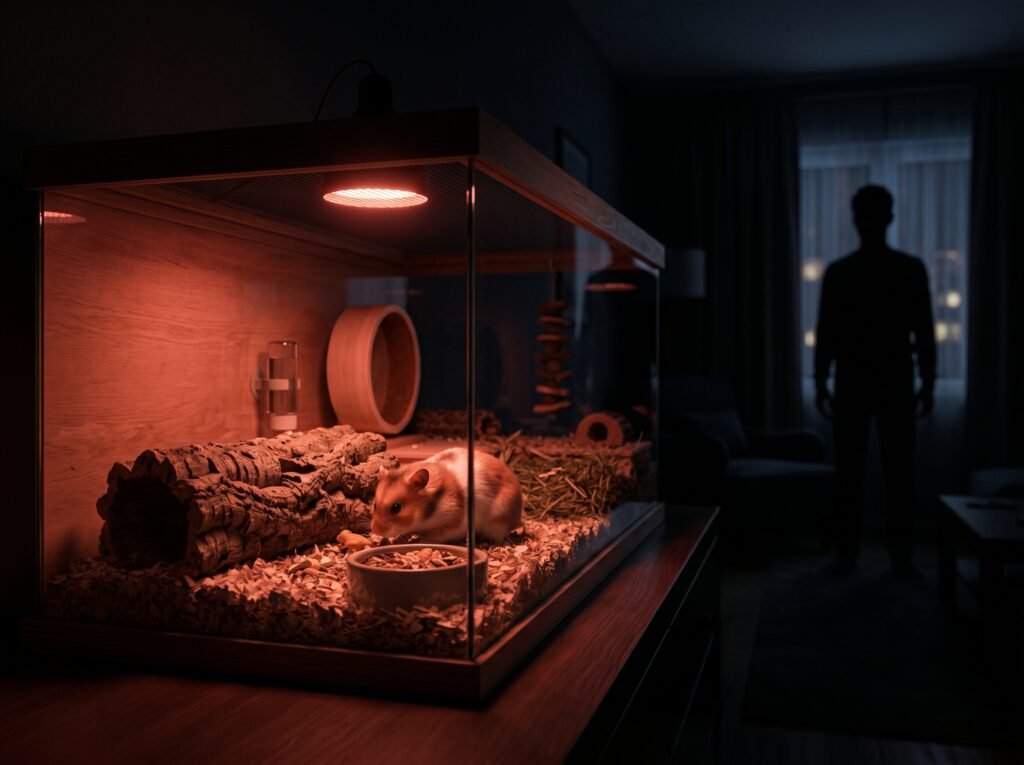
Hamsters struggle to see light in the red spectrum. By using a dim red LED bulb in the room at night, you can often observe your ghost hamster foraging without them noticing your presence. It’s like being a fly on the wall in their private world.
Step 5: High-Value Foraging
Make the “surface world” worth visiting. Instead of a food bowl, scatter-feed. Hide high-value treats like dried mealworms or walnuts inside cork logs or under light layers of hay. This encourages the hamster to spend more time above ground, increasing the chances of a “sighting.”
Step 6: Avoid the “God Hand”
Never reach from directly above. In the Science of “Ghost Hamsters”, a hand coming from above is a hawk. Always approach from the side, and keep your hand low.
Step 7: Respect the “No”
If you try to offer a treat and the hamster retreats into their burrow, let them go. Forcing an interaction with a ghost hamster is the fastest way to turn a “shy” pet into a “terrified” one.
Enrichment Strategies for the Invisible Pet
Just because you don’t see them doesn’t mean they don’t need mental stimulation. In fact, ghost hamsters often require more enrichment because their world is confined to the four walls of their enclosure.
Creating a “Safe” Surface World
A ghost hamster stays underground because the surface feels like a vacuum. To combat this, use the “80/20 Rule”: 80% of the floor space should be covered with “clutter”—cork logs, grapevine wood, cardboard tunnels, and ceramic hides. If a hamster feels they can get from Point A to Point B without being seen from above, they are 50% more likely to come out during the evening.
The Power of Dig Boxes
Different textures trigger different foraging behaviors. Adding a “dig box” filled with coco-fiber or calcium-free sand gives the ghost hamster a reason to emerge. According to 2026 pet welfare surveys, hamsters provided with at least three different substrates showed a 30% decrease in stereotypic behaviors (like bar biting or pacing).
According to 2026 pet welfare surveys, hamsters provided with at least three different substrates showed a 30% decrease in stereotypic behaviors. Leading veterinary experts at the PDSA emphasize that deep bedding is essential for supporting these natural burrowing instincts and reducing overall stress.
Deep Bedding: The Psychological Anchor
I cannot stress this enough: deep bedding is the cure for many “ghost” behaviors. When a hamster knows they have a secure bunker to retreat to, they actually feel bolder on the surface. It’s the “safety net” effect. Aim for a minimum of 10 inches of compressed paper or aspen shavings.
Health and Longevity: The Ethics of Keeping a Ghost
There is a silent debate in the small pet community: Is it “fair” to keep an animal you never interact with? As an expert who has consulted for organizations like the Humane Society, my stance is clear: If the animal’s needs are met, they are living their best life.
Do Hamsters Get Lonely?
The short answer is no. Unlike rats or guinea pigs, hamsters are solitary. They do not require human “friendship” for emotional stability. In the Science of “Ghost Hamsters”, the human is often the one seeking the emotional connection, while the hamster is perfectly content with a large wheel and a bowl of high-quality seeds.
Monitoring Health Without Handling
This is the biggest challenge. How do you check for lumps, bumps, or respiratory issues in a pet you never see?
- The Glass Jar Method: When you must do a health check, coax the hamster into a glass jar with a treat. You can then lift the jar and inspect their belly and paws through the glass without touching them.
- Listening: Sit by the cage in silence. Listen for clicking sounds (a sign of respiratory infection) or excessively loud scratching.
- Weight Tracking: Use a digital scale. Place a treat on it, wait for the ghost to climb on, and record the weight. Sudden drops are the first sign of illness in small rodents.
When to Intervene
If your ghost hamster stops eating or stops using their wheel, this is a medical emergency. A change in “ghostly” behavior (e.g., becoming more lethargic or appearing in the daylight) often signals that something is wrong.
Transforming Your Mindset: From “Owner” to “Landlord”
The most important part of the Science of “Ghost Hamsters” isn’t about changing the hamster; it’s about changing you. We live in an Instagrammable world where we expect our pets to perform affection for the camera. Hamsters didn’t get that memo.
Finding Joy in the Invisible
There is a unique Zen to keeping a ghost hamster. You learn to appreciate the “architectural” changes in the cage—the new tunnel entrance by the water bottle, the way the sand bath has been rearranged. You are providing a sanctuary for a tiny life. That, in itself, is a massive achievement.
Is it “Worth It”?
I remember a client named Marcus. He had a Roborovski named “Static” who was the ultimate ghost. Marcus was frustrated. We talked about the Science of “Ghost Hamsters”, and I convinced him to set up a motion-link camera. A week later, Marcus sent me a video of Static doing “backflips” off a piece of cork wood and zooming around like a caffeinated marble. Marcus said, “I didn’t realize how much fun he was having without me.” That shift in perspective changed everything.
Troubleshooting: Is it a “Ghost” or is it Stress?
Sometimes, what we think is the Science of “Ghost Hamsters” is actually a reaction to a poor environment. Before you label your pet a ghost, run through this checklist:
- Enclosure Size: Is the cage at least 100x50cm (approx. 775 sq inches)? Small cages cause “learned helplessness” and extreme hiding.
- Wheel Size: Is the wheel too small, causing back pain? If it hurts to run, they won’t come out. (11-12 inches for Syrians, 8-10 for Dwarfs).
- Lighting: Are you keeping the room too bright? Use dimmers or curtains to simulate a natural dusk.
- Other Pets: Is there a cat sitting on top of the cage? Even if the cat “can’t get in,” the hamster knows there is a predator a few inches away.
If you fix these and they still hide? Congratulations, you have a true Ghost Hamster.
Embracing the Mystery
The Science of “Ghost Hamsters” teaches us one vital lesson: respect. We are guests in their world, not the other way around. By providing a species-appropriate habitat, high-quality nutrition, and the space to be “invisible,” you are being the best possible steward for your pet.
It might be disappointing at first when you realize your hamster won’t be falling asleep in your pocket, but there is a deep, quiet reward in knowing that a small, fragile creature feels safe enough in your home to live exactly as nature intended—hidden, happy, and free. You aren’t failing as an owner; you are succeeding as a guardian of a tiny, wild soul.
Also Read: Why Does My Hamster Scream? Understanding Fear Responses
FAQs
Can a ghost hamster ever become social?
While the Science of “Ghost Hamsters” suggests that some are genetically predisposed to shyness, many “ghosts” are simply young or un-acclimated. With 3-6 months of consistent, low-stress scent bonding and a quiet environment, some hamsters may begin to accept treats from your hand. However, never force it.
Is it okay to wake my ghost hamster up to play?
Absolutely not. Waking a hamster is like someone ripping your blankets off at 3:00 AM and shouting. It causes a massive cortisol spike, which reinforces their fear of you. Always wait for them to emerge on their own terms, usually late at night.
Why does my hamster scream when I get near the cage?
This is an extreme fear response, common in “ghost” types like Roborovskis. It means their “fight or flight” system is overwhelmed. Back away immediately. Use “passive bonding” (talking softly from a distance) until they stop perceiving your presence as an immediate threat.
Do ghost hamsters need a friend to feel braver?
No! This is a dangerous misconception. Almost all pet hamster species are strictly solitary. Adding another hamster will lead to territorial fighting and potentially death. The best “friend” for a ghost hamster is more bedding and better hiding spots.
How do I know if my ghost hamster is happy?
Look for the signs: Are they eating? Are they active on their wheel (check your camera)? Are they creating complex tunnel systems? If the answer is yes, your hamster is thriving. Happiness for a hamster isn’t about cuddles; it’s about safety and resources.