Why Hamsters Need Sand Baths: A Complete Guide
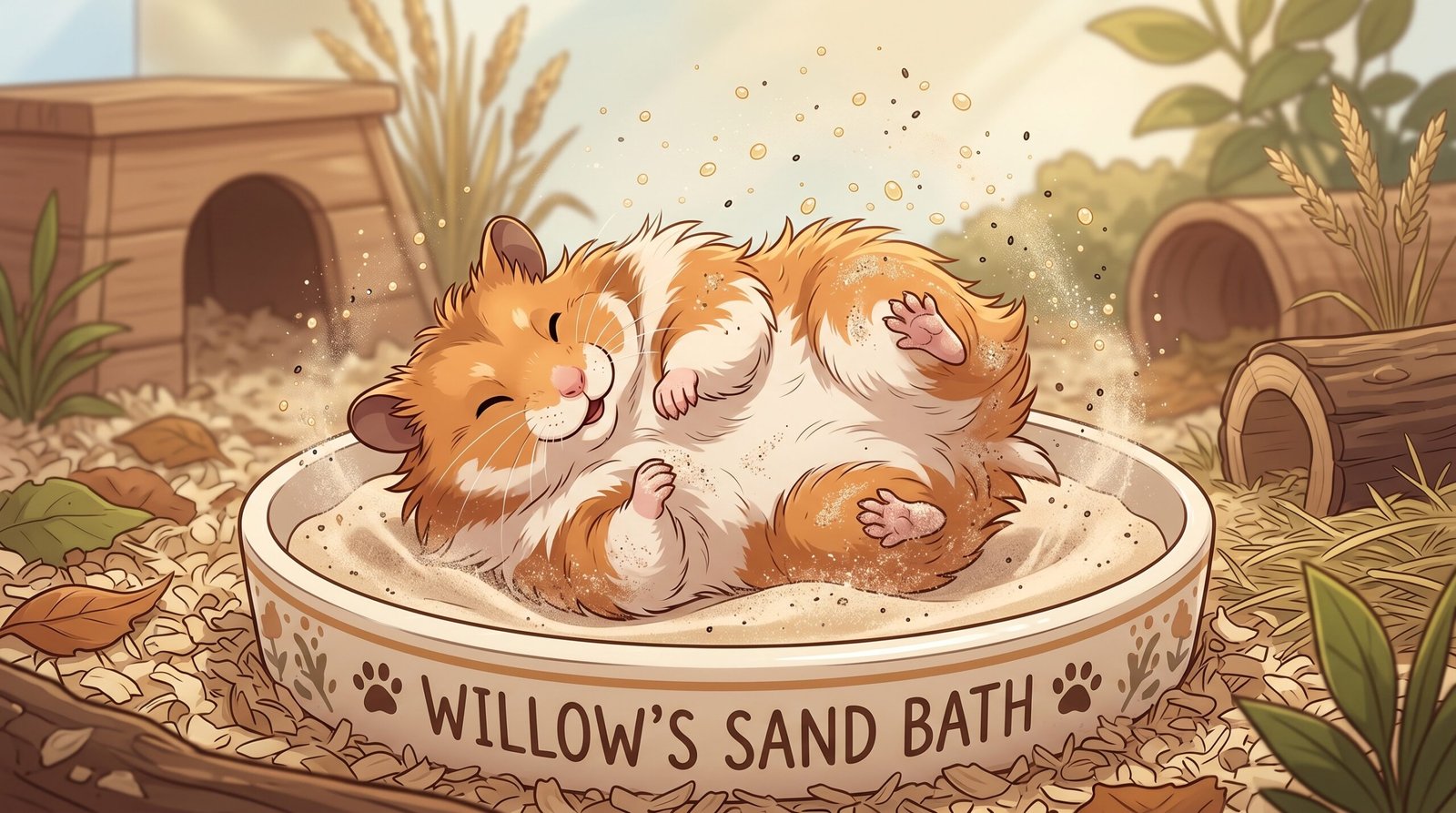
Table of Contents
Imagine coming home after a long, exhausting day, looking forward to a refreshing shower, only to find that your bathroom has been completely sealed off. You are sticky, your hair is greasy, and your skin feels incredibly uncomfortable. That is exactly how your pocket pet feels when they are deprived of their natural grooming rituals. For a tiny rodent, a specialized grooming area isn’t a luxury item or an optional cage accessory. It is a fundamental requirement for their physical health and mental well-being.
But why hamsters need sand baths is a question that many new pet owners ask when they first set up a habitat. If you have ever watched a Roborovski hamster dive face-first into a dish of clean sand, spinning and rolling around with pure joy, you already know how much they love it. However, this behavior isn’t just adorable entertainment for us; it serves a vital biological purpose. In the wild, these desert-dwelling rodents use arid terrain to keep their coats pristine.
In this comprehensive guide, we will dive deep into the science of rodent grooming, explore how a dedicated digging station prevents painful skin conditions, and provide a step-by-step blueprint for choosing safe substrates. Whether you care for a tiny Campbell’s dwarf hamster, a long-haired Syrian hamster, or a delicate Winter White, understanding their instinctual behaviors will transform your husbandry practices. Let’s look at the fascinating reasons behind this essential care requirement.
Why Hamsters Need Sand Baths
To truly understand your pet’s modern behavior, we have to look closely at their wild ancestry. Our domesticated furry companions originate from arid, semi-desert regions of Syria, Mongolia, and northern China. In these harsh geographic landscapes, water is an incredibly scarce resource. If a wild rodent attempted to wash its fur in water, it would face immediate, life-threatening danger.
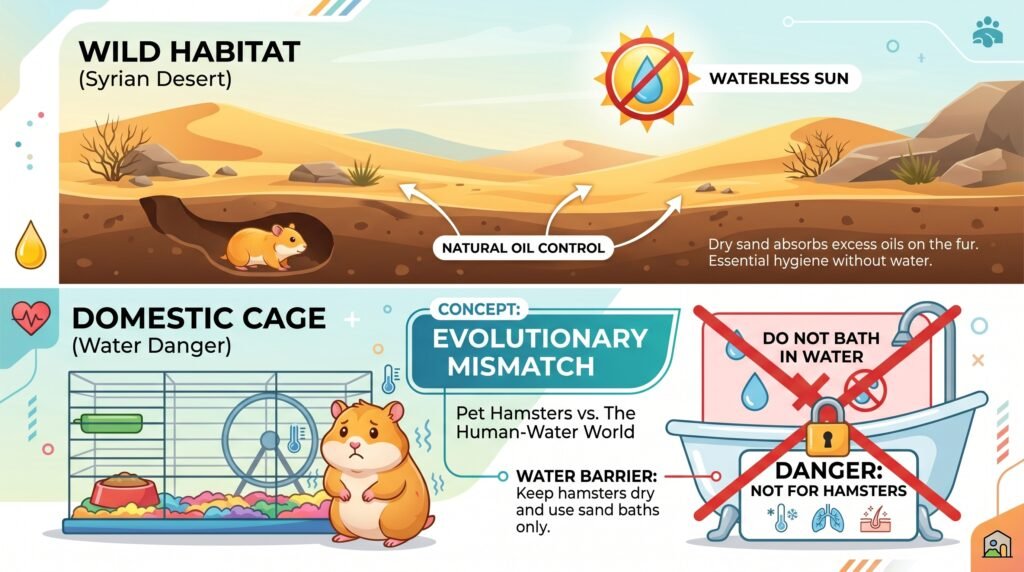
Because their native environments lack moisture, these intelligent animals naturally evolved to use dry earth and fine substrate to maintain their personal hygiene. When a rodent rolls in dry grains, the microscopic particles work as a natural abrasive, gently pulling away debris. For a deep look into how these desert adaptations impact modern husbandry, check out our Comprehensive Guide to Syrian Hamster Habitats.
The Perils of Water Baths for Desert Rodents
Real talk: Never, under any circumstances, should you give your small pet a traditional water bath unless specifically directed by an exotic veterinarian for a medical emergency. Submerging a desert rodent in water strips away the essential natural oils that insulate their delicate bodies.
Furthermore, their dense fur retains moisture for a remarkably long time. A wet rodent can easily experience a rapid drop in core body temperature, leading to severe respiratory infections, hypothermia, or extreme shock. A dry grooming station provides a completely risk-free alternative that fulfills their biological drives safely.
How Microscopic Grains Protect the Fur Coat
The mechanics of sand rolling are beautifully efficient. A hamster’s skin constantly produces sebum, a natural lipid layer that keeps their skin supple and protects against environmental pathogens. However, in a captive environment, this sebum can easily build up, trapping loose hairs, shed skin flakes, and cage dust.
When your pet vigorously rolls in a high-quality digging dish, the individual grains absorb excess surface lipids. This friction lifts away dirt without irritating the epidermis beneath. It is nature’s perfect dry shampoo, meticulously refined over millions of years of evolutionary history.
Why Hamsters Need Sand Baths for Oil Control
Every mammalian skin surface relies on sebaceous glands to maintain a healthy barrier. However, different species require vastly different levels of lipid production. Dwarf varieties, including the highly active Roborovski and the hybrid Winter White, possess incredibly active sebaceous glands relative to their tiny body mass.
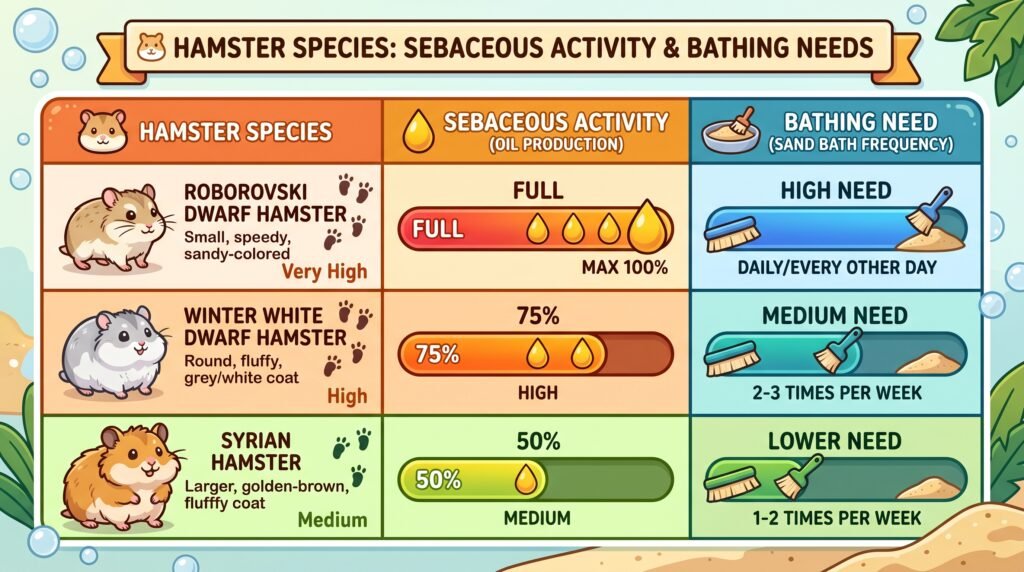
Without a reliable dry cleaning station, these natural oils quickly accumulate, causing the delicate fur coat to separate into wet, stringy clumps. This condition is more than just a cosmetic issue; it represents a significant breakdown in their primary thermal defense mechanism.
| Hamster Species | Sebaceous Activity Level | Recommended Bath Frequency |
| Roborovski Dwarf | Extremely High | Permanent Access Required |
| Campbell’s Dwarf | High | Permanent Access Required |
| Winter White Dwarf | High | Permanent Access Required |
| Syrian (Standard) | Medium | 3–4 Times per Week Min. |
| Chinese Hamster | Medium | Permanent Access Required |
The Role of the Scent Glands
Have you ever noticed your pet rubbing its flanks or its lower abdomen against the corners of its enclosure? They aren’t just itchy; they are actively marking their territory using specialized scent glands. In Syrian hamsters, these glands look like small, bilateral dark patches on the hips. In dwarf varieties, a singular gland sits prominently near the navel.
During these marking sessions, these specific anatomical zones secrete a thick, pungent fluid. If this secretion isn’t regularly cleared away by abrasive digging material, the gland openings can become completely impacted with hardened sebum, leading to painful localized inflammation and secondary bacterial infections.
Preventing Fur Matting and Skin Moisture Retention
When sebum buildup goes unchecked, the fur loses its natural fluffiness and starts matting closely against the body. This matted fur easily traps trace amounts of moisture from spilled water bottles or condensation inside plastic hideouts.
This trapped moisture creates an ideal breeding ground for opportunistic dermatophytes and fungal spores. By providing a clean, dry substrate area, you allow your pet to comb through its fur daily. This keeps the individual shafts perfectly separated and ensures that air can circulate all the way down to the skin surface.
Stress Relief and Environmental Enrichment
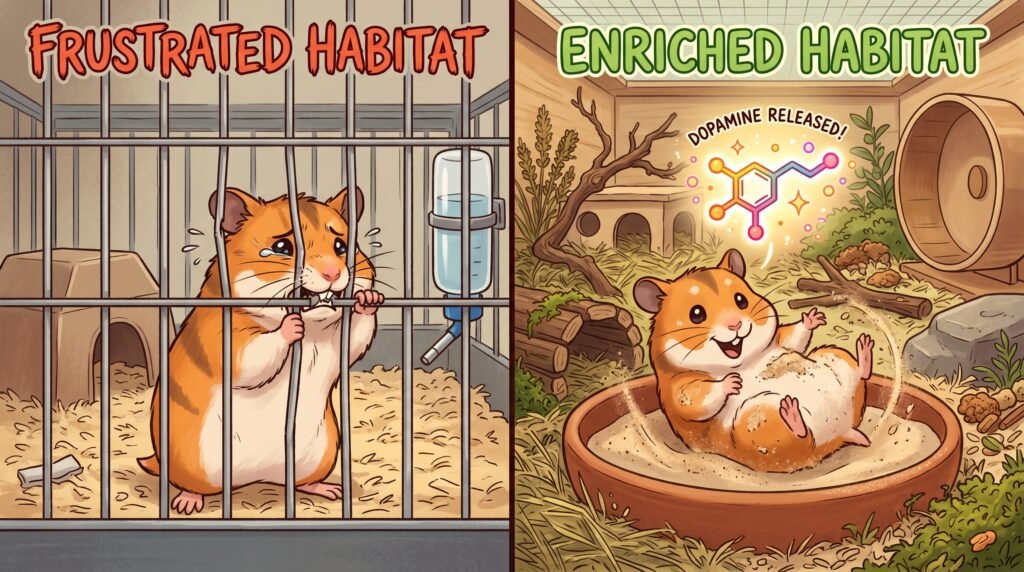
In my many years of studying exotic rodent behavior and consulting with veterinary behaviorists, I have found that boredom is one of the most common causes of stereotypic behaviors in captivity. When a small animal lacks cognitive stimulation, it often turns to destructive habits like bar biting, obsessive cage pacing, or over-grooming its own limbs.
A dedicated digging area acts as an excellent therapeutic outlet for these frustrated instinctual energies. It provides immediate sensory stimulation that engages their minds and satisfies their deep-seated urge to explore underground terrains.
Satisfying the Primal Urge to Dig
Imagine this: In their wild geographical ranges, these small animals excavate intricate, multi-chambered burrow systems that can extend several feet beneath the hard desert crust. The urge to displace substrate, tunnel, and dig is deeply hardwired into their DNA.
A deep dish filled with heavy, textured grains gives them a safe place to satisfy this primal urge inside a home enclosure. Watch them push the material around with their front paws and kick it backward with their hind legs; this rhythmic movement releases endorphins that drastically reduce captive stress levels.
A Case Study in Pocket Pet Enrichment
Let’s look at a real-world example from my consulting work. Meet Bella, a lovely winter white dwarf hamster owned by an anxious keeper named Marcus. Marcus noticed that Bella was constantly biting her wire cage bars every night, creating a loud noise and risking severe dental fractures to her incisors. Her belly fur was looking increasingly greasy and unkempt.
We added a large, shallow ceramic dish filled with heat-treated, premium digging material to her habitat. The change was almost immediate. Within forty-eight hours, Bella shifted her focus from the metal bars to her new digging station, spending hours rolling, sifting, and excavating. Her stress levels plummeted, her bar-biting behavior stopped entirely, and her fur regained its beautiful, velvety texture.
Preventing Dermatological Issues
Beyond coat aesthetics and behavioral enrichment, maintaining a clean grooming station serves as a crucial defensive barrier against several painful veterinary conditions. Ectoparasites, such as Demodex criceti and Demodex aurati mites, exist naturally in microscopic numbers within the hair follicles of healthy rodents.
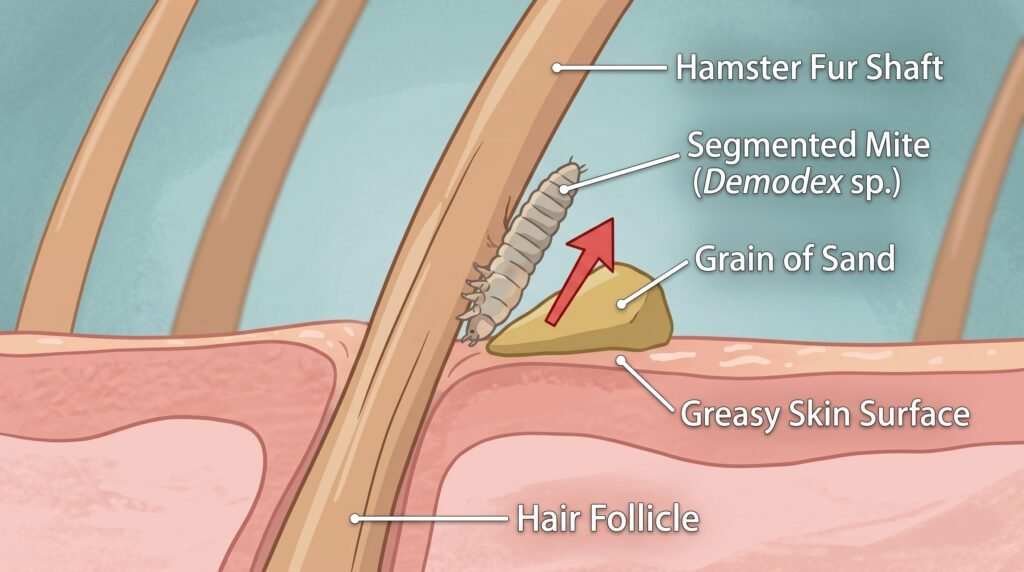
However, these parasites quickly multiply when an animal becomes stressed or greasy. The mechanical action of rolling in dry particles regularly dislodges these microscopic pests, preventing full-blown infestations. For additional insights on maintaining overall rodent wellness, read our guide on Recognizing Early Signs of Hamster Illness.
The Danger of Microbial Overgrowth
When a habitat lacks a proper abrasive dry zone, the combination of skin oils, shed skin scales, and ambient humidity forms an organic layer over the epidermis. This mixture becomes a welcoming environment for dangerous bacteria like Staphylococcus aureus.
Once bacteria colonize these delicate skin folds, your pet can easily develop ulcerative dermatitis—a painful condition marked by red, raw, bleeding sores that require systemic antibiotics from an exotic animal veterinarian. A dry grooming area prevents this buildup, keeping the skin flora balanced and healthy.
Protecting Sensitive Paws from Pododermatitis
Pododermatitis, commonly known as bumblefoot, is a painful condition characterized by chronic inflammation and deep ulcerative sores on the soft pads of a rodent’s paws. It is frequently caused by walking continuously on rough, damp, or soiled bedding.
A well-maintained dry station offers a unique, firm, yet forgiving texture that gently massages the plantar surfaces of their paws. Walking across this clean material helps callouse their small feet safely, while the natural dryness keeps the tissue free from the harmful bacteria that cause bumblefoot.
Choosing Safe and Non-Toxic Substrates
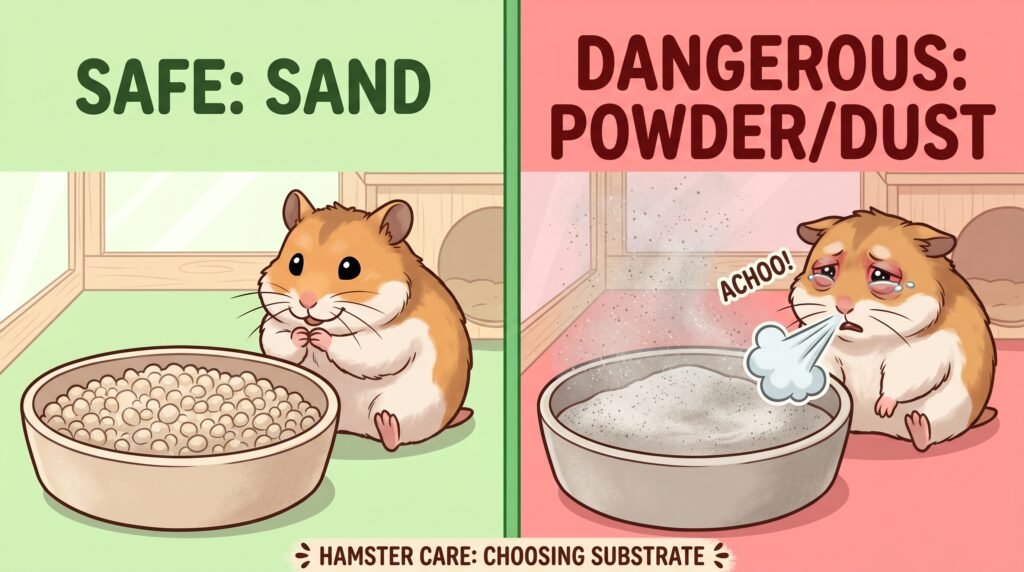
Now that we have covered the science behind why hamsters need sand baths, we must address a critical safety topic: choosing the right material. Not all commercial small animal substrates are created equal. In fact, many products commonly found on pet shop shelves can be incredibly dangerous to your pet’s delicate respiratory system.
As a dedicated owner, you must know exactly how to read ingredient labels and avoid hazardous materials. To learn more about setting up a safe overall environment, refer to our Essential Checklist for New Hamster Owners.
The Hidden Dangers of Quartz Dust and Chinchilla Powders
The absolute golden rule of rodent grooming materials is this: Never buy anything labeled as “dust” or “powder.” Many commercial products marketed for chinchillas consist of finely pulverized, airborne quartz dust or volcanic ash.
While a chinchilla’s unique fur structure can handle these micro-particles, a hamster’s respiratory tract cannot. When they kick up this fine dust, they inhale the tiny particles deep into their lungs. This can cause severe irritation, trigger chronic respiratory infections, and even lead to incurable lung scarring. Always choose a product with a coarse, consistent grain size that settles quickly when disturbed.
Evaluating Commercial Grooming Materials
When shopping for the perfect substrate, look for natural, additive-free products. Excellent choices include natural desert sands, additive-free reptile sands (without any added calcium or vitamins), and thoroughly washed play sand.
Avoid any products containing dyes, chemical fragrances, or calcium carbonate, as these additives can be toxic if accidentally ingested during grooming sessions.
Step-by-Step Guide to Baking and Sterilizing Play Sand
If you want to save money while providing a top-tier grooming experience, buying a standard bag of children’s play sand from your local home improvement store is a fantastic option. However, because it is stored in open warehouses, you must sterilize it at home first to eliminate any wild pathogens or dampness. Follow these steps to prepare it safely:
- Sift the Material: Pour the raw sand through a fine mesh kitchen strainer into a large bucket to remove any large pebbles, twigs, or debris.
- Spread Evenly: Line a large, rimmed metal baking sheet with aluminum foil and spread the sifted sand in a flat layer about one inch deep.
- Bake thoroughly: Preheat your kitchen oven to 200°C ($392^\circ\text{F}$). Place the baking sheet inside and bake for a full 30 to 45 minutes to destroy all bacteria, mold spores, and parasites.
- Cool Completely: Remove the sheet from the oven and let it sit at room temperature until it is completely cool to the touch. Never place warm substrate into your pet’s enclosure.
- Storage: Pour the sterilized, dry material into a clean, airtight plastic container for future use.
Designing the Ultimate Bathing Station
Designing an effective grooming area involves finding the right balance between functionality, accessibility, and cage design. It should be a dedicated zone within the habitat where your pet feels secure enough to let its guard down and enjoy a thorough roll.
The placement, container type, and overall depth of the container all play a key role in how clean and usable the space stays over time.
Container Selection: Finding the Right Match
When choosing a container, skip the flimsy plastic dishes sold in big-box stores. Hamsters are enthusiastic chewers; they can quickly break down soft plastic edges into sharp shards that risk causing internal blockages if swallowed. Instead, choose sturdy, heavy containers made from non-porous materials like ceramic, thick glass, or stainless steel.
A heavy ceramic pie dish, a glass baking casserole pan, or a repurposed candy jar tipped on its side all make fantastic, tip-proof grooming stations. The container should be large enough for your pet to turn around and roll comfortably without hitting the sides.
Determining the Ideal Substrate Depth
The amount of material your pet needs depends on its specific species. For larger Syrian hamsters, aim for a substrate depth of at least 1 to 1.5 inches. This depth gives them plenty of material to roll in without scraping their backs on the bottom of the pan.
For smaller, high-energy dwarf varieties like Roborovskis, increase the depth to 2 or 3 inches. These smaller species love to tunnel and sift through the grains, so providing a deeper layer encourages their natural digging behaviors.
Smart Placement in Your Habitat Design
Always place your heavy grooming dish on a solid, stable surface, such as a built-in wooden platform or directly on the solid floor of the enclosure. Never place a heavy ceramic or glass dish on top of loose, deep paper bedding.
As your pet burrows underneath the bedding, the heavy dish can easily shift and collapse downward, which risks trapping and injuring your pet. Keeping the station away from water bottles also helps prevent the dry material from turning into a damp, clumpy mess.
Also Read: How Deep Bedding for Hamsters Should Be
Keeping the Grooming Area Pristine
A clean grooming station is essential for your pet’s health, but it does require regular upkeep. Many hamsters will naturally decide that their new sand station also makes an excellent litter box.
While this can make spot-cleaning the rest of the cage much easier, it does mean you need to pay close attention to the cleanliness of the grooming area to prevent ammonia buildup.
Daily Spot-Cleaning Strategies
Make it a habit to check the grooming container every morning during your daily routine. Use a small plastic mesh reptile scoop or a slotted kitchen spoon to sift through the material, lifting out any clumped wet spots, stray droppings, or buried food hoards.
If your pet loves to snack while they bathe, be sure to remove any fresh, perishable foods they might have buried beneath the surface to prevent mold from developing.
Weekly Deep-Cleaning Protocols
At least once a week, empty the container completely and give it a thorough clean. Wash the container with hot, soapy water or a pet-safe, fragrance-free disinfectant.
Let the dish dry completely before refilling it with fresh, sterilized substrate. If the material looks clean and dry during your weekly check, you can run it through a fine kitchen sifter to remove small debris and reuse it, helping to stretch your supplies further.
Investing in Your Pet’s Long-Term Health
At the end of the day, providing a proper grooming station is one of the most impactful choices you can make for your pocket pet’s quality of life. It bridges the gap between their life in captivity and the deeply ingrained instincts passed down from their wild ancestors. By offering a safe, dry, and abrasive area to dig and roll, you are supporting their skin health, keeping their fur beautifully clean, and giving them a wonderful mental outlet for stress.
Watching your furry companion enjoy a sand bath is one of the true joys of being a pet owner. It is a simple, cost-effective addition to their habitat that provides incredible benefits for their physical and mental well-being. Take the time to select safe, dust-free materials, set up a stable container, and keep it clean. Your pet will thank you with a glossy, healthy coat, active behavior, and a happy, enriched life.
FAQs
Can I use beach sand for my hamster’s sand bath?
No, avoiding unrefined beach sand is highly recommended. Raw beach sand often contains microscopic parasite eggs, sharp shell fragments, harmful chemical pollutants, and high levels of residual sea salt that can irritate your pet’s skin. Stick to deeply washed, oven-sterilized children’s play sand or specifically designated commercial desert substrates.
Why is my hamster sleeping inside their sand bath container?
Sleeping in the sand container is a very common behavior, especially during the warmer summer months. Cool ceramic or glass dishes combined with dry sand grains provide an excellent way for your pet to regulate their body temperature. However, ensure they aren’t sleeping in a soiled corner to prevent urine scalding.
How often should I replace the sand inside the enclosure?
You should spot-scoop soiled areas daily to remove waste. The entire container should be completely emptied, sanitized, and refilled with fresh, clean material once a week. If your pet uses the area strictly for grooming rather than as a litter box, you can extend full replacements to once every two weeks.
Is chinchilla dust safe if it is sold in pet stores?
No, commercial chinchilla dust is highly hazardous for hamsters. Chinchilla dust is intentionally pulverized into an incredibly fine, airborne powder to penetrate a chinchilla’s unique fur density. When used by a hamster, this fine dust enters their sensitive respiratory tract, causing severe irritation and dangerous inflammation.
Why does my hamster keep eating the sand?
Pouching a few grains while exploring is normal, but actively eating substrate often points to a nutritional deficiency or boredom. Ensure you are feeding a high-quality, varied seed mix with adequate protein. If the behavior continues, switch to a larger grain size or consult an exotic veterinarian.