The Genetics of Hamster Colors: A Best Beginner’s Overview
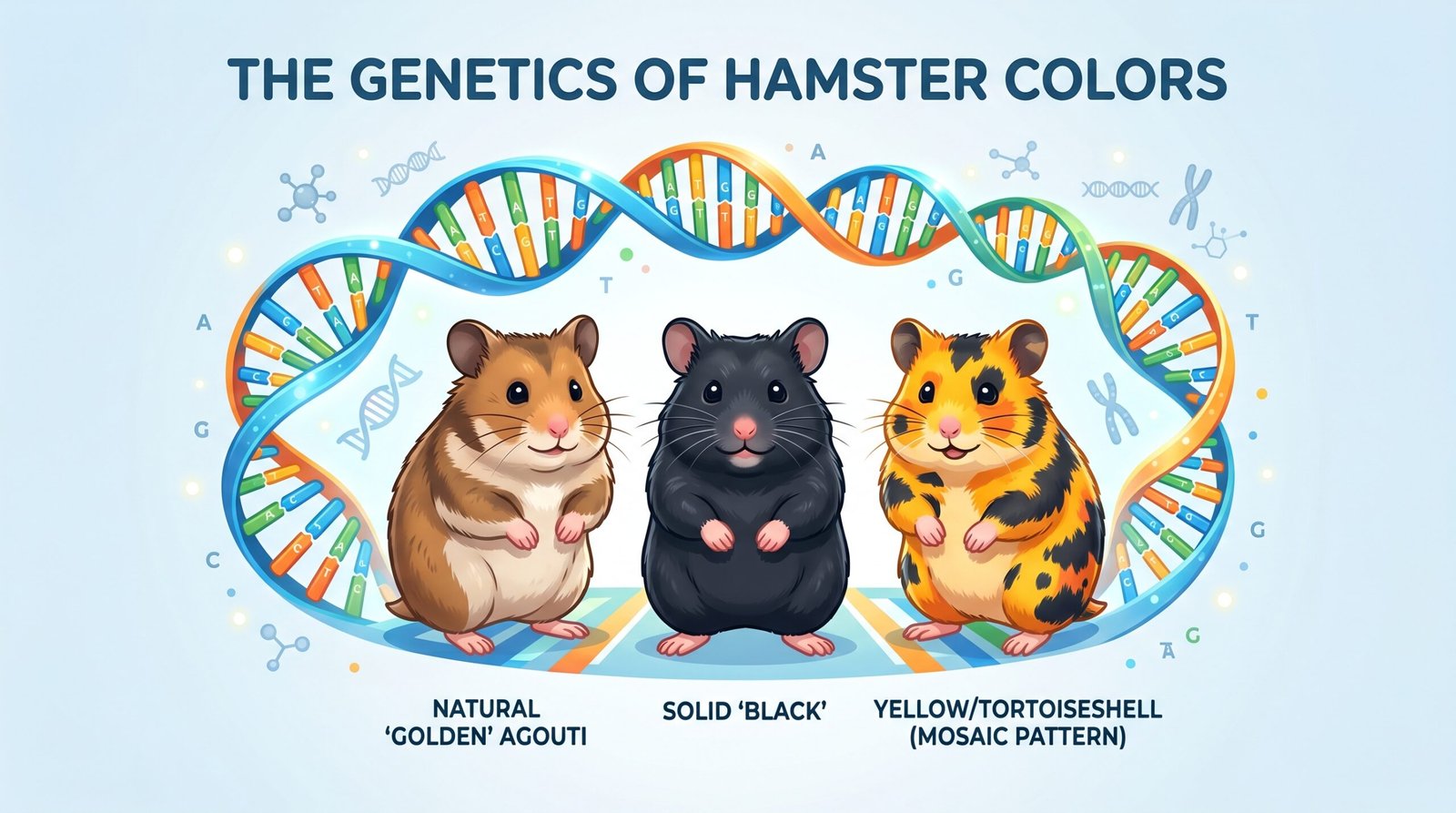
Table of Contents
Imagine walking into a boutique pet store and seeing a row of Syrian hamsters. One is a deep, velvety mahogany, another looks like a tiny cloud of cream, and a third sports a complex “tortoiseshell” pattern. Have you ever wondered why two golden-brown parents might suddenly produce a litter of smoky grey pups? It isn’t magic; it’s a beautiful, complex dance of biological coding. Understanding the genetics of hamster colors is more than just an academic exercise—it’s the key to becoming a more responsible owner, a savvy hobbyist, or even a specialized breeder. In my two decades of working with these pocket-sized wonders, I’ve found that mastering color genetics transforms how you see your pets. It’s like learning to read a secret language written in their fur.
In this deep dive, we’re going to pull back the curtain on the DNA that dictates whether your hamster is Cinnamon, Melano, or Silver Grey. We will bridge the gap between heavy laboratory data and the practical joy of holding a unique pet. Whether you are curious about why “Black” is a recessive trait or how “Lethal Greys” work, this guide covers it all with the most up-to-date information from the 2025-2026 pet care standards.
Why Understanding the Genetics of Hamster Colors Matters
When most people start their journey into the world of small mammals, they choose a pet based on personality or “cuteness.” However, knowing the basics of the genetics of hamster colors can actually save lives. For instance, certain color genes are linked to physical health issues, such as the “Anophthalmic” (eyeless) gene associated with White hamsters.
The Science of Melanin and Pigment
At its core, every hamster’s color is a result of how two types of melanin—eumelanin (black/brown) and phaeomelanin (red/yellow)—interact. Genetic mutations act like “switches” that turn these pigments on, off, or dilute them.
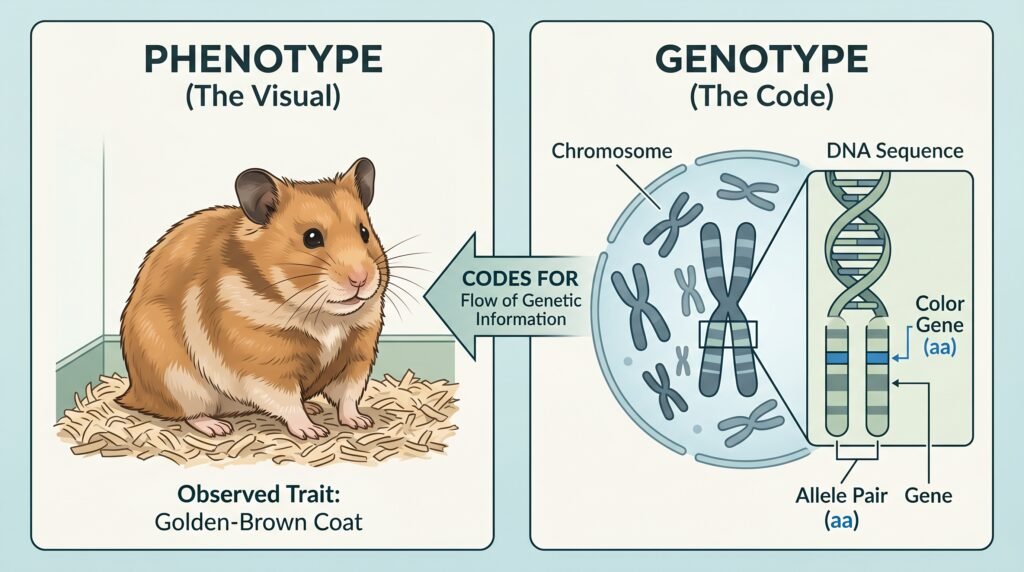
- Locus Points: Think of these as specific “addresses” on a chromosome where a gene lives.
- Alleles: Different versions of the gene at that address (e.g., one for “Normal” and one for “Black”).
How Phenotype vs. Genotype Affects Your Pet
Your hamster’s phenotype is what you see (a Golden hamster). Their genotype is the hidden genetic code they carry. In my years of consulting for top-tier ethical breeders, I’ve seen countless “surprises” in litters because the owners didn’t realize their Golden hamster carried a hidden “Black” gene. This is why a beginner’s overview is essential: it helps you predict what’s under the hood.
The 3 Pillars of The Genetics of Hamster Colors: A Beginner’s Overview
To understand how a hamster gets its coat, we need to look at the three primary ways genes behave: Dominant, Recessive, and Sex-Linked.
Dominant Genes (The “Loud” Genes)
Dominant genes only need one parent to pass them down for the color to show up in the pup. A classic example is Silver Grey (Sg). If a hamster has even one “Sg” gene, it will look grey instead of the wild-type golden.
Recessive Genes (The “Shy” Genes)
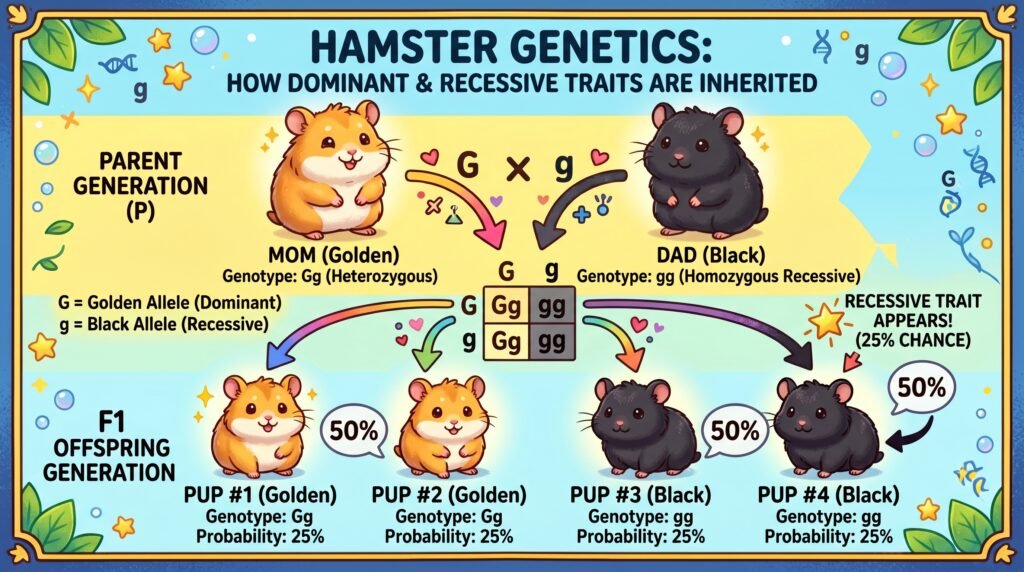
These are the most common in the hamster world. A hamster must inherit the gene from both parents to display the color. Black (aa) is the most famous recessive gene. If a hamster only gets one “a” gene, it looks Golden but is a “carrier” for Black.
Sex-Linked Traits (The “Special” Genes)
Specifically found in the Syrian hamster, the Yellow (To) gene is linked to the X chromosome. This leads to the famous Tortoiseshell pattern, which—due to how chromosomes work—is almost exclusively found in females.
Dominant Mutations: Breaking Down the Silver and Umbrella Effects
In any beginner’s overview of hamster color genetics, dominant traits are the easiest to spot but often the most misunderstood. Let’s look at the heavy hitters.
The Silver Grey (Sg) Factor
Silver Grey is a dominant mutation that essentially “washes out” the yellow/orange pigment from the hamster’s fur.
- Heterozygous (Sg/sg): These hamsters often have a “dingy” or creamy-grey look with distinct cheek flashes.
- Homozygous (Sg/Sg): These are a beautiful, clear, icy silver.
The Umbrous (U) Gene
The Umbrous gene doesn’t create a new color; it adds a “sooty” overlay to existing colors. It’s like putting a grey filter over a photo. A Golden hamster with the Umbrous gene becomes a “Sable” or “Mink” depending on other underlying genes.
Real Talk: If you see a hamster that looks like it’s wearing a dark veil over its back, you’re looking at the Umbrous gene in action. It’s one of the most versatile tools for breeders looking to create depth in coat color.
Recessive Mutations: The Hidden World of Black, Cinnamon, and Cream
Recessive traits are where the real variety lies in the genetics of hamster colors: a beginner’s overview. Because these genes can hide for generations, they provide the most excitement for hobbyists.
The Black Gene (aa)
The Black gene (non-agouti) is the foundation for many complex colors. On its own, it produces a solid black hamster, often with white paws or a white “bib” on the chest.
- Fun Fact: As Black hamsters age, they often “rust” or turn a brownish-red, similar to how human hair greys.
The Cinnamon Gene (pp)
Cinnamon is characterized by a rich, orange-red coat and—crucially—red eyes. While red eyes can be off-putting to some beginners, in the world of genetics, they are a sign of the “p” gene’s effect on melanin.
The Cream Gene (ee)
The Cream gene is one of the most popular. It creates a range of shades from ivory to deep apricot. It is “epistatic” to many other genes, meaning if a hamster is “ee” (Cream), it can hide other colors like Black or Cinnamon underneath its coat.
| Gene Symbol | Common Name | Visual Result | Eye Color |
| aa | Black | Solid black coat | Black |
| pp | Cinnamon | Orange/Ginger coat | Red |
| ee | Cream | Cream/Apricot coat | Black |
| dgdg | Dark Grey | Smokey grey coat | Black |
Sex-Linked Coloration: The Mystery of the Tortoiseshell
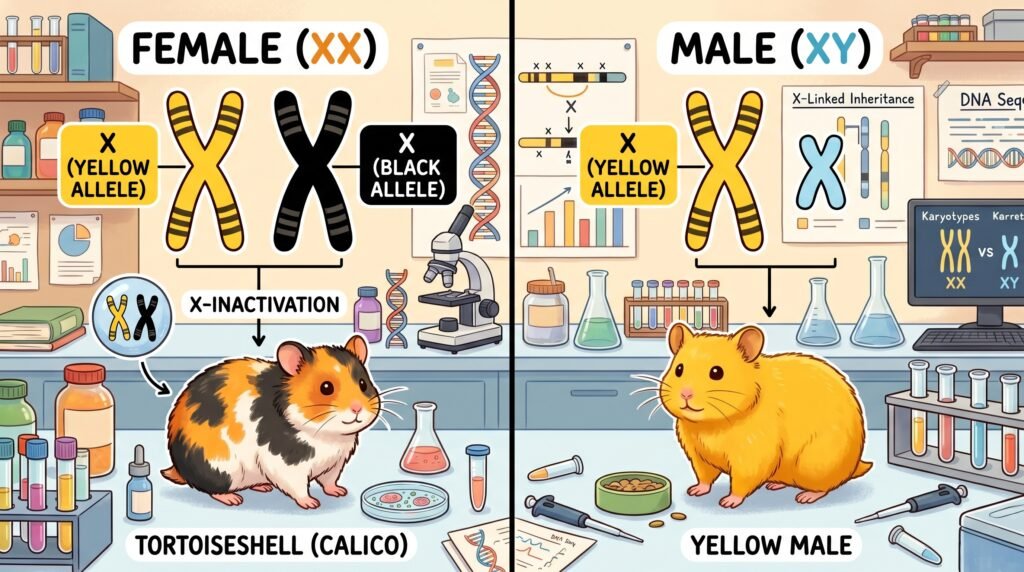
This is perhaps the most fascinating part of the genetics of hamster colors: a beginner’s overview. In Syrian hamsters, the Yellow gene (To) is carried on the X chromosome.
Why Are Only Females Tortoiseshell?
Females have two X chromosomes (XX), while males have one X and one Y (XY).
- If a female has one “Yellow” X and one “Non-Yellow” X, her body randomly switches off one X in different patches of skin. This creates the black and yellow “mosaic” known as Tortoiseshell.
- Because a male only has one X, he is either Yellow or he isn’t. He cannot be both at the same time!
The “Yellow” Male
A male with the Yellow gene will be a solid, vibrant orange-yellow. He is often mistaken for a Cinnamon, but he will have black eyes and different “ticking” (the dark tips on the fur).
Combining Genes: How “Designer Colors” Are Created
Once you understand the individual genes, you can start to see how they stack. This is the “advanced” part of the genetics of hamster colors: a beginner’s overview.
The Dove Hamster (aa + pp)
When you combine the Black (aa) gene with the Cinnamon (pp) gene, you get a beautiful dove-grey color with red eyes. It’s a perfect example of how two different mutations interact to create a completely new phenotype.
The Blue Hamster (dd)
While rare in Syrians and more common in Dwarfs, the “Dilute” or Blue gene softens black pigment into a slate-blue/grey. In 2026, we are seeing a surge in “Blue” Syrian varieties in European show circuits, though they remain rare in North America.
7 Proven Steps to Identify Your Hamster’s Color Genetics
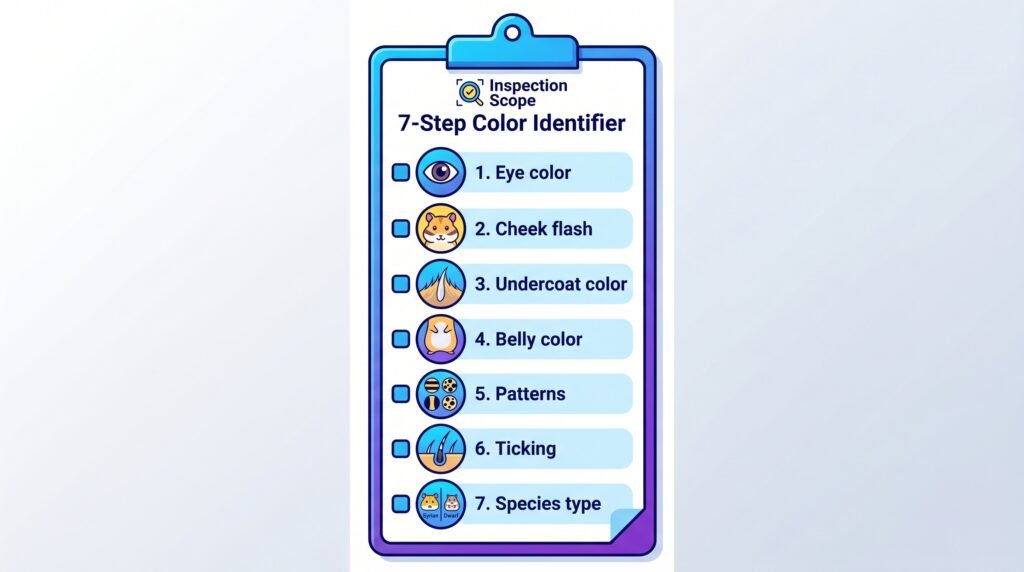
- Check the Eye Color: Are they black, red, or ruby?
- Look for Cheek Flashes: Agouti-based colors (like Golden or Cinnamon) have dark stripes on the cheeks. Solid colors (like Black or Cream) do not.
- Inspect the Undercoat: Part the fur. Is the base grey, white, or slate?
- Observe the Belly: Is it white, ivory, or the same color as the back?
- Identify Patterns: Does the hamster have spots (Dominant Spot), a white band (Banded), or a mosaic (Tortoiseshell)?
- Check for “Ticking”: Are the tips of the hairs a different color than the base?
- Consider the Species: Syrian genetics differ wildly from Winter White or Roborovski genetics.
Lethal Genes and Ethical Considerations in Hamster Breeding
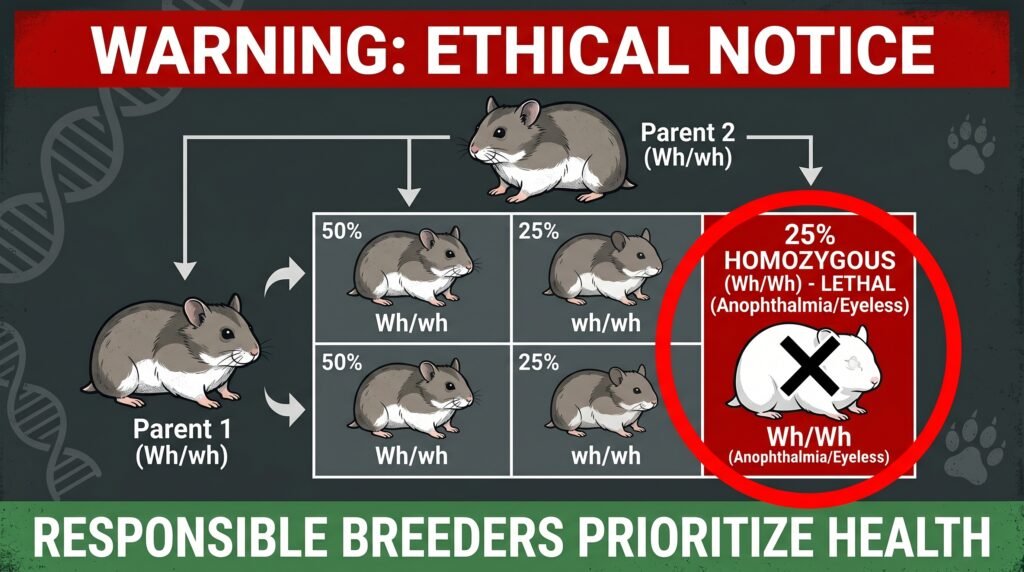
This is the most critical section of the genetics of hamster colors: a beginner’s overview. “Lethal genes” are gene combinations that result in death or severe deformity if paired incorrectly.
The White Bellied (Wh) Gene
The “Anophthalmic White” gene is a dominant trait. If two hamsters carrying this gene (even if they just look like they have a white belly or are “Roan” patterned) are bred together, 25% of the pups will be born without eyes, completely white, and often with internal organ failure. They rarely live past weaning.
The Grey Lethal Factor
In some strains of Silver Grey, breeding two “Sg/sg” hamsters can lead to smaller litter sizes because the “Sg/Sg” (homozygous) embryos are sometimes reabsorbed in the womb, though this is debated among modern 2026 geneticists.
Expert Tip: Never breed two “Banded” or “Dominant Spot” hamsters unless you are certain of their genetic lineage. When in doubt, prioritize the health of the animal over the beauty of the coat.
Genetics Across Species: Syrian vs. Dwarf Hamsters
While this beginner’s overview of hamster color genetics focuses heavily on Syrians (the most genetically diverse), we cannot ignore the Campbell’s Russian Blue or the Winter White.
Campbell’s Russian Dwarf Genetics
Campbell’s have a massive array of colors, including “Argente” (the dwarf version of Cinnamon) and “Mottled” (the dwarf version of Dominant Spot). Unlike Syrians, Campbell’s can often have “Platinum” genes which progressively whiten the coat as the hamster ages.
Winter White “Pearl” and “Sapphire”
Winter Whites have fewer color mutations. The “Pearl” gene is a pattern that leaves the hamster mostly white with colored hair tips. It is a dominant gene, and like the White Bellied gene in Syrians, breeding two Pearls can result in smaller litters due to a lethal homozygous effect.
Also Read: How to Accurately Sex Your Hamster: Male vs. Female
Insights into the Future: 2026 Genomic Trends in Pet Care
As we move through 2026, the hobby is shifting. According to recent data from the International Hamster Association, there is a growing movement toward “Health-First Genetics.”
The Rise of Genetic Testing
In the past, we guessed a hamster’s genotype based on its parents. Today, high-end ethical breeders are beginning to use simplified DNA kits to identify carriers of “hidden” recessive genes. This ensures that a “surprise” lethal pairing never happens.
Bridging the Gap: Human Experience and Data
I remember a client named Marcus. He wanted a “Chocolate” hamster—a rare combination of Black and Rust genes. By understanding the genetics of hamster colors: a beginner’s overview, Marcus was able to find a breeder who focused on the “bb” (Rust) locus. But more importantly, he learned that because the Chocolate variety often involves inbreeding to fix the trait, he needed to look for a breeder who prioritized heart health over the perfect shade of brown. This is where data meets the heart.
Becoming a Steward of Hamster Genetics
Understanding the genetics of hamster colors: a beginner’s overview is a journey that starts with a single pet and ends with a deep appreciation for the complexity of life. We’ve covered the dominant “shouters,” the recessive “hiders,” and the sex-linked mysteries of the Tortoiseshell. We’ve also touched on the sobering reality of lethal genes and the importance of ethical ownership.
Your hamster isn’t just a ball of fur; they are a living, breathing map of their ancestors’ DNA. By recognizing the patterns, eye colors, and coat types, you aren’t just a pet owner—you’re a citizen scientist. As you continue to explore the wonderful world of hamsters, keep these genetic keys in your pocket. They will unlock a much richer, safer, and more fascinating experience for both you and your tiny companion.
FAQs
Can two Golden hamsters have a Black pup?
Yes! If both parents are “carriers” (genotype Aa), there is a 25% chance for each pup to be Black (aa). This is a classic example of how recessive genes work in the genetics of hamster colors: a beginner’s overview.
Why does my Black hamster look brown now?
This is called “rusting.” It isn’t usually a genetic change, but an environmental or age-related one. High sunlight exposure or simply getting older can cause the black pigment (eumelanin) to break down, revealing a brownish hue.
What is the rarest hamster color?
In 2026, “Blue” and “True Chocolate” remain quite rare in many regions. However, rarity often depends on the local breeding community. “Dominant Spot Tortoiseshell” is also highly prized for its intricate, multi-colored patches.
Are red-eyed hamsters blind or sick?
Not at all. Red eyes are simply a result of the Cinnamon (pp) or Silver (sg) genes affecting the pigment in the eye. While they may be slightly more sensitive to very bright light, their health and lifespan are typically normal.
How can I tell if my hamster has a lethal gene?
If your hamster has a white belly and is not a “White” hamster, or if they have a “Roan” (white hairs mixed into color) pattern, they likely carry the Wh gene. Avoid breeding them to any other hamster with white markings.