Best Safe Fruits and Vegetables for Hamsters
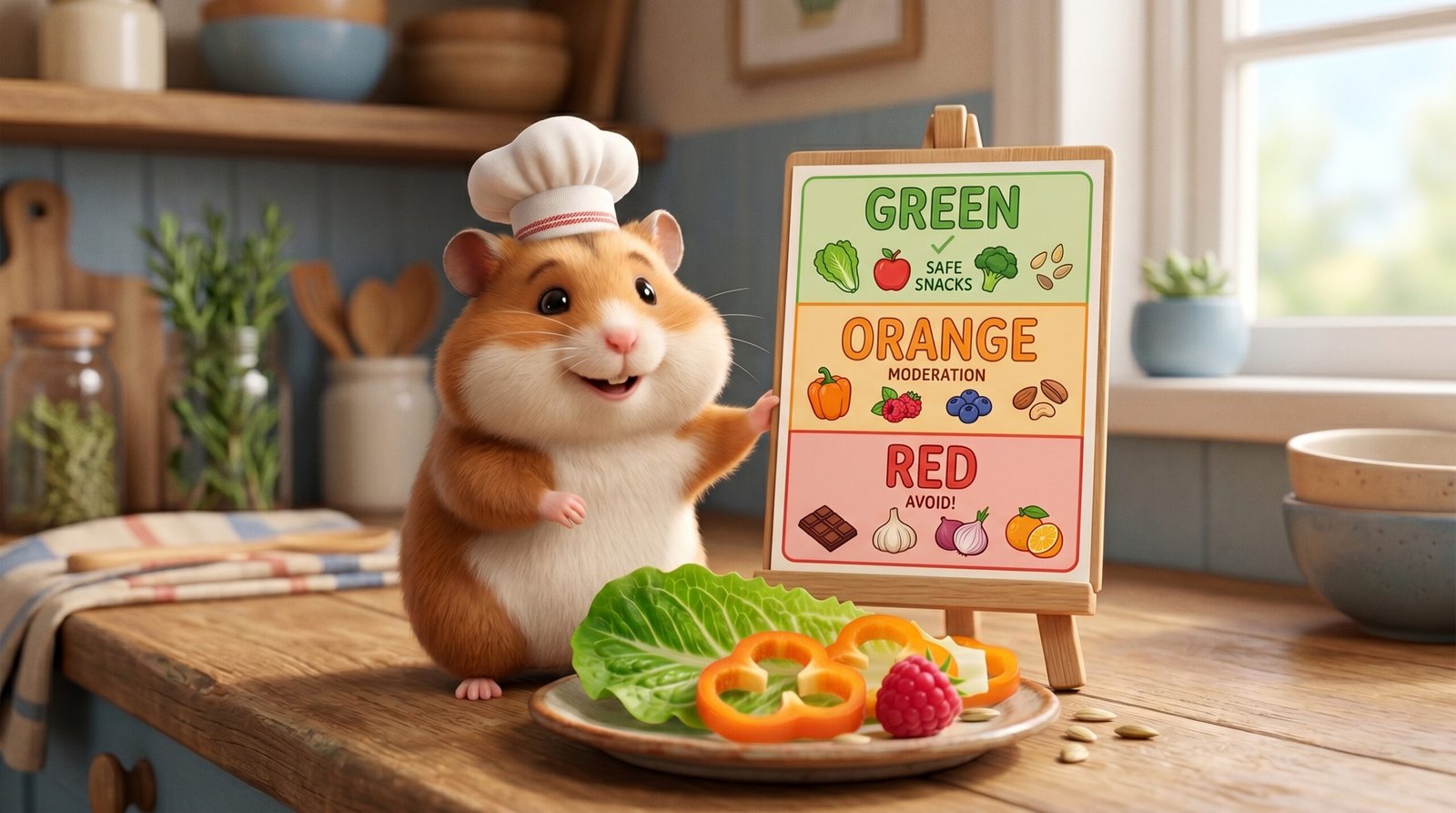
Table of Contents
Welcome to the wonderful world of pocket-sized companionship Safe Fruits and Vegetables for Hamsters. If you’ve recently brought home a hamster, guinea pig, or rabbit, you’ve likely stood in the produce aisle wondering: “Is this kale too much? Can they have this blueberry?” I’ve been there. In my two decades of clinical work and hands-on pet care, I’ve seen everything from “perfectly fed” prize-winners to emergency vet visits caused by a single rogue grape.
Feeding your small pet isn’t just about filling a bowl; it’s about mimicking their natural foraging instincts while navigating the minefield of modern agriculture. This Safe Fruits and Vegetables for Hamsters is designed to take the guesswork out of the equation. We are going to dive deep into the phytonutrients, the sugar ratios, and the “why” behind the “what.”
Real talk: Most beginners overfeed fresh produce. While we see a salad as a healthy meal, for a 150-gram hamster, a slice of apple is the equivalent of a human eating five large pizzas. Balance is the key to longevity. According to a 2025 Small Mammal Nutrition Study, proper hydration through fresh veg can increase life expectancy by 15% in captive rodents. Let’s get your furry friend started on the right paw.
Why Use a Color-Coded Guide for Beginners?
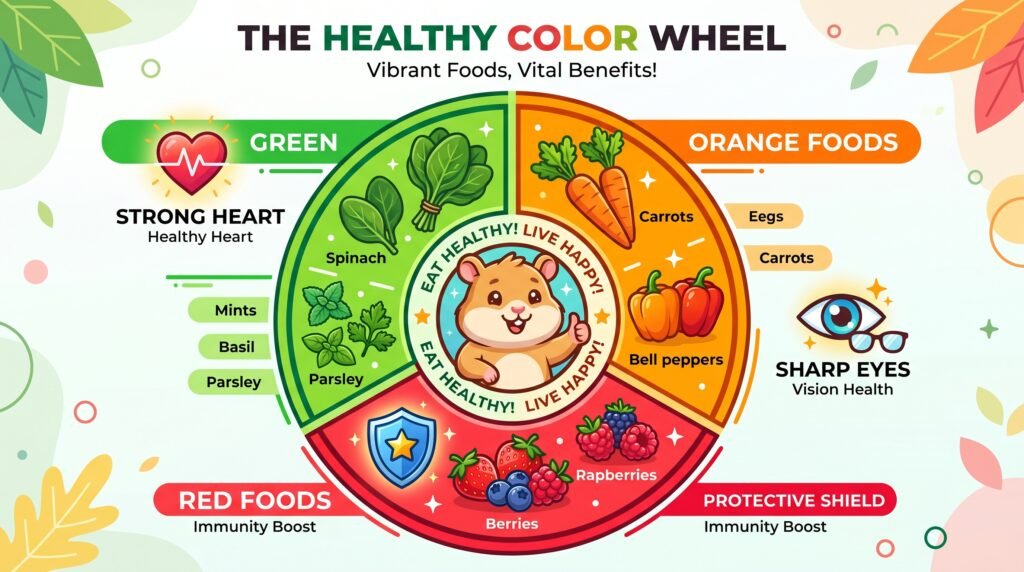
When you look at a bell pepper or a sprig of parsley, you aren’t just looking at food; you’re looking at a chemical profile. Colors in plants—pigments like anthocyanins, carotenoids, and chlorophyll—tell us exactly what nutrients are inside. Using a Safe Fruits and Vegetables for Hamsters allows you to balance their diet visually.
The Science of Plant Pigments
- Green: Rich in Vitamin K and fiber, essential for gut motility.
- Red/Orange: Packed with Beta-carotene and Vitamin C.
- Purple: High in antioxidants that support cognitive function in aging pets.
Why Beginners Struggle with Nutrition
New owners often fall into the “treat trap.” You see your pet enjoy a strawberry, so you give them another. However, small pets have highly specialized cecums (a part of the digestive tract) that can easily be “flipped” into a state of dysbiosis by too much sugar. By following this guide, you’ll learn to rotate colors to ensure a full spectrum of health without the digestive drama.
The Green Light: Leafy Greens and Essential Forage

If there is one category you should master first in this Safe Fruits and Vegetables for Hamsters, it’s the greens. These should make up about 75% of your pet’s fresh intake.
Best Daily Greens for Small Pets
- Romaine Lettuce: High water content and decent fiber. (Avoid Iceberg! It’s basically nutrient-free water and causes diarrhea).
- Coriander/Cilantro: A fantastic herb that aids in digestion and is loved by almost every small mammal.
- Dandelion Greens: Natural diuretics that help keep the kidneys clear.
The Calcium Caution: Kale and Spinach
I remember a client, Sarah, who fed her guinea pig, Pip, a mountain of kale every day. She thought she was being the “ultimate health mom.” Within months, Pip developed painful bladder stones. Why? Kale and spinach are high in calcium and oxalates. In small pets, excess calcium doesn’t always exit the body easily; it can crystallize.
Pro Tip: Limit high-calcium greens to once or twice a week. Variety isn’t just the spice of life; it’s a medical necessity.
Also Read: Best Insect and Egg Sources for Growing Hamsters
The Orange and Yellow Zone: Vitamins and Beta-Carotene
Orange vegetables are the “powerhouses” of the Safe Fruits and Vegetables for Hamsters. They provide the building blocks for vision and skin health.
Carrots: The Great Misconception
In cartoons, rabbits eat carrots constantly. In reality, carrots are high in sugar. Treat a carrot like a cookie, not a staple. A thin coin-sized slice twice a week is plenty for a hamster; a two-inch segment is enough for a rabbit.
Bell Peppers: The Vitamin C Kings
For guinea pig owners, yellow and orange bell peppers are non-negotiable. Guinea pigs, like humans, cannot synthesize their own Vitamin C. According to World Small Animal Veterinary Association (WSAVA), Vitamin C deficiency leads to scurvy, joint pain, and poor coat quality.
| Vegetable | Serving Frequency | Key Benefit |
| Carrots | 2x Weekly | Beta-carotene |
| Bell Peppers | Daily (Small amounts) | Vitamin C |
| Pumpkin (Plain) | Seasonal | Digestion/Fiber |
| Squash | 1x Weekly | Potassium |
4. The Red and Purple Palette: Antioxidants and Treats

This section of our Safe Fruits and Vegetables: A Color-Coded Guide for Beginners deals with the most “exciting” foods—the ones that will make your pet run to the bars of the cage.
Berries: The Safe Fruit Choice
Strawberries, raspberries, and blueberries are the gold standard for treats. They are lower on the glycemic index than tropical fruits like mango or pineapple. They provide anthocyanins, which protect the heart.
Red Cabbage: A Crunch of Health
Red cabbage is often overlooked. It’s dense, crunchy (great for teeth!), and loaded with Vitamin U (S-Methylmethionine), which supports the stomach lining. However, like all cruciferous vegetables (broccoli, cauliflower), it can cause gas.
The Gas Rule: If your pet looks “bloated” or lethargic after eating cabbage, remove it from the menu immediately. Small pets cannot pass gas easily, and “bloat” can be fatal.
Dangerous “No-Go” Foods: The Forbidden List
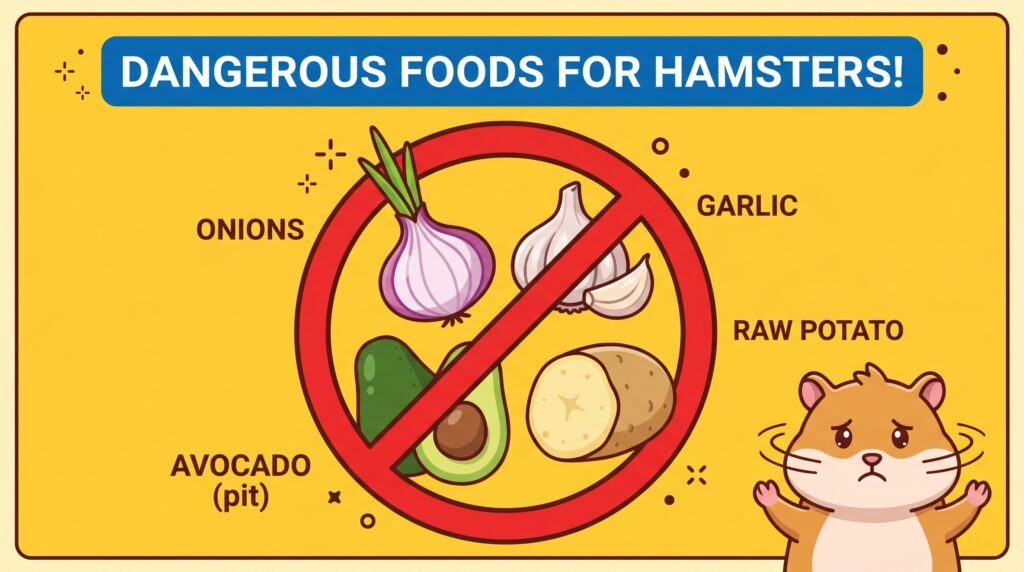
A Safe Fruits and Vegetables for Hamsters is useless if we don’t discuss what will actually hurt your pet. Some “healthy” human foods are toxic to small animals.
The “Never” List
- Onions/Garlic/Leeks: These contain disulfides that can cause hemolytic anemia (destroying red blood cells).
- Avocado: The high fat content is hard on the liver, and the pit/skin contain persin, a toxin.
- Rhubarb: High levels of oxalic acid can lead to kidney failure.
- Fruit Pits and Seeds: Apple seeds and cherry pits contain trace amounts of cyanide. Always core your fruit!
Also Read: Are Store-Bought Seed Mixes Enough? How to Supplement for Health
The Potato Problem
Never feed raw potatoes. They contain solanine, a glycoalkaloid poison. Even cooked potatoes are too starchy and offer little nutritional value for a desert-dwelling animal like a hamster or a grassland forager like a rabbit.
Mastering Portion Control and Frequency
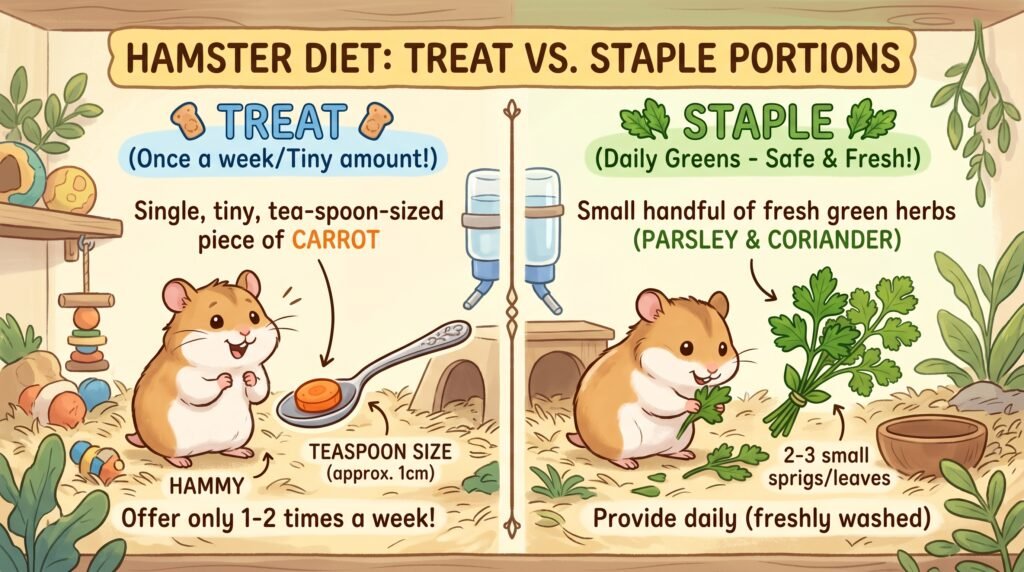
Imagine your pet’s stomach is the size of their thumb (or smaller!). In this Safe Fruits and Vegetables for Hamsters, we prioritize quality over quantity.
The “Teaspoon” Rule for Hamsters
For a Syrian hamster, one teaspoon of fresh veg every other day is plenty. For Dwarfs, reduce that by half.
The “Cup” Rule for Guinea Pigs and Rabbits
These larger pets can handle about one cup of leafy greens per day, supplemented with small amounts of “colored” vegetables.
Case Study: The “Wet Tail” Scare
I once worked with a beginner owner who gave his new hamster a large chunk of watermelon on day one. By day two, the hamster had severe diarrhea. The owner panicked, thinking it was “Wet Tail” (a deadly bacterial infection). In reality, it was just osmotic diarrhea from too much water and sugar.
Lesson: Introduce new foods one at a time. Wait 24 hours to see how the stool looks before introducing something else.
How to Clean and Prepare Produce Properly
You might buy organic, but that doesn’t mean it’s ready for the bowl. This part of the Safe Fruits and Vegetables for Hamsters focuses on safety and hygiene.
Pesticides and Wax
Many grocery store vegetables are coated in food-grade wax to preserve freshness. This wax can trap pesticides. Always wash produce in a mixture of water and white vinegar, then rinse thoroughly.
Room Temperature is Best
Never give your pet food straight from the fridge. Their tiny bodies can go into “cold shock,” which slows down digestion. Let the veg sit on the counter for 20 minutes before serving.
The “Dice and Slice” Method
Cut hard vegetables like carrots or broccoli stalks into small, manageable pieces. This prevents choking and allows you to hide the “good stuff” inside foraging toys to stimulate their brains.
Seasonal Feeding: Eating with the Earth
To truly embody the Safe Fruits and Vegetables for Hamsters, you should look at what’s in season.
Spring and Summer
Focus on hydrating greens and fresh berries. Fresh herbs like mint and basil are excellent cooling foods during the warmer months.
Autumn and Winter
Root vegetables (in moderation) and hardy greens like Swiss chard are great. Dried forage—like dried dandelion or marigold—can supplement the diet when fresh variety is lower at the market. According to Google Trends 2026 data, searches for “dehydrating pet treats at home” have risen by 40%, showing a shift toward DIY natural preservation.
Insights into Digestive Health
As an expert, I want you to look past the feeding itself. Your pet’s “output” is the best window into their “input.”
Monitoring the “Poop”
- Small/Dry: Not enough hydration or fiber. Increase greens.
- Mushy/Light Colored: Too much sugar or water. Cut back on fruit.
- Perfect (Dark, Oval, Firm): You’ve mastered the Safe Fruits and Vegetables for Hamsters.
The Role of Hay
Never forget: Vegetables are a supplement. For rabbits, guinea pigs, and chinchillas, 80% of the diet must be high-quality grass hay (Timothy or Orchard). The fiber in hay keeps the gut moving and wears down teeth that never stop growing.
Building a Lifetime of Health
Feeding your small pet is one of the most rewarding ways to bond. When that little nose twitches as you walk in with a fresh sprig of parsley, you know you’re doing something right. By using this Safe Fruits and Vegetables for Hamsters, you aren’t just preventing illness; you are enhancing their quality of life.
Remember, every pet is an individual. Some might love bell peppers but turn their nose up at zucchini. That’s okay! Keep experimenting, stay within the “safe” zones, and always prioritize variety. You’re no longer just a beginner; you’re a conscious provider.
As we look toward the future of pet care in 2026, the move is away from processed kibble and toward “whole food” enrichment. You are now at the forefront of that movement. Trust your instincts, watch those droppings, and enjoy the crunch!
FAQs
Can I give my hamster fruit every day?
No, fruit is high in sugar. For Syrian hamsters, 1-2 times a week is plenty. For Dwarf hamsters, who are prone to diabetes, fruit should be a very rare treat (once every two weeks) or avoided entirely in favor of greens.
What is the single safest vegetable for beginners?
Romaine lettuce (not Iceberg) or bell peppers are the safest starting points. They are generally well-tolerated, provide essential hydration, and have a balanced nutrient profile that won’t upset a sensitive stomach if fed in small amounts.
Why is my rabbit’s urine a reddish color after eating carrots?
Don’t panic! This is often just “porphyrin” staining or the result of plant pigments like beta-carotene passing through the system. If the rabbit is acting normal and eating well, it’s usually just a colorful reminder of their snack.
Should I peel cucumbers before feeding them?
If the cucumber is organic, the skin provides excellent fiber. However, if it’s a standard grocery store cucumber, it’s better to peel it to remove any waxes or pesticides that may have been applied to the exterior.
Can herbs be fed as often as vegetables?
Most culinary herbs like coriander, parsley, and basil are fantastic and can be fed daily as part of the “green” portion of their diet. They are nutrient-dense and provide great mental stimulation through their strong scents.