Pregnancy Signs in Hamsters: How to Tell if Your Hamster is Expecting

Table of Contents
So, you’ve noticed your little furball acting a bit… different lately? Maybe they’re extra busy with their bedding, or perhaps they’ve suddenly developed a voracious appetite that would put a competitive eater to shame. If you suspect your pet might be expanding their family, you aren’t alone. Identifying Pregnancy Signs in Hamsters is one of the most common challenges for new owners, especially those who recently brought home a female from a pet store where mixed-gender housing is common. In my two decades of working with these charismatic rodents, I’ve seen everything from “surprise” litters to false pregnancies that had owners frantic. Understanding the nuances of hamster gestation isn’t just about spotting a round belly; it’s about preparing for the delicate biological process that follows.
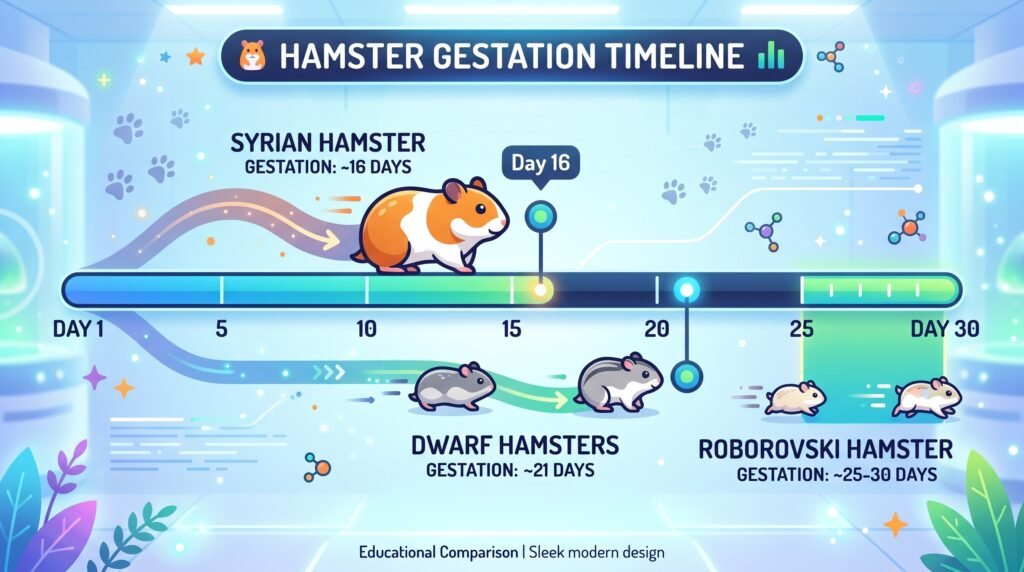
Hamsters are famous for their rapid reproductive cycles. Depending on the species, a pregnancy can last as little as 16 days. This means that by the time you start wondering if something is up, you’re likely already halfway through the journey. In this guide, we’re going to dive deep into the physiological shifts, behavioral “tells,” and the essential care steps you need to take. Whether you have a Syrian, a Dwarf, or a Roborovski, the signs are often subtle until they aren’t. Let’s grab a coffee and walk through exactly how to decode your hamster’s secret.
Physical Pregnancy Signs in Hamsters
When we talk about Pregnancy Signs in Hamsters, the physical changes are usually the most definitive, but they often appear very late in the game. Unlike humans, who might show for months, a hamster typically only looks “pregnant” in the final 4–5 days of gestation.
The “Pear-Shaped” Transformation
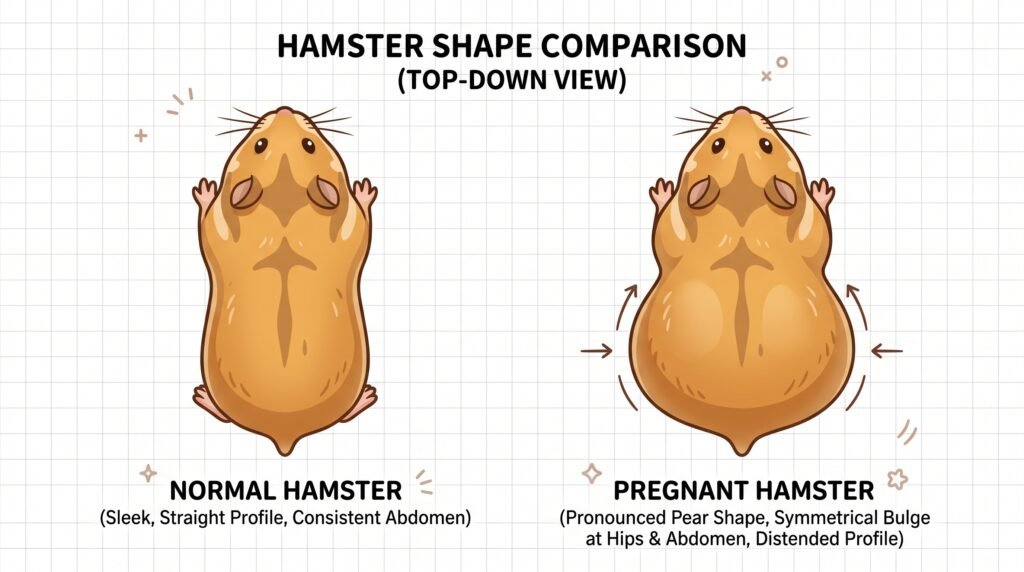
One of the most telling physical markers is the change in body shape. A healthy hamster is usually sleek or evenly plump. However, an expecting mother will develop a distinct “pear” shape. If you look at her from above, her lower abdomen will bulge significantly on both sides. This isn’t just weight gain; it’s the physical space required for a litter that can range from 4 to 20 pups.
Prominent Nipples and Mammary Development
As the body prepares for lactation, the mammary glands will enlarge. In short-haired varieties, this is quite easy to spot. You’ll notice two rows of small, pinkish bumps along the belly. If you see this, it’s a clear indicator that the body is gearing up to feed a litter.
Weight Gain and Fluid Retention
While we don’t always weigh our pets daily, a sudden jump in grams is a major red flag.
- Syrian Hamsters: May gain 20–40 grams.
- Dwarf Hamsters: May gain 5–10 grams.
Expert Tip: If you handle your hamster regularly, you might feel a certain “firmness” in the abdomen. However, never press or squeeze a suspected pregnant hamster’s belly. You could accidentally cause a miscarriage or injure the developing pups.
Behavioral Cues
Before the physical bulge, her brain is already shifting into “mom mode.” Understanding Pregnancy Signs in Hamsters requires a keen eye for behavioral shifts that deviate from her normal routine.
Aggressive Nesting and Hoarding
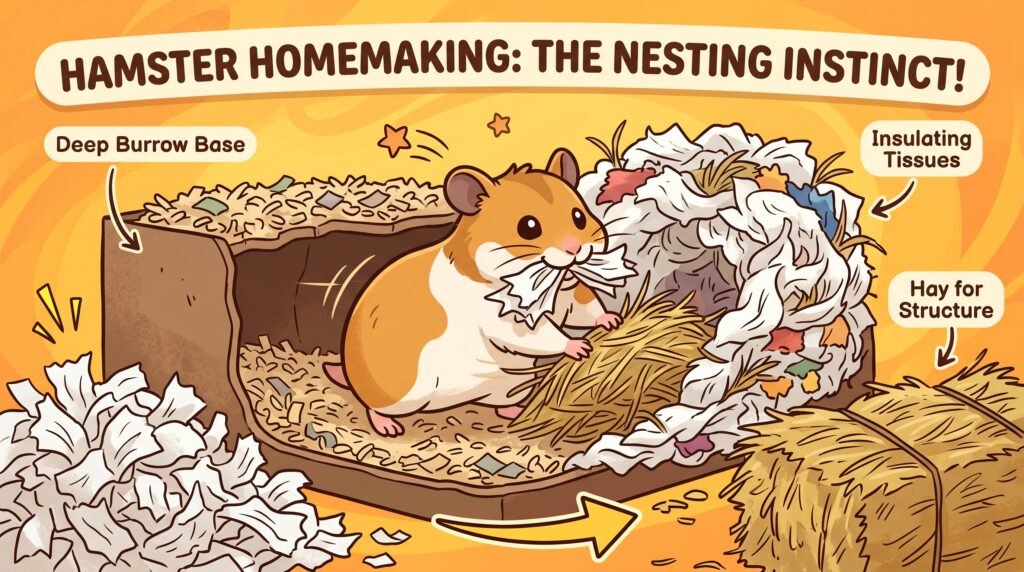
Every hamster likes a cozy bed, but a pregnant hamster takes interior design to an obsessive level. You’ll see her frantically gathering every scrap of tissue, bedding, and hay to create a massive, reinforced nest. This is often accompanied by extreme food hoarding. She’ll pack her cheek pouches to the limit and create a “pantry” right next to her nest site.
The “Grumpy” Factor
Pregnancy hormones are no joke, even for a creature the size of your palm. A normally sweet hamster might start nipping or chattering her teeth when you try to pick her up. This is a protective instinct. She is guarding her space and her future litter. If your hamster is suddenly acting territorial, give her space—it’s one of the strongest emotional Pregnancy Signs in Hamsters.
Changes in Activity Levels
In the early stages, she might be hyper-active, running on her wheel more than usual to build up strength. However, in the final 48 hours, she will likely become lethargic and spend almost all her time in the nest. This “calm before the storm” is a vital sign that delivery is imminent.
Species-Specific Gestation
Not all hamsters are created equal when it comes to the “wait time.” To accurately track Pregnancy Signs in Hamsters, you must know exactly which species you are caring for.
| Hamster Species | Gestation Period | Average Litter Size |
| Syrian (Golden) | 16–17 Days | 6–12 Pups |
| Winter White Dwarf | 18–21 Days | 4–8 Pups |
| Campbell’s Dwarf | 18–21 Days | 4–8 Pups |
| Roborovski Dwarf | 22–30 Days | 3–6 Pups |
| Chinese Hamster | 18–21 Days | 4–6 Pups |
Why the Timeline Matters
If you know when the “accidental meeting” happened (for example, if a male escaped into her cage), you can mark your calendar. If she hasn’t delivered by day 22 (for a Syrian), it might not be pregnancy—it could be a medical issue like Pyometra (a serious uterine infection) or a tumor. Both can mimic the abdominal swelling seen in Pregnancy Signs in Hamsters.
Dietary Shifts
A surge in appetite is one of the earliest Pregnancy Signs in Hamsters. If you find yourself refilling the food bowl twice as often, she’s likely fueling the growth of those tiny pups.
Seeking High-Protein Fuel
An expecting mother instinctively craves protein. In the wild, they might seek out more insects. In your home, you might notice her ignoring her usual grains in favor of protein-rich treats.
Safe Protein Boosters to Offer:
- Hard-boiled egg whites: Small, pea-sized amounts.
- Plain cooked chicken: No salt, oil, or spices.
- Mealworms: A favorite for many dwarf species.
- Tofu: Plain, firm tofu is a great plant-based option.

Increased Water Consumption
Growing babies requires a lot of hydration. If the water bottle is emptying faster than usual, and you’ve ruled out a leak, take it as a sign. Ensure she has access to clean, fresh water 24/7. Dehydration during pregnancy can lead to the mother abandoning or consuming the litter—a heartbreaking but natural survival instinct.
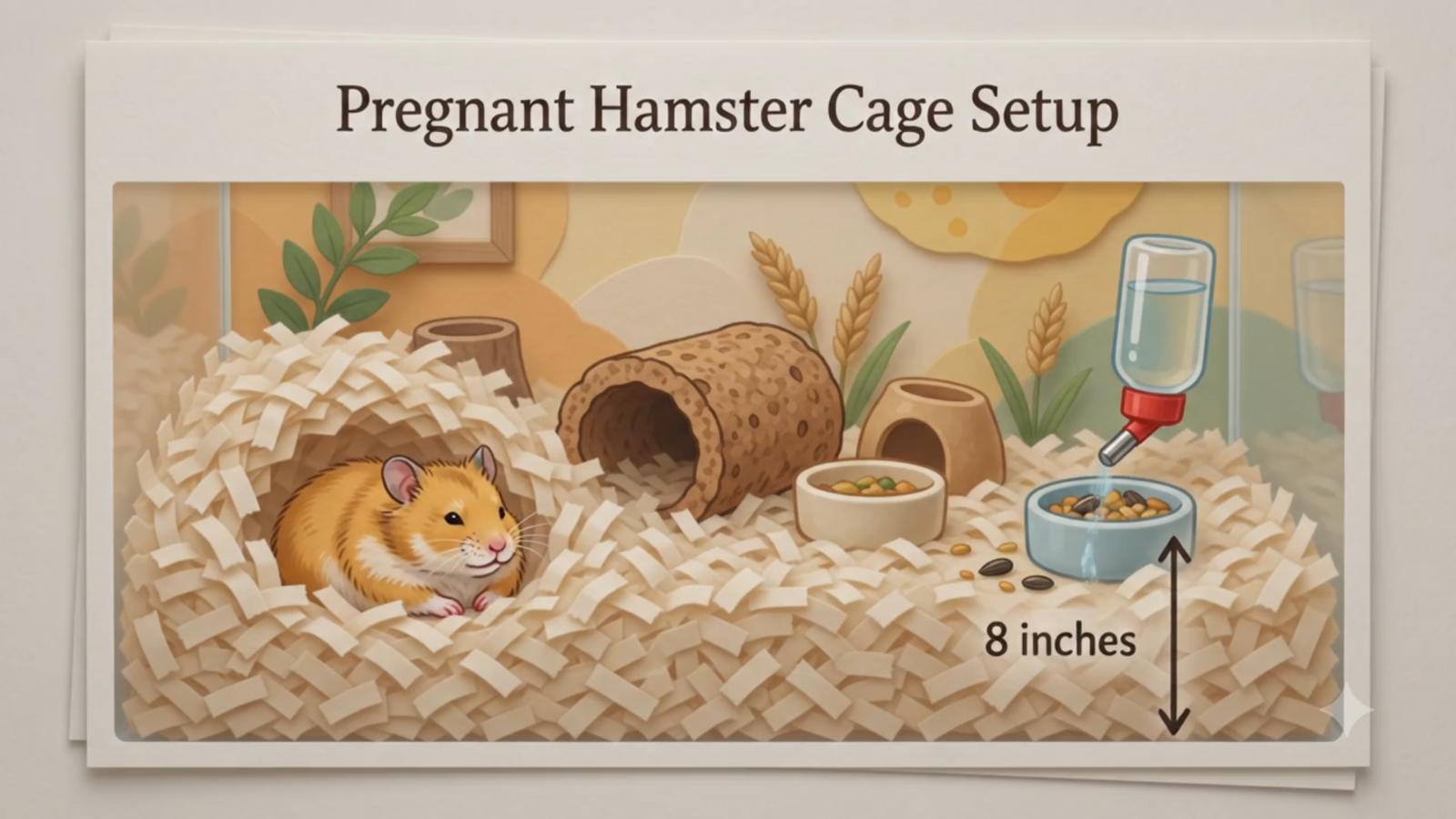
Setting Up the “Maternity Ward”
Once you are confident in the Pregnancy Signs in Hamsters, you must transition from “owner” to “midwife.” The environment you provide now determines the survival of the litter.
Step 1: The Great Clean-Out
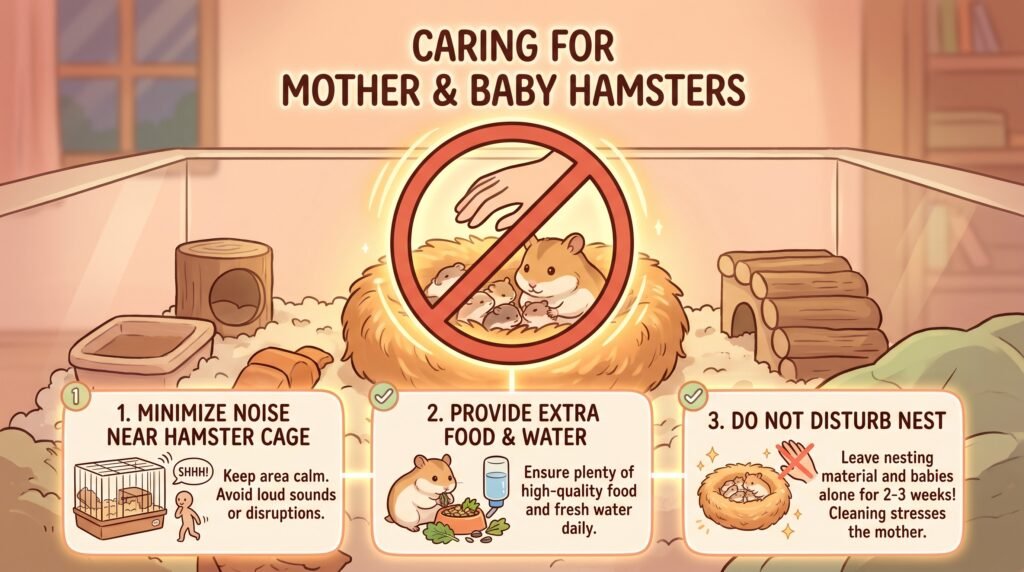
About 2–3 days before the expected birth, do a deep clean of the cage. This is the last time you will touch the cage for at least two weeks. Replace the bedding, scrub the base, and provide plenty of nesting material (unscented toilet paper torn into strips is perfect).
Step 2: Remove the Wheel
This is controversial for some, but as a long-time expert, I insist: Remove the wheel. A mother might be so distracted by the wheel that she neglects her pups, or worse, she might give birth on the wheel, leading to injuries for the newborns.
Step 3: Privacy is Paramount

Move the cage to a quiet, low-traffic area of your home. Cover half the cage with a light towel to give her a sense of security. If she feels threatened or watched, she may become stressed enough to harm her young.
Distinguishing Pregnancy from Medical Concerns
It’s a scenario I’ve seen dozens of times: an owner thinks they have a pregnant hamster, but it turns out to be a health crisis. Because hamsters are prey animals, they hide illness until it’s advanced.
Pyometra vs. Pregnancy

Pyometra is an infection of the uterus that causes the abdomen to swell with pus. It is life-threatening. How do you tell the difference?
- Discharge: Pyometra often involves a foul-smelling, bloody, or yellow discharge from the vulva.
- Lethargy: An ill hamster looks “scruffy” and has dull eyes; a pregnant hamster usually looks healthy despite the weight.
- Thirst: While pregnant hamsters drink more, pyometra causes extreme thirst.
Tumors and Cysts
Abdominal tumors can also cause a “bulge.” However, tumors are often asymmetrical—you might feel a lump on one side but not the other. Pregnancy Signs in Hamsters are almost always symmetrical, with both “saddlebags” expanding equally.
Critical Note: If your hamster is over 1.5 years old, pregnancy is less likely, and a medical issue is more probable. Most hamsters lose fertility as they age.
What to Expect When She’s Delivering
If you’ve tracked the Pregnancy Signs in Hamsters correctly, you’ll eventually wake up to tiny, high-pitched squeaks. Most hamsters give birth at night or in the early hours of the morning.
The Appearance of “Pinkies”
Hamster pups are born hairless, blind, and deaf. They look like tiny pink beans (hence the nickname “pinkies”). Do not panic if they look fragile—they are!
The Golden Rule: Hands Off!
This is the hardest part for any owner. Do not touch the pups. Do not touch the mother. Do not even open the cage except to quietly drop in food and change the water. If your scent gets on the pups, the mother may no longer recognize them as hers.
Common Post-Birth Statistics
- Day 7: Pups begin to grow fur.
- Day 10: They start nibbling on solid food (scatter some around the nest).
- Day 14: Eyes begin to open.
- Day 21: Weaning is complete.
When Things Go Wrong
Sometimes, despite noticing all the Pregnancy Signs in Hamsters and doing everything right, nature takes a difficult turn. Being prepared is part of being a responsible expert owner.
Cannibalism and Abandonment
It’s a grim reality, but hamsters sometimes eat their young. This usually happens if the mother is too young (under 4 months), if she is stressed by noise/handling, or if the litter is too large for her to sustain. If you see this, don’t blame the hamster; it’s an evolutionary response to ensure the survival of the mother so she can breed again later.
Dystocia (Difficult Labor)
If you see your hamster straining for hours with no pups appearing, or if there is a significant amount of blood, she may have a pup stuck in the birth canal. This is a veterinary emergency. Call an exotic animal vet immediately.
Quick Reference for Expectant Owners
| Sign Category | Specific Indicators |
| Physical | Distended abdomen (pear-shape), visible nipples, weight gain. |
| Behavioral | Obsessive nesting, food hoarding, sudden cage aggression. |
| Appetite | Increased water intake, searching for high-protein foods. |
| Emergency | Foul-smelling discharge, asymmetrical lumps, extreme lethargy. |
Weaning and Rehoming
Once the madness of the first three weeks has passed, you have a new task. Detecting Pregnancy Signs in Hamsters was just the beginning; now you have a crowd!
Sexing and Separating
By week 4, you must separate the pups by gender. Hamsters can become sexually mature as early as 4–5 weeks old. If you don’t separate them, you will have a geometric explosion of hamsters that no one is prepared for.
Also Read: The Genetics of Hamster Colors
Finding Forever Homes
Start looking for adopters early. Check with local rescues or specialized hamster groups. Ensure that each pup goes to a home with a proper-sized enclosure (at least 450–600 square inches of floor space).
Embracing the Journey
Discovering Pregnancy Signs in Hamsters can be an overwhelming experience, especially if it wasn’t planned. However, it’s also a window into one of nature’s most efficient and fascinating reproductive processes. By staying observant, providing a high-protein diet, and—most importantly—respecting her need for privacy, you give both the mother and her pups the best chance at a healthy life.
Remember, the key to success is preparation. If you suspect your pet is expecting, stop handling her immediately, beef up her nutrition, and get that “maternity ward” ready. It’s a short journey from those first behavioral shifts to a nest full of squeaking pinkies, so make every day count. You’ve got this!
FAQs
How can I tell if my hamster is pregnant or just fat?
Check the shape. Fat hamsters are round all over, including the neck and shoulders. Pregnancy Signs in Hamsters typically involve a “pear” shape where the bulge is concentrated in the lower abdomen and appears quite suddenly over a few days.
Can I hold my hamster while she is pregnant?
It is best to avoid it. While she may be tame, the stress of being handled can cause hormonal imbalances. In the final week of gestation, handling can also physically harm the developing pups or cause the mother to become defensive and bite.
What should I do if my hamster has babies unexpectedly?
Don’t panic! Immediately remove any male hamsters from the cage (they can impregnate the female again hours after birth). Provide extra protein, fresh water, and total privacy. Do not touch the nest or the babies for at least 14 days.
How many babies do hamsters usually have?
It varies by breed. Syrian hamsters often have larger litters, averaging 8 to 12 pups, though 20 is possible! Dwarf hamsters usually have smaller litters of 4 to 8. The first litter for a young mother is often smaller.
When can I clean the cage after the babies are born?
Wait at least two full weeks. By day 14, the pups’ eyes are opening and they are becoming mobile. At this point, the mother is less likely to feel threatened. Even then, do a “spot clean” rather than a total bedding change.