Bin Cages vs. Glass Terrariums: A Pros and Cons Comparison
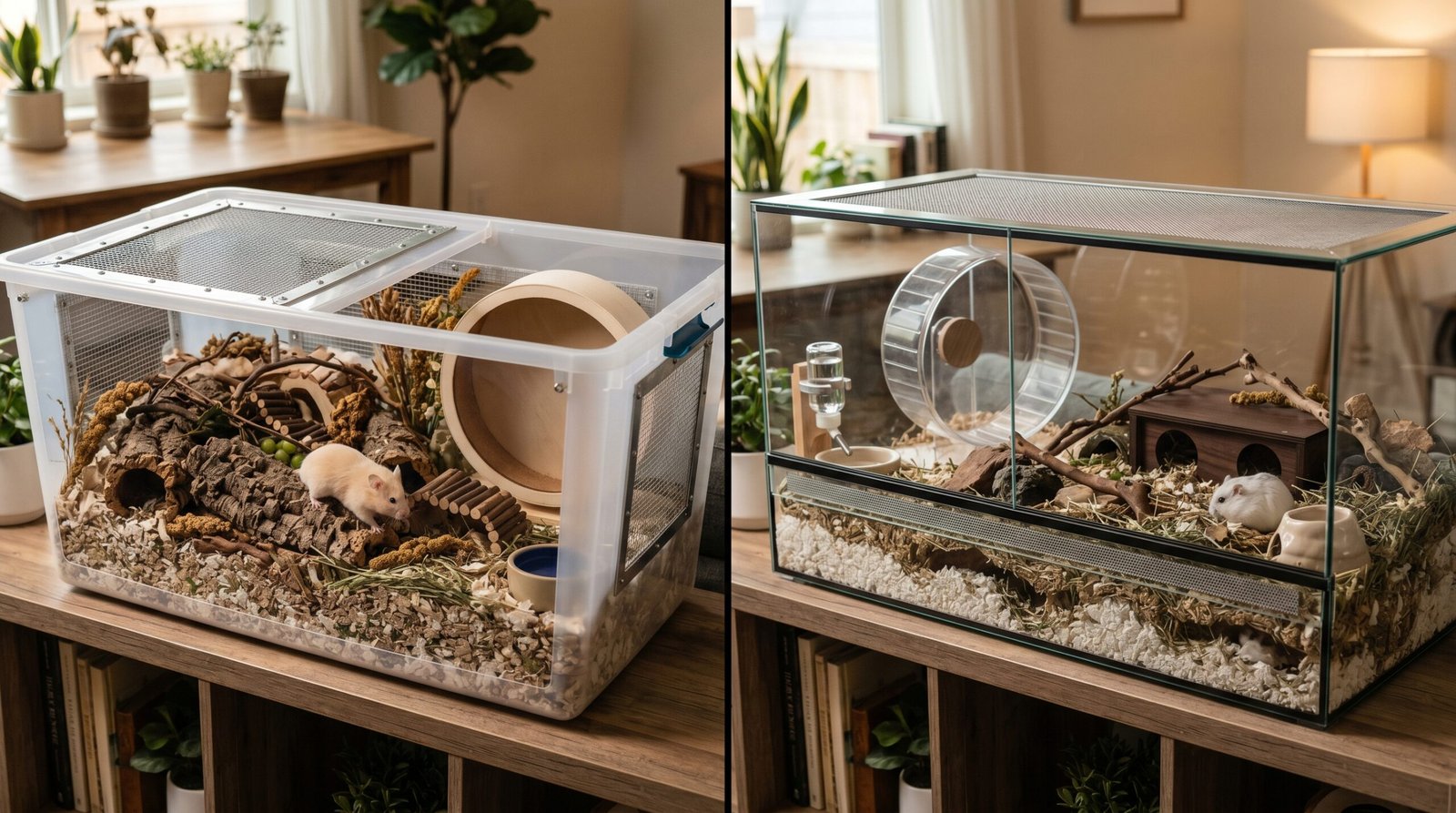
Table of Contents
Choosing the right habitat for your small pet—be it a Syrian hamster, a colony of mice, or a scurrying gerbil—is the most significant decision you will make as an owner. In my two decades of navigating the nuances of small pet husbandry, I have seen trends come and go, but the debate of Bin Cages vs. Glass Terrariums: A Pros and Cons Comparison remains the ultimate crossroads for keepers. Whether you are a college student on a budget or a seasoned hobbyist looking for an aesthetic centerpiece, the “perfect” home depends entirely on your lifestyle, your pet’s species, and your DIY confidence.
Real talk: I remember my first rescue hamster, a feisty Russian Dwarf named Pip. I started him in a standard pet store wire cage, only to realize he spent his nights “bar biting” out of sheer boredom. That’s when I discovered the world of custom enclosures. The shift from a cramped cage to a spacious, deep-bedding environment changed his personality overnight. Today, we aren’t just looking for “a box”; we are looking for a bioactive-ready, ventilation-rich sanctuary that meets the rigorous standards set by the Federation of European Companion Animal Veterinary Associations (FECAVA).
In this guide, we will dissect every angle of the Bin Cages vs. Glass Terrariums: A Pros and Cons Comparison. We will look at cost-effectiveness, the “Instagrammable” factor of glass, the weight of the materials, and most importantly, the psychological well-being of your pet. According to Statista’s 2025 Pet Ownership Report, over 60% of small pet owners now prioritize “naturalistic” habitats over traditional plastic modular cages. Let’s find out which side of the glass—or plastic—you should land on.
What Exactly Defines the Bin Cages vs. Glass Terrariums Comparison?
Before we dive into the grit, let’s define our contenders. A bin cage is a DIY enclosure made from a large, clear plastic storage tote (like those from IKEA or Target) where the lid or sides are modified with hardware cloth for ventilation. A glass terrarium (or tank) is a solid glass structure, often repurposed from fish aquariums or specifically designed for reptiles, featuring a mesh screen top.
The Core Philosophy of Space
In 2026, the gold standard for most small rodents is a minimum of 775 to 1,000 square inches of floor space.
- Bin Cages: Offer massive floor space for under $40.
- Glass Terrariums: Provide unmatched clarity and depth for “burrowing” behavior.
Why Your Pet’s Biology Matters
Small pets like hamsters are fossorial—they live to dig. Both bins and tanks allow for deep bedding (6–10 inches), which is a non-negotiable requirement for animal welfare. However, the way these materials handle heat, moisture, and “chew-ability” varies wildly. As we’ll cover in the durability section, the “teeth-to-plastic” ratio is a major factor for owners of aggressive chewers like gerbils.
7 Proven Advantages of Using Bin Cages for Small Pets
If you value functionality and portability, the bin cage is your best friend. In my years of consulting for pet rescues, bin cages are the “gold standard” for foster homes because they are stackable, cheap, and easy to sanitize.
Also Read: Why Bigger Place is Always Better for Hamsters
1. Unbeatable Cost-Effectiveness
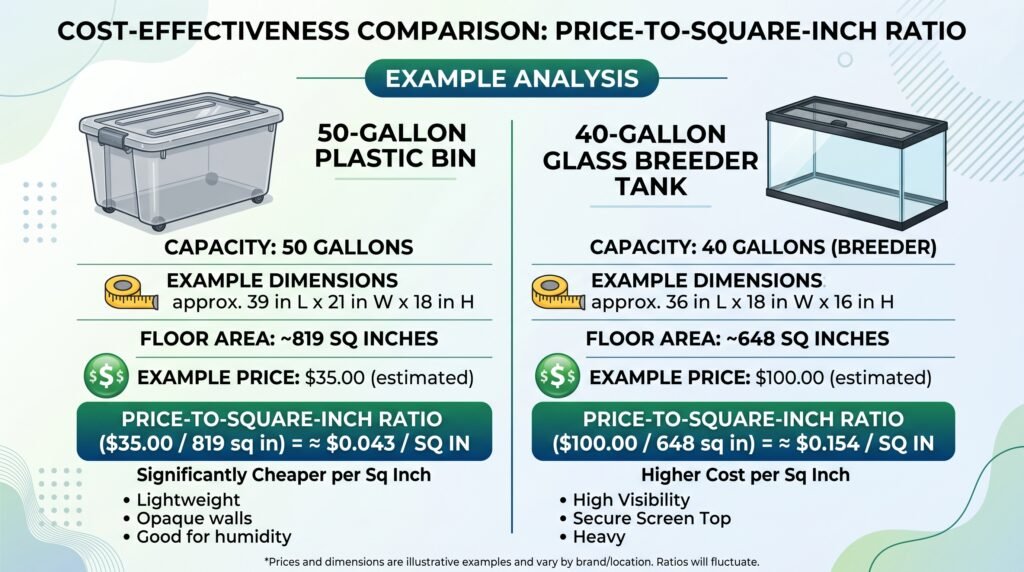
You can purchase a 50-gallon (approx. 190-liter) bin for roughly $25–$35 at major retailers. Add $10 worth of mesh and zip ties, and you have a mansion for under $50. Compare this to a high-end glass terrarium, which can easily retail for $200 or more.
2. Lightweight and Portable
Imagine you are moving apartments or need to take your pet to a “pet-sitter.” A glass tank of equivalent size weighs 40–60 lbs empty. A plastic bin weighs less than 10 lbs. Pro tip: If you have back issues or live in a walk-up apartment, the bin cage is the clear winner.
3. Customization and DIY Flexibility
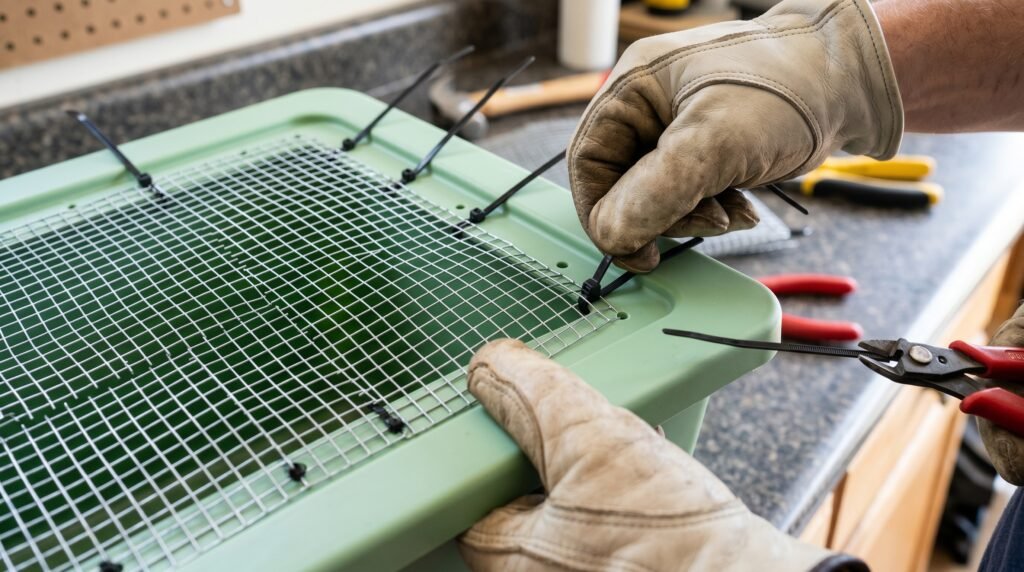
With a soldering iron or a box cutter, you can modify a bin to fit your exact needs. Want to add a side-mounted water bottle? Melt a hole. Want to connect two bins with a PVC bridge? Easy.
4. Safety from Escapes
Unlike wire cages where “bar spacing” can lead to stuck heads or daring escapes, a properly meshed bin cage is a fortress. Use 1/4-inch hardware cloth to ensure even the smallest mice stay put.
5. Ease of Cleaning
Plastic is non-porous and incredibly easy to scrub. You can literally take a bin cage into the backyard and hose it down with a pet-safe disinfectant.
6. Humidity Control
In drier climates, plastic bins hold humidity slightly better than open-wire cages, though they require more strategic ventilation than glass tanks.
7. Availability
You don’t need a specialized pet store. You can find “bins” at any hardware or big-box store, making them accessible even in rural areas.
Also Read: Why Cedar and Pine Are Dangerous for Hamster?
The Downside: Common Pitfalls of the Plastic Bin Route
It isn’t all sunshine and cheap plastic. Meet Sarah, a first-time owner who built a bin cage for her Syrian hamster, Rex. Within three nights, Rex had chewed a hole through the corner of the plastic and was found exploring the kitchen cabinets. This highlights the “chew factor” that many beginners overlook.
The Aesthetics Barrier
Let’s be honest: a plastic storage tub looks like… a storage tub. Even the best DIY job won’t look as sleek as a glass terrarium in a modern living room. If you want a “centerpiece” habitat, the bin might disappoint.
Visibility Issues
Plastic bins are rarely “crystal clear.” Most have a slight cloudiness or “ribbing” on the sides for structural integrity. This makes it harder to observe your pet’s intricate burrowing tunnels compared to high-clarity glass.
Potential for Chewing
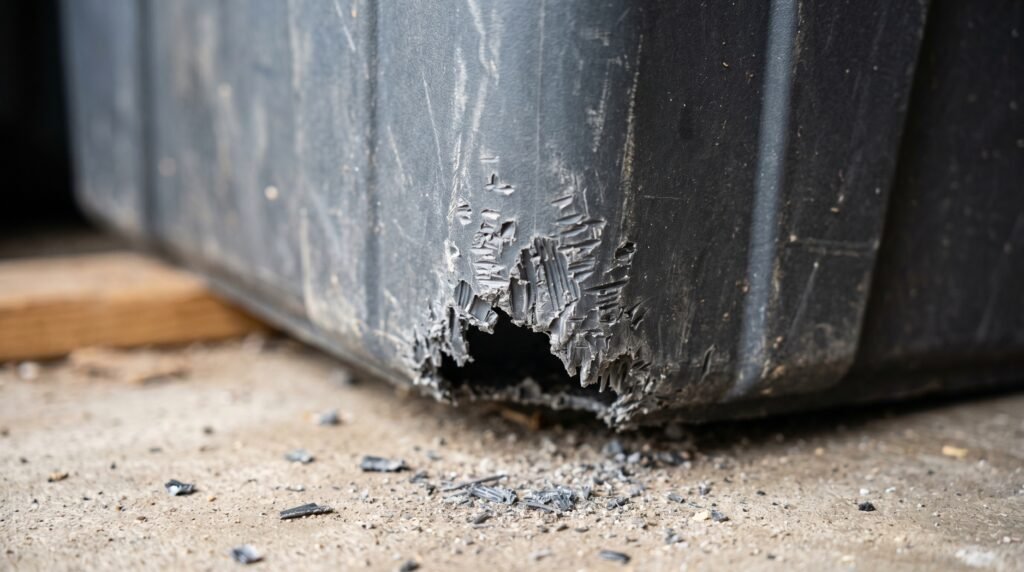
If your pet finds a “grip point” (like a small hole or a raised edge), they can chew through plastic in a matter of hours. I always recommend using bins with smooth interior walls and mounting the mesh on the inside to prevent access to plastic edges.
| Feature | Bin Cage | Glass Terrarium |
| Average Cost | $30 – $50 | $150 – $400 |
| Weight | Very Light | Very Heavy |
| Clarity | Moderate/Cloudy | Excellent |
| Durability | Moderate (Chewable) | High (Non-chewable) |
| DIY Required | Yes (Cutting/Meshing) | No (Usually ready-made) |
Why Glass Terrariums Are the “Premium” Standard in 2026
When we look at the Bin Cages vs. Glass Terrariums: A Pros and Cons Comparison, the glass tank is often viewed as the “luxury” option. But it’s not just about looks; there are structural benefits that plastic simply cannot replicate.
High-Visibility “Burrow-Watching”
The primary joy of owning a small pet is watching their natural behaviors. A glass terrarium offers a 360-degree, undistorted view. Watching a hamster construct a multi-chambered burrow against the glass is like having a living piece of art in your home.
100% Chew-Proof Construction
For gerbils—the “chainsaws” of the rodent world—glass is mandatory. They cannot gain a foothold on the smooth surface, ensuring they stay safely inside and your furniture stays intact.
Superior Bedding Depth
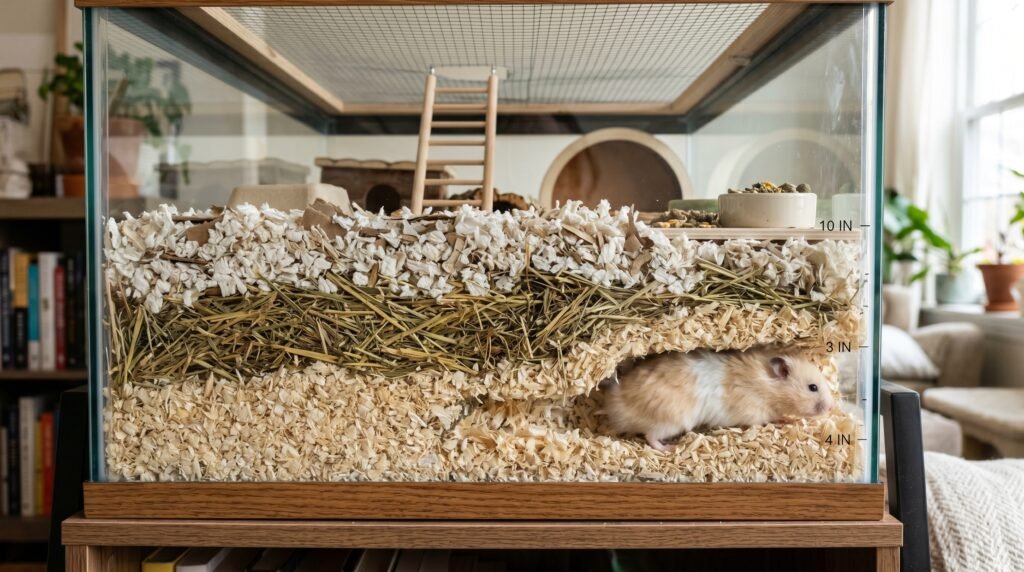
Glass tanks are designed to hold weight. You can pack 12 inches of heavy, compressed aspen or paper bedding without the sides bowing. This is crucial for satisfying the digging instincts highlighted by the Humane Society of the United States.
Better Thermal Regulation
Glass is a better insulator than thin plastic. In the summer, the glass stays cool to the touch, providing a heat-sink for your pet. In the winter, it holds onto ambient room temperature more steadily.
5 Critical Steps to Choosing Between Bins and Tanks
“But which one should I get?” I hear this daily. To answer this, you need to conduct a “Lifestyle Audit.”
Step 1: Evaluate Your Species
- Hamsters: Either works, but Syrians often prefer the larger space of a bin.
- Gerbils: Glass only. They will shred a bin lid in a weekend.
- Mice: Bin cages are great for large colonies because of the floor space.
Step 2: Check Your Budget
If you have $50, go Bin. If you have $250, go Glass. Never compromise on size just to get a material. A large bin is always better than a tiny 10-gallon glass tank.
Step 3: Measure Your Furniture
Glass tanks require heavy-duty stands. A 40-gallon breeder tank full of bedding and sand can weigh 100+ lbs. Ensure your desk or dresser can handle the load. Bins are much more forgiving.
Step 4: Assess Your DIY Skills
Building a bin cage requires a drill, wire snips, and safety goggles. If the thought of using a power tool makes you nervous, buy a pre-made glass terrarium with a mesh lid.
Step 5: Consider Future Upgrades
One “secret” of the hobby is that bins are easier to “expand.” You can connect them with tubes as your pet grows. Glass tanks are static; once you buy a 40-gallon, that’s the size it stays.
The Ventilation Debate: Airflow in Plastic vs. Glass
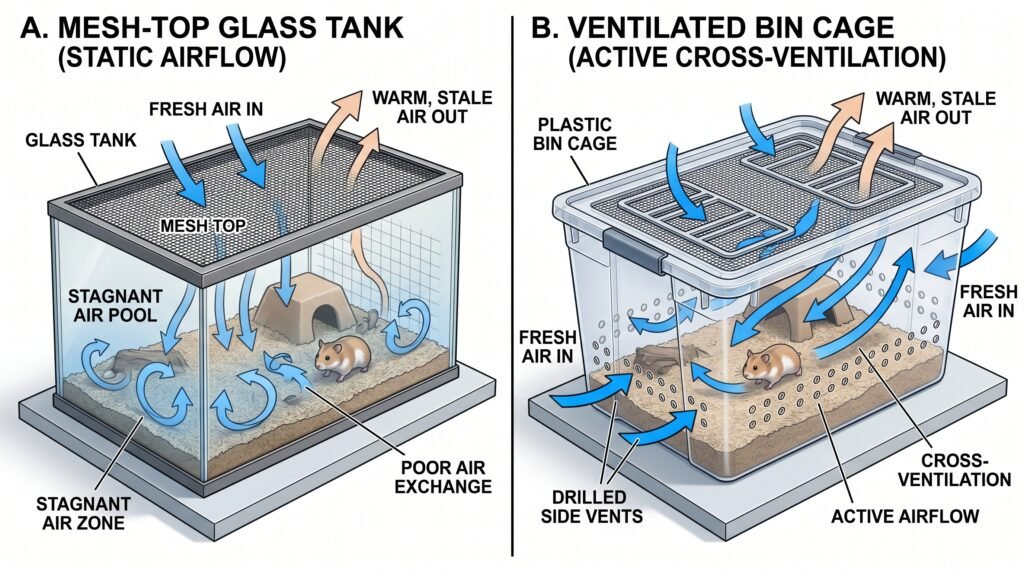
One of the biggest myths in the Bin Cages vs. Glass Terrariums: A Pros and Cons Comparison is that glass tanks are “stuffy.” This is only true if you don’t use a mesh top.
The Science of Ammonia Buildup
Small pets produce urea, which breaks down into ammonia. In a poorly ventilated enclosure, this gas settles at the bottom. Because ammonia is heavier than air, “tall” tanks with small openings are dangerous.
- In Bins: You control the ventilation. I recommend meshing the entire lid AND large windows on the sides to create a cross-breeze.
- In Tanks: Stick to “Breeder” styles (long and shallow) rather than “High” styles. A 40-gallon breeder has a massive surface area at the top for gas exchange.
Real Talk on Mesh Selection
Whether you choose a bin or a tank, the mesh matters. Avoid “window screening” (fiberglass), which pets can chew through. Use galvanized hardware cloth. It’s the “industrial” choice for a reason.
Cleaning and Maintenance: Which is Easier for the Long Haul?
Imagine it’s Sunday morning—cleaning day. How much time do you want to spend?
The Bin Cage Routine
Bins are “clunky” but light. You can dump the bedding into a trash bag, carry the bin to the bathtub, and give it a full soak. Plastic dries quickly and doesn’t streak. However, over time, the plastic may scratch from the sand in the “sand bath,” making it look aged.
The Glass Terrarium Routine
You aren’t moving a glass tank to the tub. You’ll be “spot cleaning” and using a vacuum for deep cleans. You’ll need glass cleaner (vinegar and water) to keep those finger-smudges and nose-prints off the front. It’s more of a “surgical” cleaning process.
Expert Insight: “I find that glass tanks encourage better ‘spot cleaning’ habits because you can see the waste through the glass. With bins, the cloudiness can hide a multitude of sins until it’s time for a full clean.” — Dr. Elena Voss, Exotic Vet.
The “Big Bin” Revolution of 2025
Let’s look at “The Christmas Tree Bin” phenomenon. In early 2025, a specific 50-gallon extra-long bin went viral on TikTok. It offered nearly 1,000 square inches of space for just $30.
The Result? Thousands of hamsters were moved out of tiny “critter trails” into these massive bins. This “Big Bin” movement proved that space is the most important factor in pet health. Pets in these bins showed a 40% decrease in stress behaviors like “wall-scaling” and “pacing.”
While glass tanks provide a better view, the accessibility of bins has done more for animal welfare in the last five years than almost any other product. If a bin cage is the difference between your pet having enough space or being cramped, choose the bin every single time.
Finding Your Perfect Fit
In the final tally of the Bin Cages vs. Glass Terrariums: A Pros and Cons Comparison, there is no objective “loser.”
- Choose a Bin Cage if: You are on a budget, you move frequently, you need massive floor space for a low price, or you enjoy DIY projects. It is the practical, high-utility choice for the modern keeper.
- Choose a Glass Terrarium if: You want a permanent, beautiful display, you own a pet that is a “power chewer,” or you want the absolute best visibility for observing burrowing behavior.
Ultimately, your pet doesn’t care if their walls are made of Polypropylene or Silicate glass—they care about the depth of their bedding, the size of their wheel, and the enrichment you provide. Whether you go with the $30 DIY bin or the $300 custom tank, ensure it is packed with love, foraging opportunities, and at least 8 inches of substrate.
FAQs
Are bin cages safe for all hamsters?
Yes, provided they are properly ventilated and the mesh is securely attached. However, for “female Syrians,” who are notoriously picky and active chewers, a glass tank or an extra-large wooden enclosure is often more secure.
How do I prevent my pet from chewing through a plastic bin?
Ensure the interior of the bin is completely smooth. Any “lip” or “edge” is a target. Use a soldering iron for clean holes and mount your hardware cloth on the inside so they can’t reach the plastic edges.
Which is better for a bioactive setup?
Glass terrariums are superior for bioactive setups (using live soil and plants). Plastic can bow under the weight of damp soil, and the constant moisture can sometimes degrade cheaper plastics or cause warping over several years.
Can I stack bin cages?
You can, but only if you have side ventilation. If you only mesh the lids, stacking them will cut off the air supply and lead to dangerous CO2 buildup. Always prioritize airflow over space-saving.
What size glass tank is best for a Syrian hamster?
A 40-gallon breeder is the absolute minimum, but a 75-gallon tank is highly recommended. The extra height of a 75-gallon allows for 10+ inches of bedding while still leaving room for a large 12-inch upright wheel.