
Best Hamster Teeth Care: A Guide to Checking Your Pet’s Smile

Table of Contents
If you have ever spent a quiet evening watching your furry friend, you know that their life revolves around their mouth. From pouching seeds like a professional hoarder to the rhythmic crunch-crunch-crunch of a wooden block, those tiny incisors are a hamster’s most vital tools. However, unlike our teeth, a hamster’s teeth never stop growing. This biological quirk makes hamster teeth care the most critical aspect of their long-term health. If those teeth aren’t properly managed, a happy pet can quickly spiral into a medical emergency.
I remember a client, Mark, who brought in his Syrian hamster, Barnaby. Barnaby had stopped eating and was pawing at his face. Upon inspection, his lower incisors had curved upward, piercing the roof of his mouth. It was heartbreaking because it was entirely preventable. Over my two decades in small pet husbandry, I’ve seen that most owners want to help, but they are simply intimidated by those wiggly whiskers. Real talk: you don’t need a medical degree to master this. You just need a little patience and the right technique.
In this comprehensive guide, I’m going to walk you through exactly how to monitor your pet’s dental health. We will cover the anatomy of their mouth, the warning signs of malocclusion, and the specific steps to ensure their “pearly yellows” stay at the perfect length. This isn’t just about grooming; it’s about life-saving preventative maintenance using proven hamster teeth care strategies that anyone can learn at home.
Why Hamster Teeth Care is a Lifelong Commitment
To understand why hamster teeth care is so vital, we have to look at the “hypsodont” nature of their dentition. Their incisors grow at a staggering rate of 2 to 3 millimeters per week. In the wild, hamsters forage through tough terrain, gnawing on roots and hard seeds that naturally file these teeth down. In a cage, they rely entirely on you to provide that resistance. Imagine if your fingernails were made of bone and grew three inches every month—you’d be pretty concerned about having a good pair of clippers!
The Anatomy of the Hamster Mouth
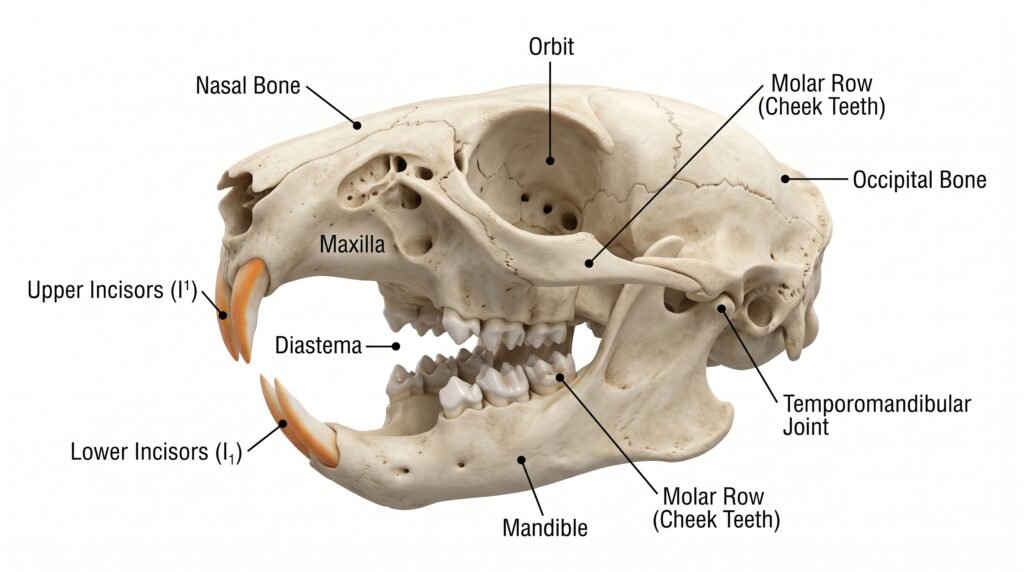
Hamsters have four main incisors—two on top and two on the bottom. You might notice they are naturally orange or yellow.
Do not panic! White teeth in an adult hamster are actually a sign of calcium deficiency or illness. The orange pigment comes from iron-rich enamel that makes the teeth incredibly strong. Behind these incisors is a gap called the “diastema,” followed by molars used for grinding food. While molars rarely overgrow, the front incisors are the primary culprits for trouble.
Understanding the Risks of Neglect
When teeth overgrow, it leads to malocclusion. This is when the teeth don’t meet properly, causing them to grow into the cheek, tongue, or palate. According to recent 2025 veterinary wellness data, dental issues account for nearly 30% of “failure to thrive” cases in domestic rodents. If left unchecked, the hamster cannot pouch food, develops abscesses, and may eventually starve.
7 Proven Steps to Check Your Hamster’s Teeth Safely
Checking a hamster’s mouth is a delicate dance. You aren’t just looking for length; you’re looking for alignment and gum health. Here is my tried-and-true method for a stress-free dental exam that prioritizes hamster teeth care without causing trauma.
Step 1: Choose the Right Time
Never wake a sleeping hamster for a physical exam. A grumpy hamster is a biting hamster. Wait until they are naturally active in the evening, usually after they’ve had their first “zoomies” on the wheel.
Step 2: The “Scruff” Technique (With Caution)

Gently grasp the loose skin on the back of the hamster’s neck (the scruff). This naturally pulls the lips back, revealing the front teeth.
Expert Tip: If you have a particularly wiggly dwarf hamster, place them on a flat surface and use your thumb and forefinger to gently retract the cheeks.
Step 3: Inspect the Length and Color
The bottom teeth should be significantly longer than the top teeth—usually a 3:1 ratio. Look for that healthy yellow-orange hue. If the teeth look translucent or chalky white, it’s time for a vet-approved mineral boost.
Step 4: Check for Symmetry
The teeth should grow straight and meet in the middle. If one is curving to the left or right, it’s a red flag. Misalignment is often the first sign that your hamster teeth care routine needs an upgrade to include harder chewing materials.
Step 5: Look for “The Arch”
Check the top incisors. They should curve slightly inward toward the mouth but should never touch the roof. If they are curling back toward the throat, they have already gone too far and require professional intervention.
Step 6: Smell Their Breath
It sounds strange, but your nose is a diagnostic tool. A healthy hamster’s mouth shouldn’t smell like much beyond their food. A foul, rotting odor usually indicates an abscess or trapped, decaying food in the cheek pouches.
Step 7: Reward with a Healthy Treat
Always end the session with a positive association. A single sunflower seed or a piece of broccoli goes a long way in making the next exam easier for both of you.
Also Read: Decoding Hamster Body Language: What the Ears and Tail Tell You
Recognizing the Red Flags of Dental Distress
Sometimes, you don’t even need to open their mouth to know something is wrong. Hamsters are masters at hiding pain—it’s a survival instinct. However, their behavior will always give them away if you know what to look for. In my years of consulting, I’ve found that behavior is the most honest language they speak.
Behavioral Changes to Watch
- Drooling (Sialorrhea): If the fur under the chin is constantly wet, it’s a sign they can’t close their mouth properly.
- Selective Eating: Are they only eating soft bits and leaving the hard pellets? This is a classic “ouch” signal indicating they can’t apply pressure to hard surfaces.
- Face Pawing: Constant rubbing of the mouth or nose often indicates a tooth poking the cheek or a misaligned bite.
Physical Indicators of Malocclusion
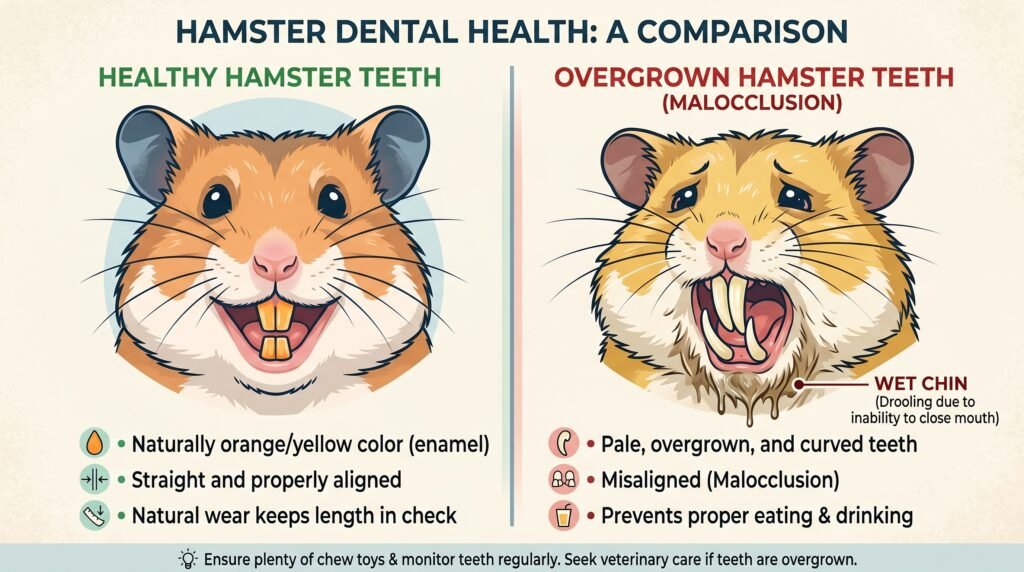
If a tooth has already overgrown, you might see “pouching” that never goes away, or a small bulge near the eye. Because the roots of the upper incisors are close to the tear ducts, severe overgrowth can actually cause eye discharge. As noted in the 2026 Small Mammal Health Review, early detection of these signs reduces the need for invasive surgery by 80%.
Weight Loss: The Silent Killer
I recommend weighing your hamster once a week on a digital kitchen scale. A drop of even 5-10 grams in a week is a massive red flag. If they can’t use their teeth, they can’t maintain their weight. Consistent hamster teeth care includes tracking these vital metrics.
| Symptom | Possible Cause | Urgency Level |
| Orange Teeth | Healthy Enamel | Normal |
| White Teeth | Vitamin Deficiency | Moderate |
| Wet Chin | Drooling/Overgrowth | High |
| Weight Loss | Inability to Eat | Emergency |
Essential Tools for Maintaining Hamster Teeth Care
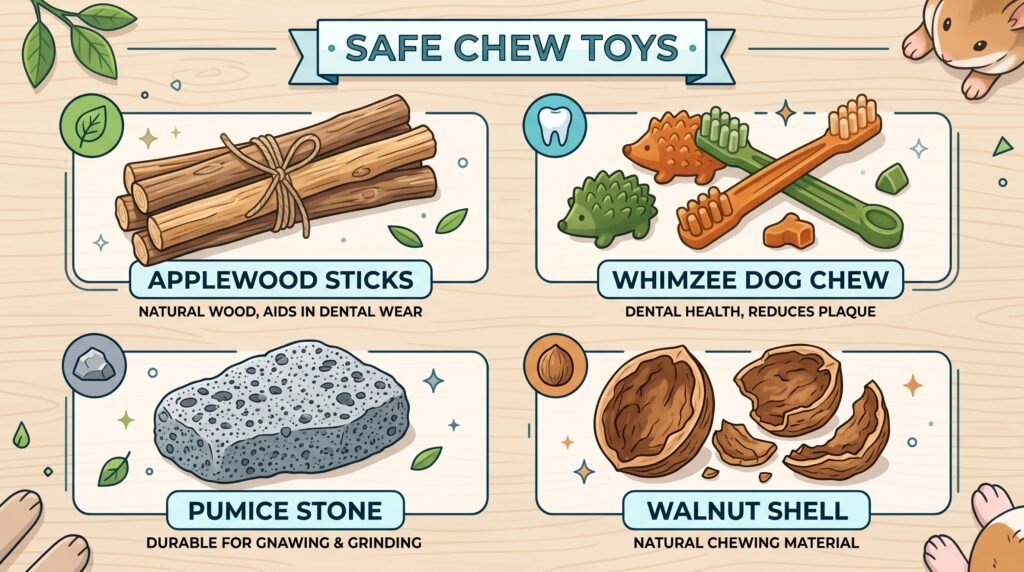
You cannot expect a hamster to maintain their teeth on a diet of soft mush. They need “mechanical abrasion.” Think of it as a natural gym for their mouth.
Also Read: How Often to Clean Hamster Cage?
The Power of Foraging and Gnaws
The best way to prevent overgrowth is to provide a variety of textures. In my experience, applewood sticks and kiln-dried pine are the gold standards. Avoid “honey-coated” sticks found in big-box stores; the sugar is terrible for their cheek pouches and can lead to tooth decay—yes, hamsters get cavities too!
Safe Materials vs. Dangerous Options
- Safe: Whimzees (dog chews, use the XS size), dandelion roots, walnut shells, and pumice stones.
- Unsafe: Plastic toys (can cause internal blockages), cedar wood (toxic oils), and cardboard with heavy inks.
The Role of Calcium and Minerals
A balanced lab block (like Mazuri or Oxbow) ensures the jaw bone is strong enough to support the pressure of gnawing. If the jaw is weak, the teeth will shift, leading to the very malocclusion we are trying to avoid. Proper hamster teeth care starts with the foundation of their skeleton.
What to Do if You Find Overgrown Teeth
If you perform your check and realize the teeth are too long, do not attempt to clip them yourself with nail clippers. This is the most common mistake I see. Imagine the horror of Sarah, a first-time owner who tried to “trim” her hamster’s teeth with cuticle scissors, only to have the tooth shatter into the gum line. It resulted in a $400 emergency surgery.
Seeking Professional Veterinary Help
An exotic vet will use a high-speed dental burr or specialized nippers to trim the teeth while the hamster is under light sedation or properly restrained. This ensures the cut is clean and the “pulp” (the living part of the tooth) isn’t damaged.
The Cost of Professional Care
In 2026, a standard tooth trim usually ranges from $50 to $150, depending on your location and whether sedation is required. It’s a small price to pay for your pet’s comfort and long-term survival.
Post-Trim Recovery
After a trim, your hamster might be a little shy or sore. Offer soft foods like scrambled eggs or soaked pellets for 24 hours to give their mouth a rest. This is a crucial part of the hamster teeth care recovery phase.
Dietary Strategies for Perfect Dental Alignment
Your hamster’s bowl is their first line of defense. A common misconception is that “muesli” mixes are enough. The problem? Hamsters are “selective feeders”—they eat the tasty, soft seeds and leave the hard bits that actually work their teeth.
The Pelleted Diet Advantage
Switching to a high-quality pelleted diet (lab blocks) forces the hamster to crunch through every bite. This provides consistent, daily wear on the incisors.
Supplemental Forage
Introduce dried herbs and stalks. Foraging for these tiny bits mimics natural behavior and keeps the incisors engaged at different angles. Think of it as a natural, organic toothbrush that they actually enjoy using.
The Importance of Hard Treats
Once a week, offer a hard-shelled nut like a hazelnut or a piece of dry pasta. The force required to crack these items is the ultimate workout for the jaw muscles and keeps the teeth in perfect alignment. This proactive approach is the pinnacle of hamster teeth care.
Advanced Hamster Teeth Care: Genetic and Age-Related Issues
Sometimes, you do everything right, and things still go wrong. This is especially true for senior hamsters or certain breeds like Campbell’s Dwarfs, which are prone to metabolic issues.
Senior Hamster Challenges
As hamsters age, their bones can become brittle. Teeth may break more easily or grow at odd angles due to shifting jaw alignment. In older hamsters (2+ years), I recommend checking the teeth every three days instead of weekly.
Genetic Malocclusion
Some hamsters are simply born with misaligned jaws. This is often seen in “pet store” hamsters where breeding isn’t strictly controlled. In these cases, regular professional trims every 4-6 weeks will be a permanent part of your hamster teeth care routine.
The Impact of Cage Biting
If your hamster is constantly gnawing on the metal bars of their cage, they can actually “realign” their teeth in a bad way. This repetitive trauma can cause the teeth to grow crooked or even snap at the root. If you see bar-biting, it’s a sign of boredom or an enclosure that is too small. Switching to a glass terrarium or a large bin cage can solve this dental hazard instantly.
Creating a Dental Health Schedule

To make hamster teeth care a habit, you need a schedule. Here is what I recommend for the average owner who wants to stay ahead of the curve:
- Daily: Observe eating habits. If they are pouching normally, things are likely okay. Look for a “wet chin.”
- Weekly: Perform a physical “scruff” exam to check alignment. Weigh your pet and record it in a health log.
- Monthly: Rotate in new chew toys and textures to keep them interested in gnawing.
- Annually: Schedule a wellness check with an exotic vet to inspect the back molars.
By following this rhythm, you catch problems when they are “tiny tweaks” rather than “major surgeries.” Your hamster can’t tell you when they have a toothache, but through these steps, you’ll be able to hear their silent plea for help.
The Joy of a Healthy Hamster
Maintaining hamster teeth care might seem like a lot of work at first, but it quickly becomes a bonding moment between you and your pet. When you know their mouth is healthy, you can enjoy those moments of them stuffing their pouches with abandon, knowing they are comfortable and thriving.
Remember, you are the guardian of those tiny incisors. By providing the right chews, monitoring their growth, and knowing when to call in the pros, you are ensuring your hamster lives a long, “crunchy,” and happy life. Don’t wait for a problem to arise; start your first dental check tonight. Your furry friend will thank you (probably with a very full cheek pouch and a content little squeak).
FAQs
How often should I provide new chew toys?
You should provide new textures every 1-2 weeks. Hamsters lose interest in the same old wood block. By rotating toys, you encourage more active gnawing, which is the cornerstone of effective hamster teeth care.
Can I use human toothbrushes to clean hamster teeth?
No. Hamsters do not need their teeth “brushed” like humans. Their teeth are self-cleaning through the act of gnawing. Using a brush can cause stress and potential injury to their delicate gums and cheek pouches.
What should I do if my hamster’s tooth breaks off?
If a tooth breaks, check for bleeding. If there is no blood, the tooth will usually grow back within a week. However, the opposite tooth will have nothing to grind against and may overgrow quickly. Consult a vet immediately.
Are certain breeds more prone to dental issues?
While all hamsters can have issues, Dwarf varieties are often more susceptible to genetic malocclusion. Regardless of breed, consistent hamster teeth care is necessary to prevent environmental overgrowth caused by a soft diet or lack of chews.
Is it normal for my hamster’s teeth to be two different lengths?
The top two should be equal to each other, and the bottom two should be equal to each other. If one bottom tooth is much shorter than the other, it likely snapped. This requires a vet visit to balance the growth.