How Often to Clean Hamster Cage: The Ultimate 2026 Guide to Stress-Free Maintenance
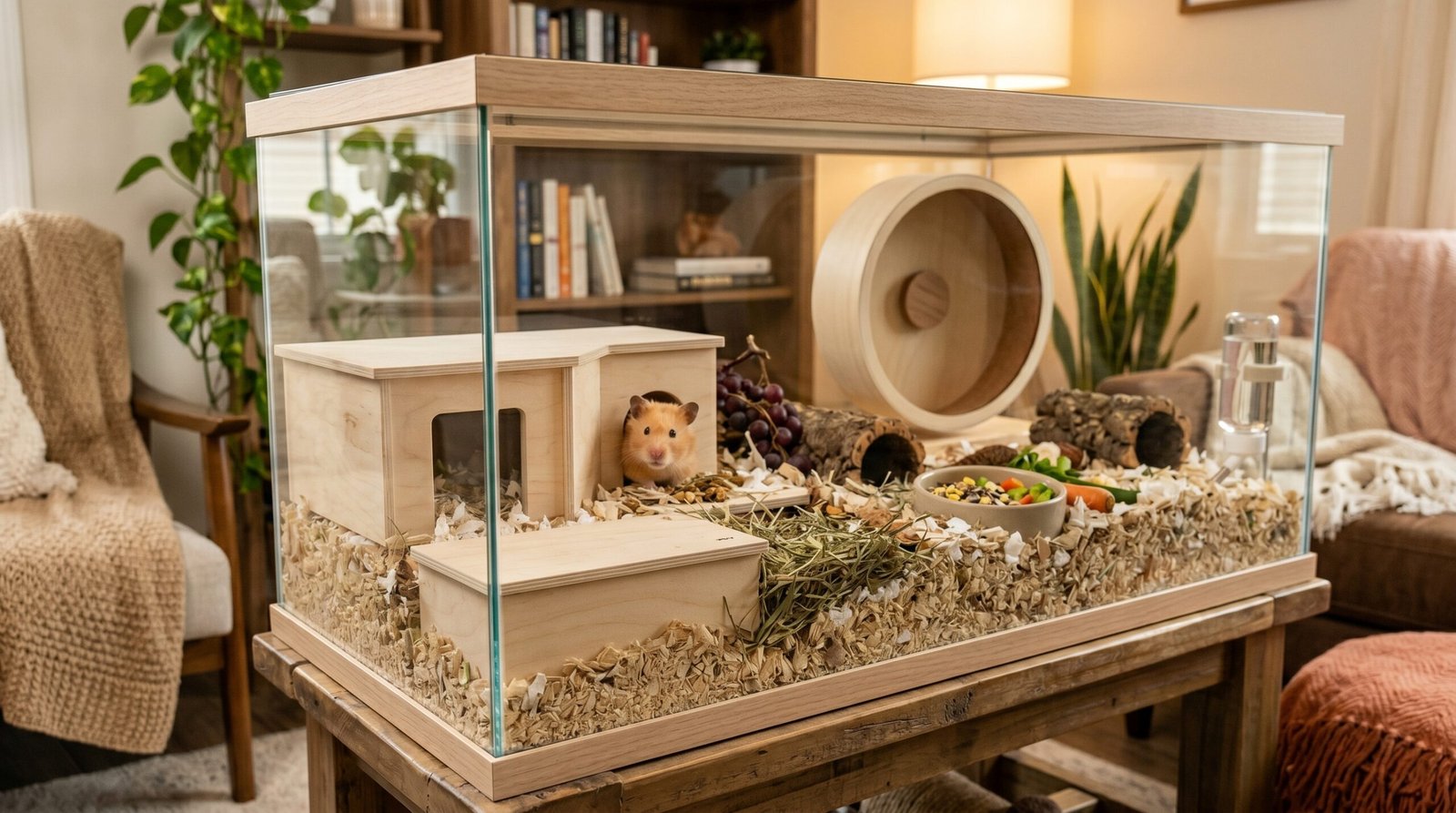
Table of Contents
So, you’ve brought home a tiny, twitching nose and a pair of beady eyes. Whether it’s a fluffy Syrian or a speedy Robo, you’re now a “hamster parent.” But shortly after the honeymoon phase of watching them stuff eighteen sunflower seeds into their cheeks, reality sets in. The smell. The stray bedding. The mystery of where all that broccoli went. You find yourself staring at the glass or wire bars wondering: how often to clean hamster cage setups without turning your pet’s life into a stressful nightmare?
In my two decades of consulting for small animal rescues and writing for major pet publications, I’ve seen it all. I’ve seen cages cleaned so often the hamster became a nervous wreck, and I’ve seen cages left so long they developed their own localized weather systems. Finding that “Goldilocks zone”—not too much, not too little—is the secret to a long-lived, happy hamster.
Real talk: Most of the advice you find on old forums is dangerously outdated. In 2026, we understand hamster psychology better than ever. We know they rely heavily on scent marking to feel safe. If you scrub away their scent every three days, you aren’t being “clean”; you’re being a home-wrecker. On the flip side, ammonia buildup from urine is the number one cause of respiratory infections. This guide is your definitive blueprint for balancing hygiene with hamster happiness. We’re going to dive deep into spot cleaning, deep cleaning, and the science of “scent-loading.”
How Often to Clean Hamster Cage Habitats?
When people ask me for a hard number, they usually want to hear “once a week.” But if I told you that, I’d be doing you a disservice. The frequency depends entirely on the size of the enclosure, the species of hamster, and your pet’s personal bathroom habits.
The 2026 Standard for Cleaning Frequency
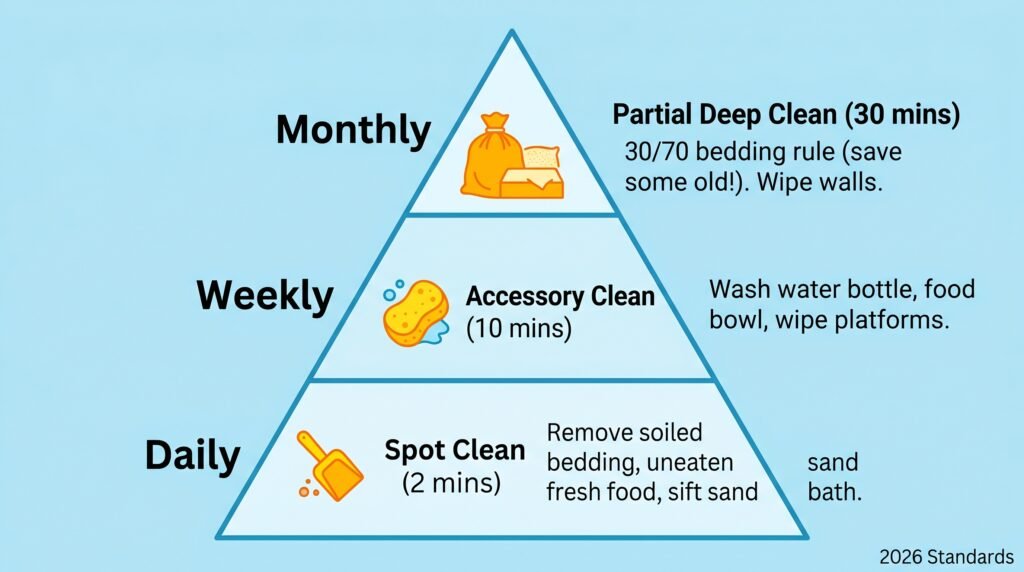
Based on current veterinary standards and animal welfare guidelines from the Association of Exotic Mammal Veterinarians (AEMV), the “once-a-week scrub” is officially dead. Instead, we use a tiered approach:
- Daily: Spot cleaning (2 minutes).
- Weekly: Accessory cleaning and “high-traffic” bedding swaps (10 minutes).
- Monthly (or longer): Partial deep clean (30 minutes).
Why Enclosure Size Changes Everything
Imagine living in a studio apartment versus a mansion. If you drop a piece of ham in the studio, you’ll smell it by evening. In the mansion, it might take a week. The same logic applies to cages. According to a 2025 study by the Global Hamster Welfare Initiative, hamsters in enclosures over 800 square inches of floor space require 50% less frequent deep cleaning than those in smaller “starter” cages.
If you are using a 40-gallon breeder tank or a large DIY IKEA Linmon cage, you can often go 4 to 6 weeks between deep cleans, provided you are diligent with spot cleaning. Small, modular plastic cages? You’re looking at a full clean every 7 to 10 days because the ammonia concentration rises rapidly in small air volumes.
7 Proven Steps to Perfect Daily Spot Cleaning
Spot cleaning is the “secret sauce” of low-maintenance pet ownership. If you do this right, your deep cleans will be a breeze. I once worked with a client named Sarah who was ready to rehome her Syrian, “Gus,” because the smell was overwhelming her small apartment. After teaching her these seven steps, the odor vanished, and Gus became much calmer.
Step 1: Locate the “Kitchen” and the “Bathroom”
Most hamsters are surprisingly clean. They usually pick one corner for their business and another for their hoard. Identify these spots. Use a small sand bath; many hamsters will instinctively use a sand dish as a litter box, which is a total game-changer for cleanliness.
Step 2: Remove Visible Waste
Every evening while your hamster is awake and exploring, use a small scoop (a reptile sand sifter works wonders) to remove clumped bedding or soiled sand.
Step 3: The “Hoard Check”
Hamsters hoard food. It’s in their DNA. However, fresh foods like cucumber or bell pepper will rot and grow mold within 24 hours. Gently sift through their nest. Keep the dry seeds, but toss the “wet” stuff.
Step 4: Sifting the Sand Bath
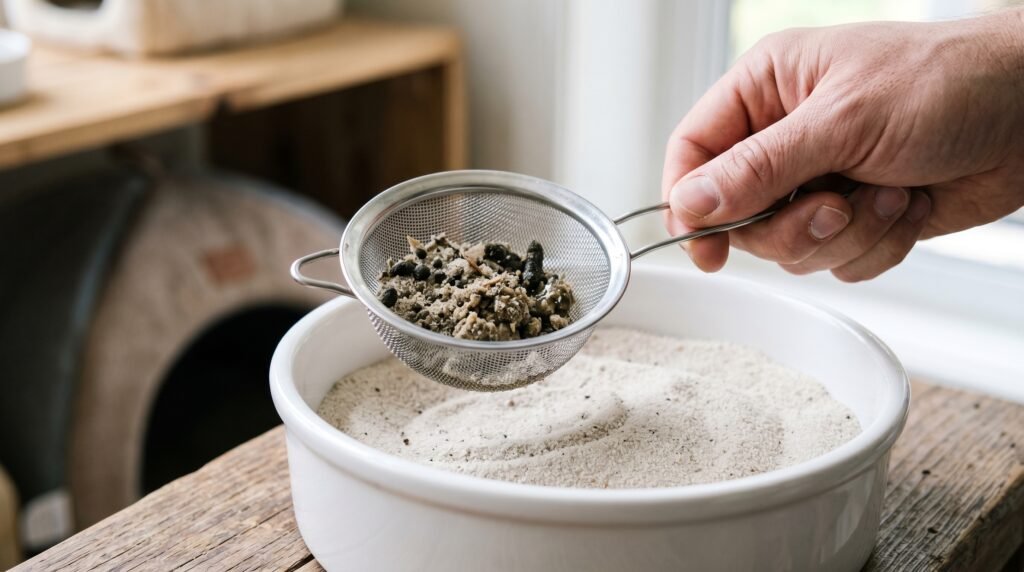
If you use a sand bath (which you should for coat health), sift out the clumps daily. Replace the sand entirely only if it smells like a New York subway station.
Step 5: Water Bottle Maintenance
Bacteria love water bottle nozzles. Don’t just refill it; rinse it. In 2026, we recommend glass bottles or heavy ceramic bowls to prevent microplastic leaching.
Step 6: Surface Wiping
Wipe down any plastic or wooden platforms where your hamster might have “piddled.” Use a 50/50 water and white vinegar solution—it’s safe, cheap, and kills odors.
Step 7: The “Sniff Test”
Before you close the lid, get your nose in there. If you smell ammonia, you’ve missed a spot. If it smells like hay and wood shavings, you’re golden.
Why “Deep Cleaning” Can Be Harmful
Here is where the “old school” and “new school” of pet care clash. Traditional advice says to dump everything out and bleach the cage. Modern science says: don’t you dare.
Understanding the Olfactory Map
Hamsters are nearly blind. They navigate the world through their noses. They have scent glands (on the hips for Syrians, on the belly for Dwarfs) that they rub against surfaces to say, “I live here, I am safe.” When you do a 100% bedding change, you erase their map. This causes extreme stress, leading to “cage rage,” frantic pacing, and a weakened immune system.
The 30/70 Bedding Rule
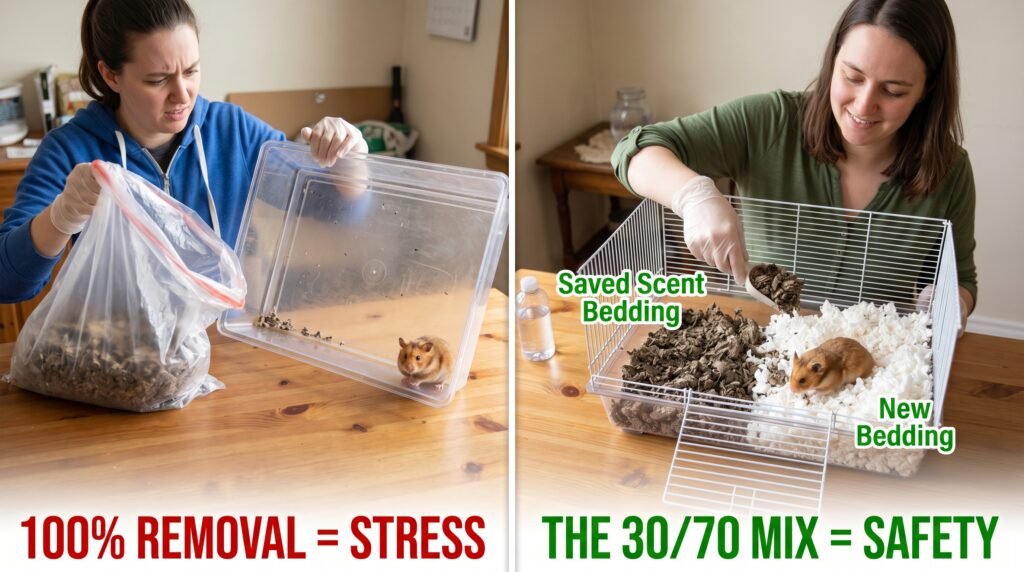
In my years of writing for Small Pet World, I’ve championed the 30/70 Rule. When you perform a “deep clean,” you should only remove about 70% of the bedding. Take the cleanest 30% of the old bedding—usually the stuff from the bottom layers—and mix it back in with the new. This keeps the familiar scent profile intact.
Also Read: The Ultimate Guide to the Best Bedding for Hamsters: 2026 Expert Review
| Cleaning Type | Frequency | Stress Level | Main Goal |
| Spot Clean | Daily | Very Low | Remove waste/wet food |
| Partial Clean | Every 2-4 Weeks | Moderate | Refresh top layers/platforms |
| Full Sanitization | Only after illness/death | High | Kill pathogens |
Managing the “Nest”
The nest is the most sacred part of the cage. Unless it is soiled with urine, leave the nest alone. If you must clean it, try to save a few pieces of the hamster’s unsoiled nesting material (shredded paper, etc.) and put it back in the exact same spot. Imagine waking up and finding your bedroom has been moved to the garage—that’s how a hamster feels when you move their nest.
Cleaning Different Cage Types: From Glass Tanks to Wire Bars
Not all cages are created equal. The material of your enclosure dictates how often and how you should clean.
Glass Aquariums and Terrariums
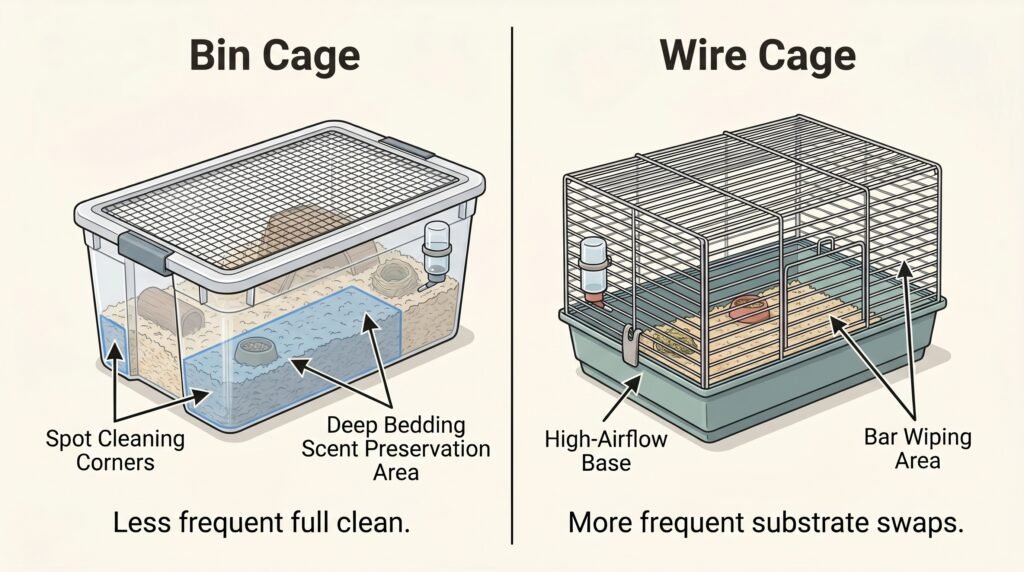
These are the gold standard for many owners because they allow for deep bedding (essential for burrowing). However, they lack cross-ventilation.
- The Risk: Ammonia settles at the bottom.
- The Strategy: Because you can see through the glass, you can actually spot-clean underground burrows if you see waste against the glass. Clean glass walls with a vinegar solution to remove “nose smudges.”
Wire Cages (Barred Enclosures)
Wire cages have great ventilation, but they are often too small to hold the 6-10 inches of bedding a hamster needs.
- The Risk: Dust and debris falling out of the cage onto your floor.
- The Strategy: Focus on the plastic base. Since these cages usually have less bedding depth, they require more frequent full bedding swaps (every 2 weeks) because the volume of substrate isn’t enough to dilute the waste.
Bin Cages (The DIY Savior)
Bin cages are popular in 2026 for their affordability and size.
- The Strategy: Treat these like glass tanks. Ensure you have a large mesh lid for ventilation. The plastic can hold odors more than glass, so a monthly wipe-down with an enzymatic cleaner is recommended.
Safe vs. Dangerous Cleaning Supplies: What to Use in 2026
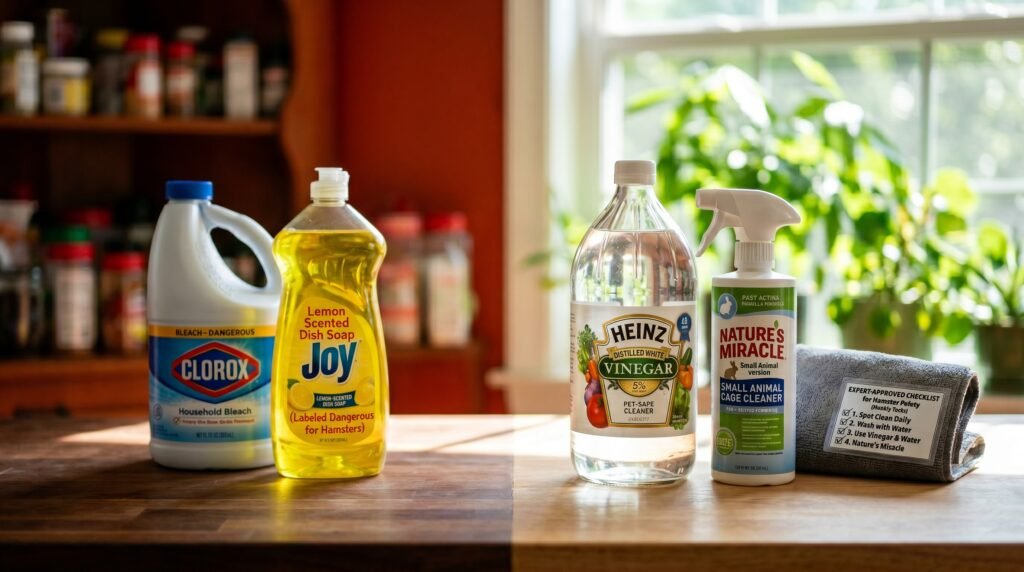
If you’re still using “Lemon Fresh” dish soap or, heaven forbid, bleach, we need to talk. Hamsters have incredibly sensitive respiratory systems. One whiff of concentrated bleach can cause permanent lung damage.
The “No-Go” List
- Bleach/Ammonia: Never. Just don’t.
- Scented Detergents: Anything labeled “Spring Meadow” or “Lavender” is a respiratory irritant for hamsters.
- Essential Oils: Most are toxic to small mammals.
- Aerosol Sprays: Febreze is a death sentence in a small room with a hamster.
The “Expert’s Toolkit”
- Distilled White Vinegar: The GOAT of pet cleaning. It cuts through urine scale (the white crusty stuff) like a charm.
- Enzymatic Cleaners: Brands like Nature’s Miracle (the small animal version) break down the proteins in urine rather than just masking them.
- Steam Cleaners: If you want to be high-tech, a small handheld steam cleaner uses only water to sanitize surfaces. It’s the most “eco-friendly” and pet-safe method available in 2026.
- Microfiber Cloths: They grab dust without needing chemicals.
How to Handle Your Hamster During Cleaning Day
Cleaning day is a high-stress event for your pet. How you handle them determines whether they spend the next three days hiding or go right back to their happy self.
The “Playpen” Method
Never leave your hamster in the cage while you’re moving large amounts of bedding. The giant hand from the sky moving their world around is terrifying. Instead, set up a secure playpen with some hideouts and treats. This turns cleaning day into “adventure day.”
The “Travel Carrier” Trick
If you don’t have a playpen, a well-ventilated travel carrier with a bit of old bedding and a piece of cucumber (for hydration) works perfectly. Keep the carrier in a quiet room away from the vacuum or the sound of running water.
Re-Entry Protocol
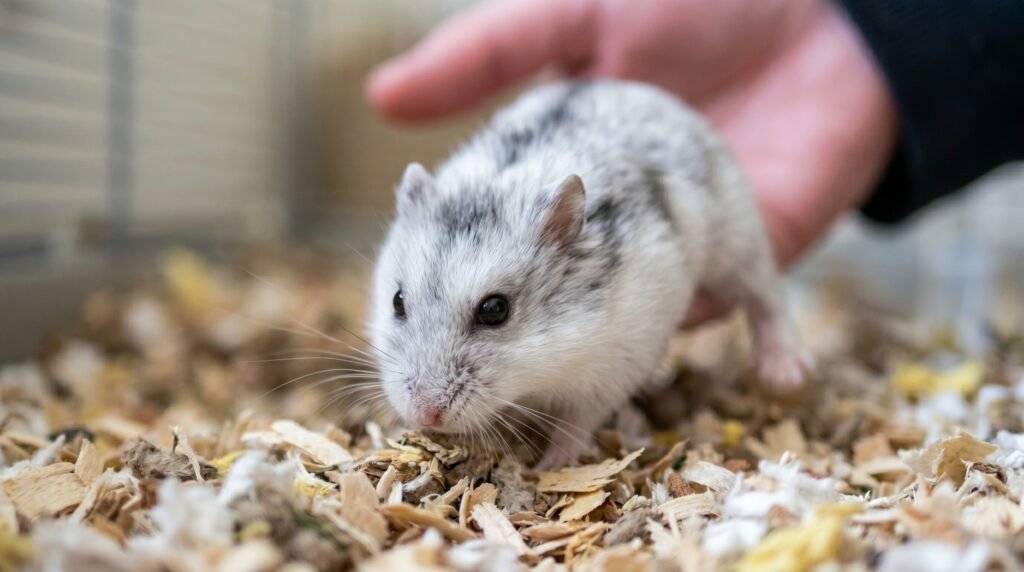
When you put the hamster back into their cleaned cage, don’t just drop them in. Place them in their nest area. You’ll notice they immediately start doing a “patrol”—sniffing every corner to see what’s changed. This is normal. Toss in a few high-value treats (like a mealworm or a pumpkin seed) to create a positive association with the “new” environment.
Troubleshooting Odor: Why Does My Cage Still Smell?
If you’ve cleaned everything and the room still smells like a petting zoo, something is wrong. Usually, it’s one of these three culprits.
Culprit 1: The Wooden Accessories
Wood is porous. If your hamster decides that their expensive wooden multi-chamber hide is actually a toilet, the urine will soak into the fibers. You can’t just wipe this off.
- The Fix: Soak the wood in a vinegar-water solution, then bake it in the oven at a low temperature (about 200°F or 90°C) until bone dry. Alternatively, seal your wooden items with pet-safe “Plastikote” or water-based polyurethane before use.
Culprit 2: Poor Bedding Choice
Not all bedding is created equal. Sawdust or pine shavings have terrible odor control and are dangerous for lungs.
- The Fix: Use high-quality paper-based bedding (like Kaytee Clean & Cozy or Carefresh) or hemp bedding. Hemp is a rising star in 2026 for its incredible absorbency and sustainability.
Culprit 3: The Wheel
Check the wheel. Hamsters often pee while running. The centrifugal force flings the urine onto the track, where it dries and stinks.
- The Fix: Clean the wheel every 2-3 days. It’s one of the highest-impact things you can do for odor control.
Seasonal Adjustments: Cleaning in Summer vs. Winter
Believe it or not, the weather outside affects your cleaning schedule.
Summer (The Humidity Factor)
High humidity and heat accelerate the growth of bacteria and mold. In the summer months, you might need to increase your spot-cleaning frequency. If the bedding feels “damp” to the touch, it needs to go immediately. Flies are also a risk; “flystrike” is a horrific condition where flies lay eggs on a dirty pet. Keep it dry, keep it cool.
Winter (The Dryness Factor)
In winter, indoor heating can dry out the air. While this helps with odors, it can make the cage dusty. You might find you can go longer between deep cleans, but you’ll need to be more mindful of dust buildup, which can irritate your hamster’s nose.
Finding Your Rhythm
Determining how often to clean hamster cage setups isn’t about following a rigid calendar; it’s about observing your pet and their environment. It’s a dance between hygiene and habitat stability.
Remember, a clean cage isn’t one that smells like a floral shop—it’s one that smells like… nothing. Or perhaps a faint scent of hay and wood. By mastering the art of the spot clean, respecting the 30/70 bedding rule, and using safe, natural cleaners, you’re providing your hamster with the best possible life. You’re not just a cleaner; you’re a curator of their tiny world.
The goal is to let your hamster be a hamster. Let them dig, let them hoard, and let them scent-mark. Your job is just to manage the “overflow.” If you can do that, you’ll have a happy, healthy companion for years to come.
FAQs
1. Can I use baby wipes to clean the cage?
Most baby wipes contain fragrances and chemicals that are not safe for hamsters. Even “unscented” wipes may contain ingredients that leave a residue. It is much safer and cheaper to use a paper towel dampened with a water and white vinegar solution.
2. My hamster bites me after I clean the cage. Why?
This is a classic sign of cleaning-induced stress. You’ve likely removed too much of their scent, and they feel insecure and defensive. Try the 30/70 bedding rule next time, and ensure you aren’t moving their favorite hideouts around too much.
3. Is it okay to use baking soda to absorb odors?
You should never put baking soda directly in the bedding, as it can be harmful if ingested or inhaled. However, you can place a small bowl of baking soda outside the cage, near the enclosure, to help neutralize airborne odors in the room.
4. How do I clean a cage if my hamster is sick?
If your hamster has “wet tail” or a respiratory infection, a full sanitization is required. Remove all bedding and wash the cage with a pet-safe disinfectant. Consult your vet about which accessories (like wood) should be thrown away to prevent reinfection.
5. What is the best bedding for odor control?
In 2026, the consensus among experts is that high-quality, unscented paper bedding or hemp bedding offers the best balance of absorbency and odor control. Avoid cedar and pine at all costs, as the phenols are toxic to small animals.