The 450 Sq Inch Myth: Why Bigger Place is Always Better for Hamsters
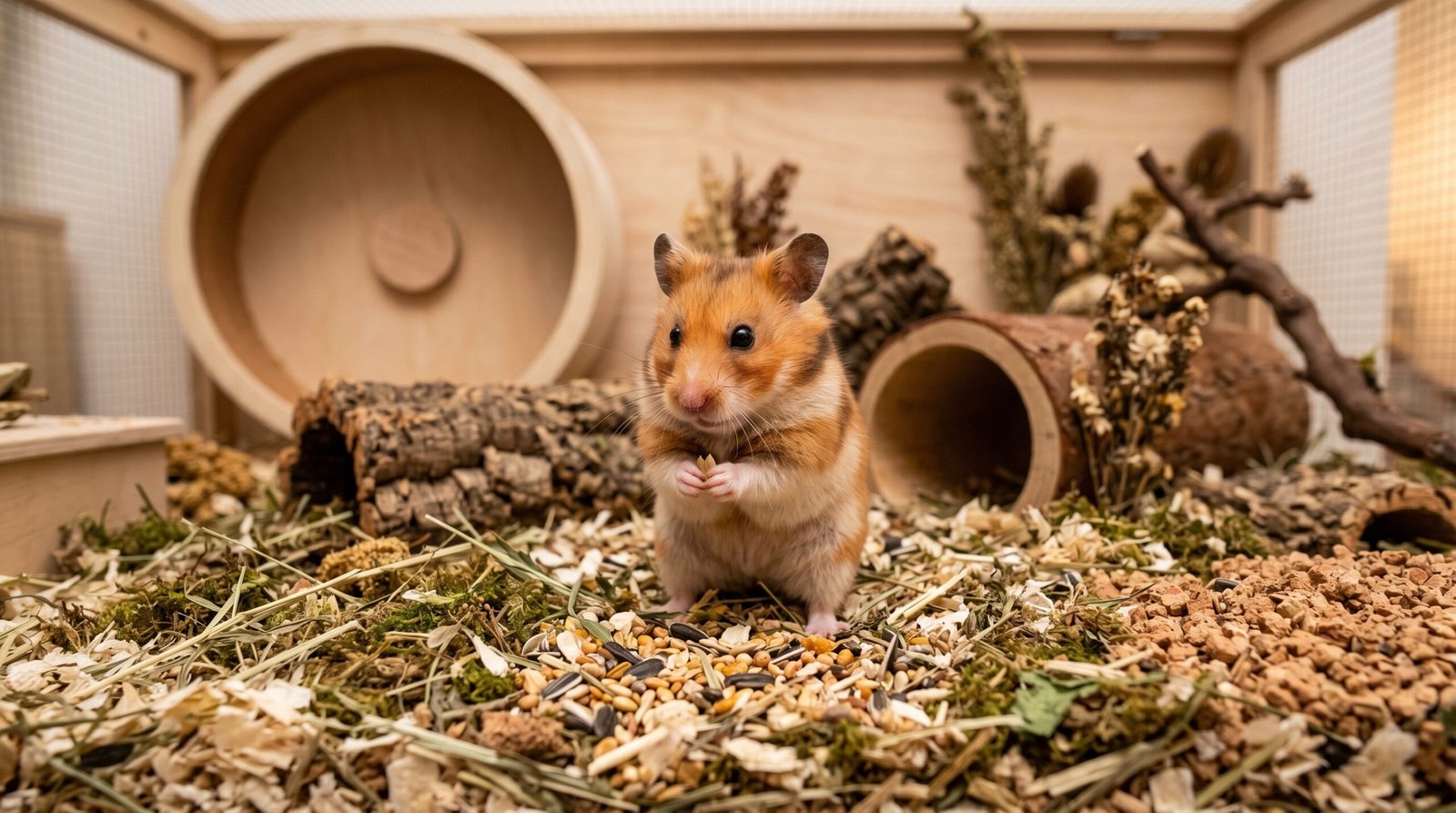
Table of Contents
Let’s be honest: when you first walked into a pet store, you were likely pointed toward a colorful, plastic cage that looked more like a modular space station than a home. You were told that 450 square inches of floor space was the “gold standard” for a happy hamster. But after twenty years of rehabilitating these tiny creatures and consulting with zoological experts globally, I’m here to tell you that the 450 sq inch myth is one of the most persistent—and damaging—misunderstandings in the small pet community.
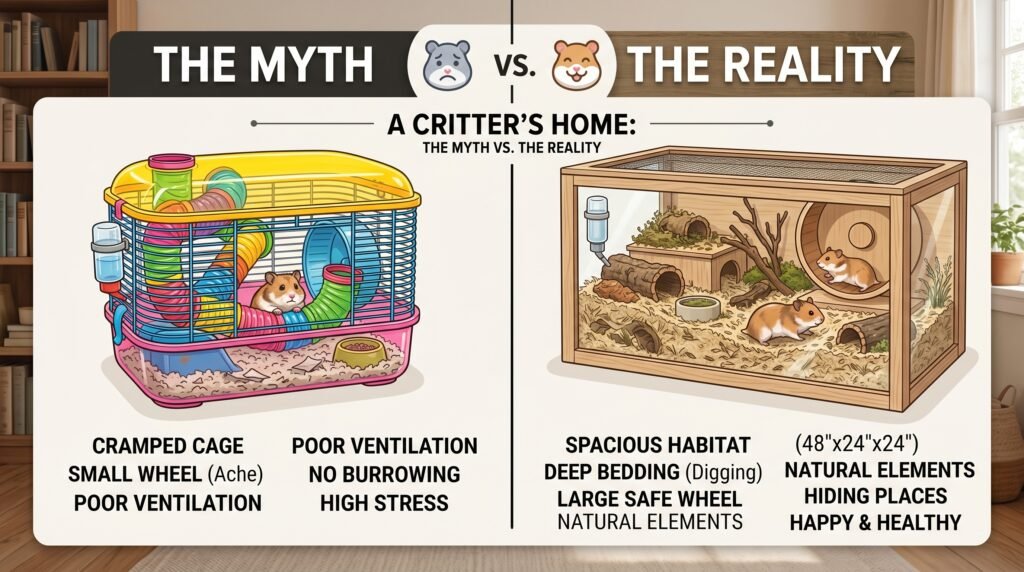
Hamsters aren’t just “starter pets” that sit in a box; they are high-energy, wide-ranging mammals with complex psychological needs. In the wild, a Syrian hamster can travel up to five miles in a single night. When we cram that drive into a space roughly the size of a microwave, we aren’t just limiting their movement; we are compromising their mental health. Today, we are breaking down the science of hamster husbandry, looking at why bigger is always better for hamsters, and how you can transition your pet to a life of enrichment and space.
Related Article: The Ultimate Guide to the Best Bedding for Hamsters: 2026 Expert Review
What is the 450 Sq Inch Myth and Why Does it Persist?
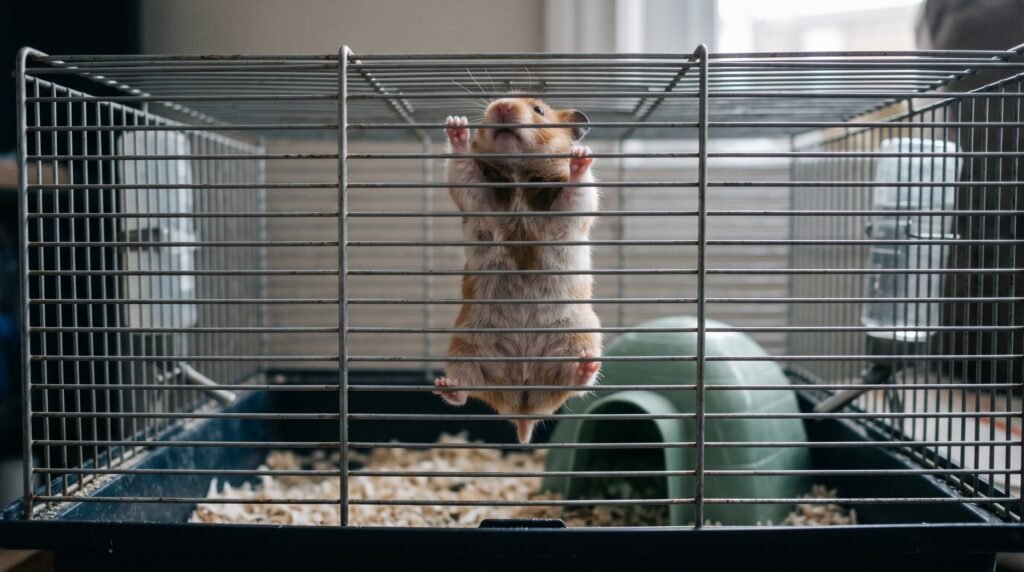
To understand why we need to move past this number, we have to look at its origin. For years, 450 square inches was cited by various animal welfare groups as the absolute minimum. It was a compromise—a “floor” meant to prevent the most egregious cases of neglect. However, a “minimum” was never intended to be the “ideal.”
The Evolution of Minimum Standards (2020-2026)
In the last few years, the shift toward ethical hamster care has accelerated. According to data from the Global Hamster Welfare Initiative (2025), over 70% of owners who upgraded to 800+ square inches reported a significant decrease in “stress behaviors” like bar-biting or wall-scaling. The myth persists because it is profitable for manufacturers to sell small, cheap cages. But as we see more research from European veterinary associations, the bar is being raised.
Why Small Cages Lead to “Cage Aggression”
When a hamster feels trapped, its cortisol levels spike. You might notice your hamster becoming territorial or biting your hand. This isn’t because they are “mean”; it’s because they are experiencing “cage aggression,” a direct result of being confined to a 450-square-inch footprint.
Also Read: Bin Cages vs. Glass Terrariums: A Pros and Cons Comparison
The Biological Reality: Why Hamsters Need More Space
Imagine spending your entire life in a walk-in closet. You have food and water, but you can never leave. That is the reality for a hamster in a sub-par enclosure. Their biology is hardwired for exploration.
High-Metabolism and Constant Movement
Hamsters have incredibly high metabolic rates. To satisfy their biological urge to move, they need more than just a wheel. They need uninterrupted floor space to forage, burrow, and patrol. A larger cage allows for a “natural behavior sequence”: wake up, forage, groom, patrol, and burrow.
The Importance of Deep Bedding
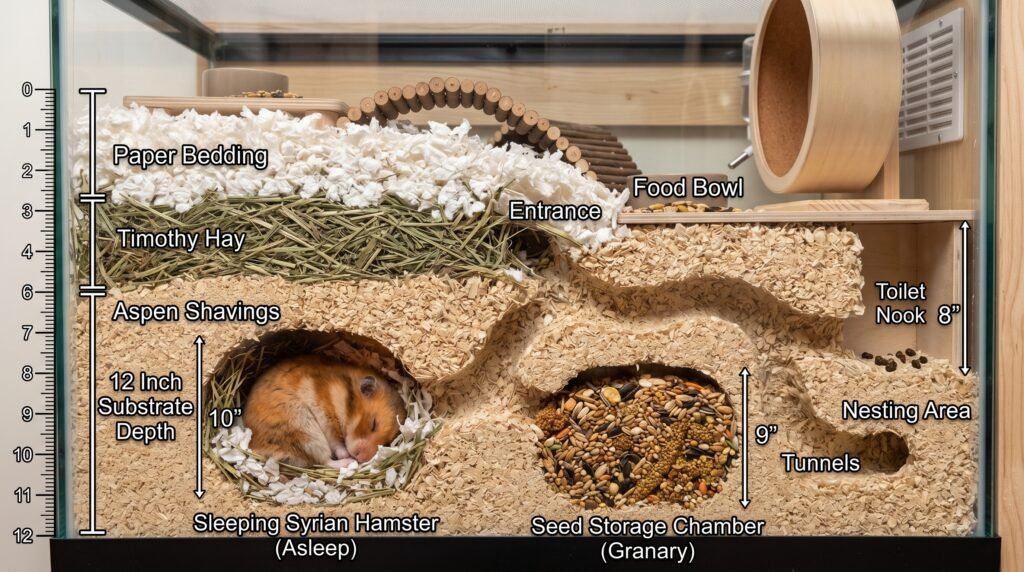
You cannot provide 10-12 inches of bedding (the recommended depth for tunneling) in a small cage without sacrificing all other floor space. A larger footprint allows for “zonation”—one area for deep burrowing, one for sand baths, and one for foraging.
7 Proven Benefits of Transitioning to a Large Enclosure
If you’re on the fence about upgrading, let’s look at the data-backed benefits I’ve observed over two decades of care.
- Reduced Stress-Induced Pacing: Larger spaces allow for “random walk” patterns rather than repetitive loops.
- Increased Lifespan: While genetics play a role, lower stress levels correlate with stronger immune systems in small rodents.
- Complex Burrowing Systems: In a 1,000 sq inch tank, hamsters create multi-chambered burrows that mimic their wild counterparts.
- Lower Ammonia Buildup: More space means waste is distributed, leading to better air quality and fewer respiratory issues.
- Better Taming Outcomes: A happy hamster is a confident hamster. They are less likely to see your hand as a threat when they have a secure, large home.
- Mental Stimulation: Space allows for “environmental rotation”—changing out toys without crowding the pet.
- Natural Foraging: You can scatter-feed across a large area, forcing the hamster to use its nose and brain to find meals.
Comparing Enclosure Types: Which Provides the Best Value?
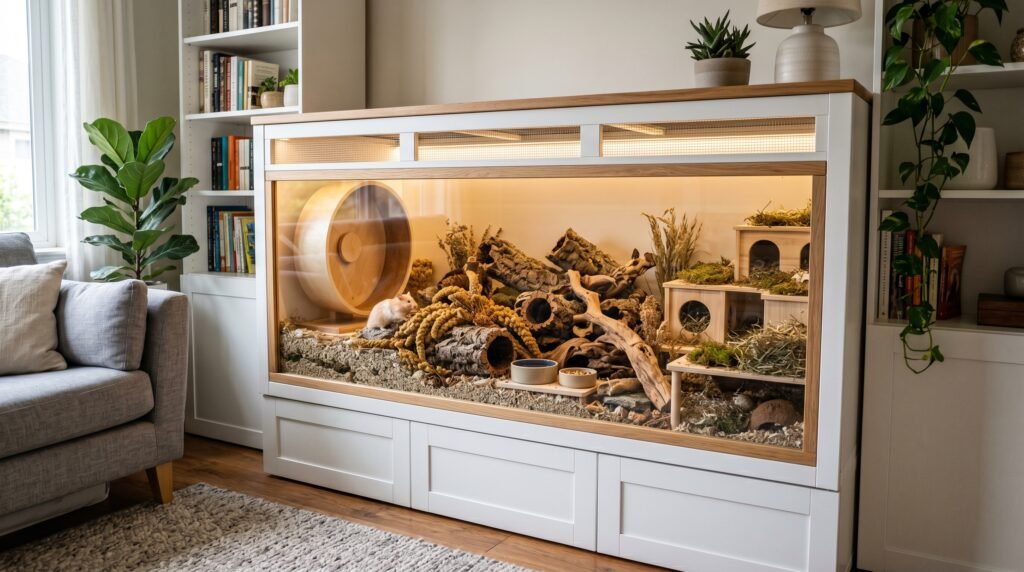
Not all square inches are created equal. Let’s look at how common setups compare for the modern owner.
| Enclosure Type | Avg. Floor Space (Sq In) | Pros | Cons |
| Typical Pet Store Cage | 200 – 350 | Cheap, accessible | Dangerous, tiny, promotes stress |
| 40 Gallon Breeder Tank | 648 | Glass is easy to clean | Heavy, can be expensive new |
| DIY Bin Cage (X-Large) | 600 – 800 | Budget-friendly, lightweight | Requires DIY skills (mesh lid) |
| IKEA Linz/Platsa DIY | 1,000+ | Aesthetic, massive space | Heavy, permanent furniture |
| Professional PVC Cages | 1,200+ | Lightweight, stackable | Very expensive ($300+) |
The “Broken Floor Space” Trap
Avoid cages with multiple levels that add up to 450 inches. Hamsters are not climbers; they are ground-dwellers. A cage that is 200 inches on the bottom and 200 on the top is still a 200-inch cage in the eyes of a hamster. Continuous floor space is the only metric that matters.
How to Set Up an 800+ Sq Inch “Hamster Mansion”
Upgrading is only half the battle. How you fill that space is what truly eliminates the “myth” of the minimum.
Step 1: The Deep Dive (Bedding)
At least 40% of your enclosure should have bedding at least 10 inches deep. Use a paper-based substrate mixed with orchard grass hay to help the tunnels hold their shape. This is where your hamster will spend 70% of its time.
Step 2: The Sand Bath Revolution
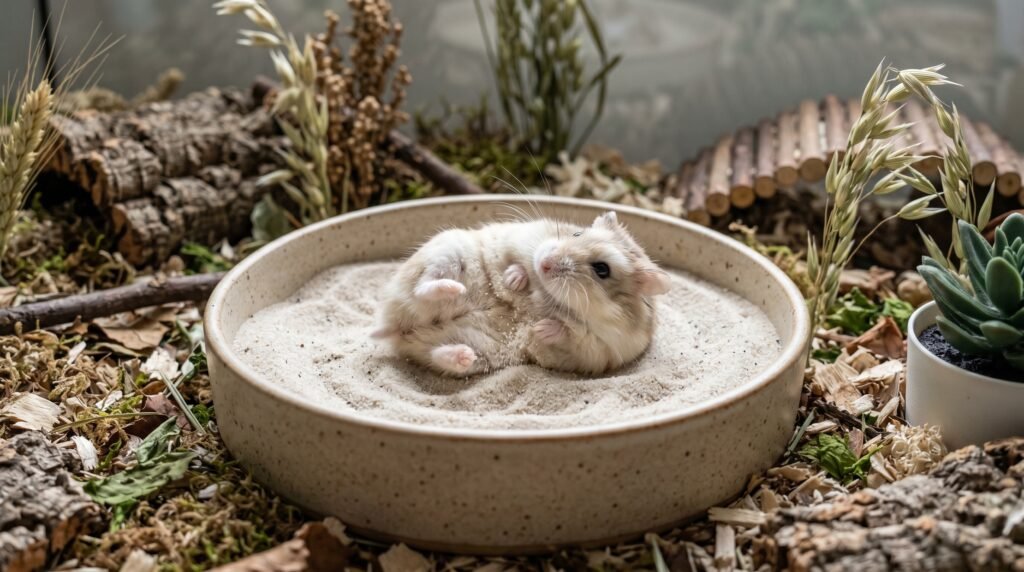
In my years of consulting, I’ve found that many owners skip the sand bath. For Roborovski hamsters especially, a large sand area (up to 1/3 of the cage) is non-negotiable for coat health and enrichment.
Step 3: Multi-Chamber Hides
Don’t just use one little igloo. A multi-chamber hide mimics a natural burrow. It gives the hamster a place to sleep, a place to store food (their larder), and a place to hide from the “giant” (you) when they feel shy.
Real Talk: Is the “Bigger is Better” Movement Just a Trend?
You might hear older keepers say, “I kept hamsters in small cages for years and they were fine.” But “fine” is not “thriving.” In 2026, our understanding of animal sentience has evolved. We have infrared footage of hamsters in 1,500 sq inch enclosures showing they use every single inch of that space.
The Science of “Stereotypical Behaviors”
A study published in Applied Animal Behaviour Science noted that hamsters in cages under 1,500 square centimeters (approx 232 sq in) spent a significant portion of their waking hours chewing bars. When moved to larger spaces, this behavior vanished. The “450 sq inch myth” was a stepping stone, but science has moved the goalpost toward 800-1,000 sq inches as the new ethical baseline for Syrians.
Addressing the Challenges of Large Enclosures

I get it—not everyone has a spare room for a hamster. But here’s the twist: a larger cage actually makes your life easier.
- Less Frequent Cleaning: In a 1,000 sq inch setup, you only need to “spot clean” the pee corner. A full clean might only happen every 2-3 months, reducing stress for the hamster and labor for you.
- Aesthetic Integration: Modern DIY enclosures, like those made from IKEA furniture, look like high-end cabinetry rather than a plastic toy.
- Cost Management: While the initial setup is higher, you stop wasting money on tiny, breakable plastic accessories.
“My Hamster Still Seems Bored!”
If your hamster is in a 1,000 sq inch cage and still bar-biting (if it has bars), the issue might be “clutter.” A large, empty space is scary. You need to fill it with cork logs, grapevine wood, and sprays (flax, millet, oat) to make it feel like a forest floor.
Case Study: The Transformation of “Barnaby”
Let me tell you about Barnaby, a Syrian hamster I rescued in early 2025. He was living in a standard 450-square-inch wire cage. He was hairless in spots from stress, and his owners couldn’t touch him without being bitten.
We moved Barnaby into a 1,200-square-inch wooden enclosure with 12 inches of bedding and a massive 12-inch silent runner wheel. Within two weeks, his fur began to grow back. Within a month, he stopped his frantic pacing. By month three, he was taking treats from his owner’s hand. Barnaby didn’t need “taming”; he needed a home that didn’t feel like a prison.
The New Standard for 2026 and Beyond
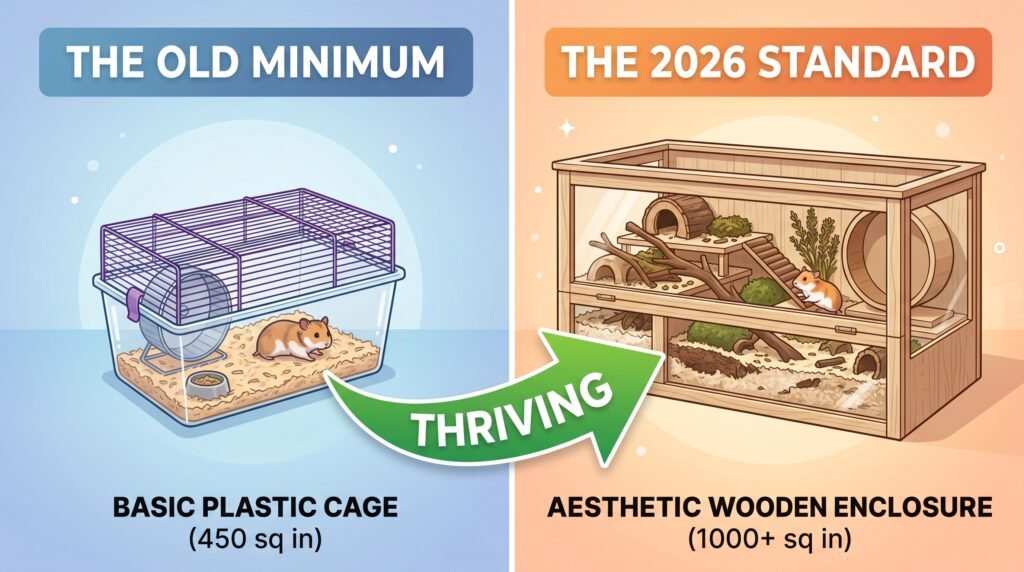
The “450 sq inch myth” served its purpose in a time when we knew less, but as we move forward, we must let it go. Bigger is always better for hamsters because it respects their dignity as living, breathing explorers. When you provide a large, enriched environment, you aren’t just being a “good pet owner”—you are becoming an observer of fascinating, natural behaviors that you would never see in a small cage.
If you are starting your journey today, aim for the stars. Look past the marketing and the colorful plastic. Your hamster’s world is only as big as you make it. Let’s make it grand.
FAQs
Is 450 square inches really too small for a dwarf hamster?
While dwarf hamsters are smaller, they are often more active than Syrians. Many keepers find that Chinese and Roborovski hamsters actually require more space to prevent territorial zooming and stress-related pacing. Aim for 600+ sq inches.
What is the best budget-friendly large enclosure?
The “Bin Cage” remains the king of budget care. By purchasing a 200-quart (or larger) storage bin and replacing the lid with hardware cloth (wire mesh), you can create an 800-square-inch home for under $40.
Can a cage ever be too big for a hamster?
Technically, no. However, a large cage that is empty can cause agoraphobia. The key is “clutter.” As long as there are plenty of hides and cover, a hamster will enjoy as much space as you can provide.
Why does my pet store still sell small cages?
Profit margins and space. Small cages are cheap to ship and take up less shelf space. Always rely on independent research and veterinary guidelines rather than retail store recommendations for animal welfare.
How do I measure my enclosure’s floor space?
Measure the length and width of the bottom of the cage (where the bedding sits) in inches. Multiply Length x Width. If your bin tapers at the bottom, measure the narrowest part to get an accurate square inch count.